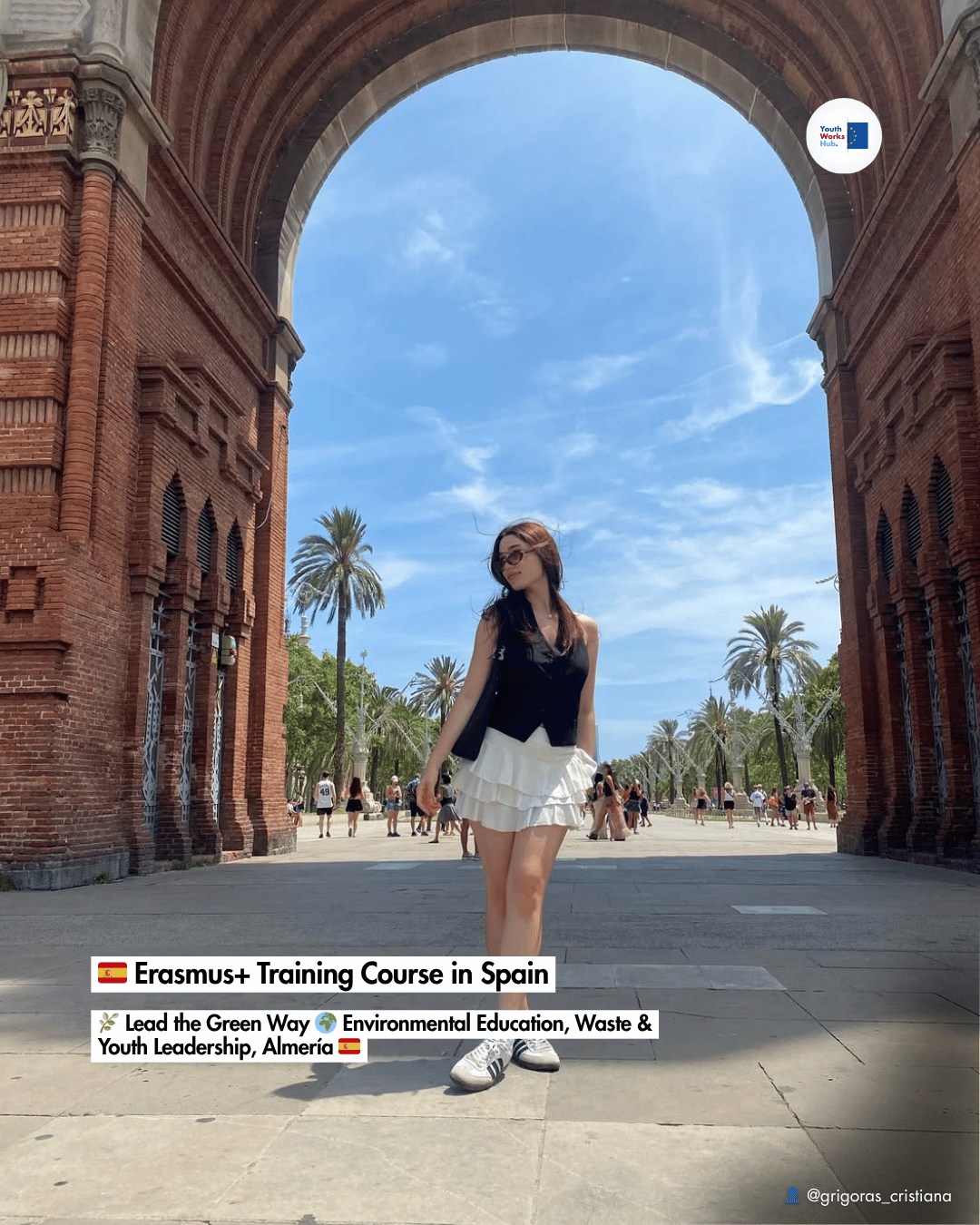
🇪🇸 Erasmus+ Training Course in Spain 🌿 Lead the Green Way 🌍 Environmental Education, Waste & Youth Leadership, Almería 🇪🇸
Nestled in the mountains of Almería, beside one of Andalusia’s most spectacular natural parks, “Lead the Green Way” is a fully-funded Erasmus+ Training Course for youth workers from five countries who want to develop and share real tools for environmental education. Over six days in the beautiful village of María, participants will explore the environmental consequences of waste, connect with nature through outdoor learning, carry out a hands-on cleanup activity, and leave equipped with practical methods to inspire the young people they work with to become active leaders in environmental protection. Participants are being selected on a rolling basis — apply as soon as possible.
🌍 Did You Know? María is a small, whitewashed mountain village in the Los Vélez region of Almería province in southeastern Spain — one of Europe’s sunniest and most geologically dramatic landscapes. It sits at the edge of the Sierra de María-Los Vélez Natural Park, a remarkable oasis of pine and oak forests rising from the semi-arid Andalusian terrain. With its deep rural traditions, local gastronomy, and extraordinary biodiversity, María offers an authentically Andalusian setting that is perfectly aligned with a training course rooted in nature and environmental awareness.
What Is This Project About?
🌿 Lead the Green Way brings together youth workers from Erasmus+ programme and partner countries to learn and share educational tools that raise young people’s awareness about environmental protection — with a particular focus on waste and its consequences
🌳 The project uses non-formal education methods throughout: interactive presentations, educational games, simulations, reflections, group discussions, group assignments, and outdoor and nature-based learning activities
🧹 A hands-on cleanup activity forms the centrepiece of the “day out” — participants create a direct, tangible positive impact on the local environment rather than just learning about it in theory
🛠️ Participants don’t just receive tools — they create new ones. A dedicated session focuses on designing and developing practical educational resources that participants can take home and use immediately in their youth work
🤝 The project actively encourages participants who have their own successful environmental education practices to share them — these can be incorporated into the programme itself, making the training genuinely collaborative
🌍 Did You Know? Every year, humanity generates over 2 billion tonnes of solid waste globally — and less than 20% of it is recycled. Young people consistently report that environmental issues are among their top concerns, yet many youth organisations lack the specific tools and methods to channel that concern into genuine behavioural change. Trained youth workers who know how to facilitate environmental education are among the most powerful catalysts for community-level sustainability action.
What Will You Learn?
♻️ The environmental challenges related to waste management and its impact on ecosystems, communities, and global sustainability — from local context to planetary scale
🌍 That environmental protection is not just about policies but about everyday choices — from consumption habits to activism — and how to communicate this to young people effectively
🌲 The importance and methodology of outdoor education in fostering a deeper human connection with nature and inspiring proactive environmental behaviour in young people
🔍 Knowledge and practical skills to detect environmental issues in your own local area — and concrete tools and ideas to tackle them with the young people you work with
🎨 Practical, creative methods to engage youth in sustainability practices and waste reduction initiatives that go beyond lectures and posters
🤝 Soft skills — especially teamwork-related competences: communication, cooperation, working towards a common goal, and personal expression in international contexts
💪 A deeper understanding of the role of youth work in shaping environmentally responsible citizens and empowering young people to move from awareness to action
Programme Overview
📅 18 May (Sunday): Arrivals
📅 19 May (Monday): Introduction and team building — getting to know each other and the project
📅 20–21 May (Tuesday–Wednesday): Exploring the core topics of the project — waste, ecosystems, environmental consequences, outdoor education, and youth-led environmental action
📅 22 May (Thursday): Day out and cleanup activity — hands-on environmental action in the natural landscapes of the Sierra de María-Los Vélez Natural Park
📅 23 May (Friday): Creating new tools — participants collaboratively design practical educational resources for environmental youth work
📅 24 May (Saturday): Closing, final evaluation, and planning forward — reflecting on learning and setting intentions for local follow-up activities
📅 25 May (Sunday): Departures
Who Can Apply?
🎂 Youth workers (professional or volunteer) or youth leaders — aged 20 and above — officially residing in one of the five partner countries
🌿 With or without prior experience in environmental education — what matters is willingness to learn, practise, and share
💪 A genuinely proactive attitude — this training requires active participation, not passive attendance
🌍 Eligible to apply for a visa to stay in Spain for 7 days if required (for non-EU participants)
📅 Available to participate in ALL phases of the project — the preparation phase in April, the full training course (partial participation is not permitted under Erasmus+ rules), and the follow-up activities from 25 May to 25 July 2026
📝 After the training, participants are expected to: fill in an evaluation form, write a short testimonial, share project outcomes, and implement a local activity with young people they work with
🤝 If you have your own successful environmental education practices to share — mention this in the application form; the organisers will work with you to incorporate them into the programme
Accommodation, Food & Travel
🏡 Venue: Casa Convento Sierra de María, in the mountain village of María, Los Vélez region, Almería province — equipped with an indoor activity room and outdoor spaces ideal for nature-based learning
🛏️ Shared rooms of four people with shared bathrooms — comfortable and suited to the communal spirit of the training
🍽️ Three meals per day and two coffee breaks throughout the programme — menus are adapted to participants’ dietary requirements and allergies
🧹 Participants share responsibility for caring for and cleaning the spaces they use — daily duties are organised in international teams, reinforcing the communal and intercultural dimension of the project
✈️ Travel costs reimbursed up to country-specific limits: Spain €56 | Albania €309 | Lithuania & Serbia €395 | Georgia €1,188
💶 Participation fee applies — calculated proportionally to average net wages: Spain €50 | Lithuania €40 | Albania, Georgia, Serbia €30
⚠️ Any travel costs exceeding the reimbursement limit are the participant’s own responsibility — plan your travel accordingly
Project Timeline
📋 April 2026 — Preparation: Participants receive tailored support from their sending organisations to prepare for the training according to their specific needs
🌿 19–24 May 2026 — The Training Course: The main event in María, Almería — six days of non-formal learning, outdoor activities, and tool creation
🌱 25 May – 25 July 2026 — Follow-up: Complete an evaluation form, write a short testimonial, share project outcomes, and implement a local environmental activity with the young people you work with
Key Information
Eligible Countries
🇦🇱 Albania, 🇬🇪 Georgia, 🇪🇸 Spain, 🇷🇸 Serbia, 🇱🇹 Lithuania
Application Link
⚠️ Important Notice
1️⃣ Source of Information
This announcement has been prepared based on the information provided by the opportunity organiser.
2️⃣ Responsibility for Content
The organiser is solely responsible for the accuracy, details, and updates of the opportunity content.
3️⃣ Right to Modify or Withdraw
Organisations reserve the right to make changes after publication — including eligibility criteria, conditions, or deadlines — or to withdraw the announcement entirely.
4️⃣ Disclaimer of Liability
YouthWorks Hub is not responsible for any such changes, updates, or cancellations made by the organiser.
💡 Final Note:
All listings are shared for informational purposes only. Please always verify details directly through the official organiser or programme website before applying.

 🇵🇱 Erasmus+ Training Course in Poland 🕊️ Building Bridges 🗣️ Non-Violent Communication & Youth Work, Baliki 🇵🇱
 🇨🇿 Erasmus+ Training Course in Czechia 🤖 AI Unlocked 🌍 Artificial Intelligence and Digital Literacy in Youth Work, Kolín 🇨🇿
 🇩🇪 Erasmus+ Training Course in Germany 💧 Water Matters 🌿 Water Sustainability, Environmental Education & Youth Work, Stuttgart 🇩🇪
 🇷🇴 ESC Volunteering in Romania ☀️ Short Term Summer Fun Vol.5 🏕️ Summer Camps for Disadvantaged Children, Cristuru Secuiesc 🇷🇴