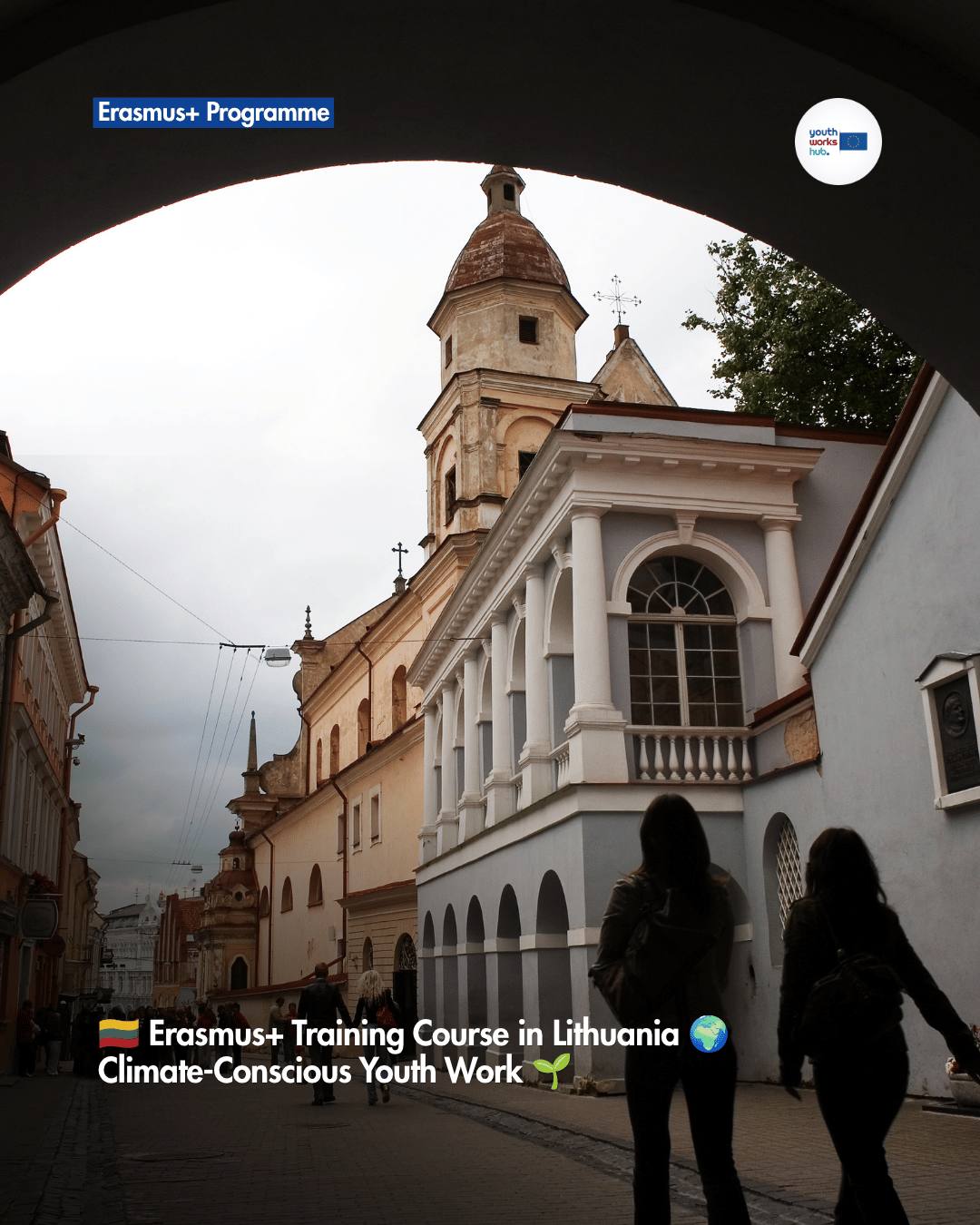
Climate change is no longer a distant headline — it is already shaping the daily lives, health and future of the young people you work with. Climate-Conscious Youth Work (2nd edition) is an Erasmus+ Training Course taking place from 13 to 20 October 2026 in the Kaunas district of Lithuania, bringing together youth workers, leaders and educators who want to bring climate and sustainability into their everyday practice with young people. At Youth Works Hub we gather fully funded training for youth workers, and this one turns a heavy global topic into something you can actually facilitate back home. You do not need to be a climate expert — the course is built precisely for those with little or no prior experience in the field.
Why This Training Matters
Young people are among the populations most exposed to the accelerating climate crisis. European research and policy analysis show that climate change is already affecting young people's physical health, deepening social inequalities and adding emotional strain — including the growing phenomenon of eco-anxiety. The Council of Europe and the European Commission both stress that young people are experiencing, and will continue to bear, the brunt of worsening climate impacts, which makes climate action not only an environmental issue but a matter of intergenerational justice.
At the same time, youth engagement is increasingly recognised as a decisive force in Europe's green transition. Through both formal pathways (schools, civic participation) and informal ones (community projects, youth work), young people bring creativity, fresh perspectives and a direct stake in long-term solutions. The Council of Europe's Recommendation on Young People and Climate Action goes further, insisting that young people be meaningfully included in climate decision-making, that young climate defenders be protected, and that the structural barriers keeping youth out of policy be removed. This course sits exactly at that intersection — equipping the youth workers who stand between those young people and real, local action.
🎓 New to this format and what it involves? Here's the essential guide: What Is a Training Course? → https://youthworkshub.org/trainingcourse
What You Will Explore
Over eight days, through non-formal learning, you will:
🌍 Explore current global trends around climate change and sustainability, and how they connect to young people and youth work;
🌱 Build a shared understanding of what sustainability actually means and why it matters in youth work;
🔎 Unpack the complexity and the multiple perspectives surrounding climate challenges;
⚖️ Examine climate justice and equity as central to any real solution;
📚 Study real-life case studies of community-led and youth-led climate and sustainability initiatives;
🧰 Practise concrete non-formal tools and youth work approaches that help young people build competencies for sustainable living and active citizenship;
🗣️ Design sustainable, local and participatory climate action initiatives that amplify young people's voices;
🤝 Experience a safe, inclusive space for intercultural dialogue, exchange and partnership building.
The draft programme runs day by day through group building, global trends, sustainability and resource depletion, the complexity of the climate crisis, climate justice and youth, the power of community, a climate activism case study, climate education, climate-friendly youth work, and finally building a climate-conscious action you can carry into your own organisation.
🌱 Prefer another sustainability-focused training abroad? Take a look at the Bioconstruction and Sustainable Building Training Course in 🇵🇹 Portugal → https://youthworkshub.org/20693
Who Can Apply
This training is for youth workers, youth leaders and educators active in youth centres, youth organisations or any entity working with young people, as well as mentors, trainers and coordinators involved in local and/or international youth activities outside formal education. To take part, you should:
🌱 Have little or no prior experience in climate and sustainability topics — and the motivation to build that into your daily work;
🌍 Be a citizen or resident of an Erasmus+ Programme country (EU27 plus Türkiye, North Macedonia, Serbia, Iceland, Norway and Liechtenstein);
🏢 Be connected to an organisation with an Erasmus+ OID number that agrees to act as your sending organisation;
📅 Not be taking part in another Erasmus+ long-term project (student exchange, European Solidarity Corps, Erasmus internship) during the training period;
🗣️ Have a good command of English and be able to join the entire programme.
To keep the group balanced, the organisers will select no more than 3–4 participants per country.
Costs and the Green Travel Bonus
Accommodation and meals are fully provided and paid by the organisers. Participants stay at the Sadauskų sodyba homestead, surrounded by Lithuanian nature just outside Kaunas, in shared rooms of 3–4, with food cooked on site. Travel costs are reimbursed according to the European Commission's distance calculator (destination: Antalkiai). The organisers strongly encourage green travel — using low-emission transport such as train, bus or carpooling for the main part of your journey. Travel green and they can also reimburse accommodation (up to €70) and food (up to €60) for your extra travel days, up to €130 total. Reimbursement typically takes 4–6 weeks. Fittingly for a course on sustainability, the low-carbon route is not just rewarded on paper — it is part of the point.
🌱 Planning to travel green and get more for it? Here's how it works: Green Travel in Erasmus+ and ESC→ https://youthworkshub.org/green-travel-erasmus-esc
🏕️ Also heading to Lithuania? See this ESC Volunteering — Scouting and Youth Programme Development in 🇱🇹 Lithuania → https://youthworkshub.org/esc-volunteering-lithuania-scouting-programme
Frequently Asked Questions
❓ Do I need prior climate experience? No — the course is specifically designed for youth workers with little or no background in climate and sustainability who want to build that competence.
❓ What are the exact dates? 13–20 October 2026 in the Kaunas district, Lithuania (arrival 13 October, departure 20 October).
❓ Is it really funded? Accommodation and meals are fully covered and paid by the organisers, travel is reimbursed via the distance calculator, plus an extra green-travel top-up of up to €130.
❓ Do I need a sending organisation? Yes — you must be connected to an organisation with an Erasmus+ OID number willing to act as your sending organisation.
Deadline
⏳ 11 September 2026 (23:59), with selection results by 15 September. This is one to act on fast — Youth Works Hub gathers time-sensitive funded training like this so you can apply before it closes.
How to Apply
📝 Fill in the online application form, and read the full info pack for all the practical details before you apply.
Links
🔗 Application form: https://docs.google.com/forms/d/e/1FAIpQLScnq-8UqQs_ko_JpCx4kJw0SR_z4zJCRAOueclueZpno1fA8w/viewform
📄 Info pack: https://tr.ee/hm9E4uh7WU