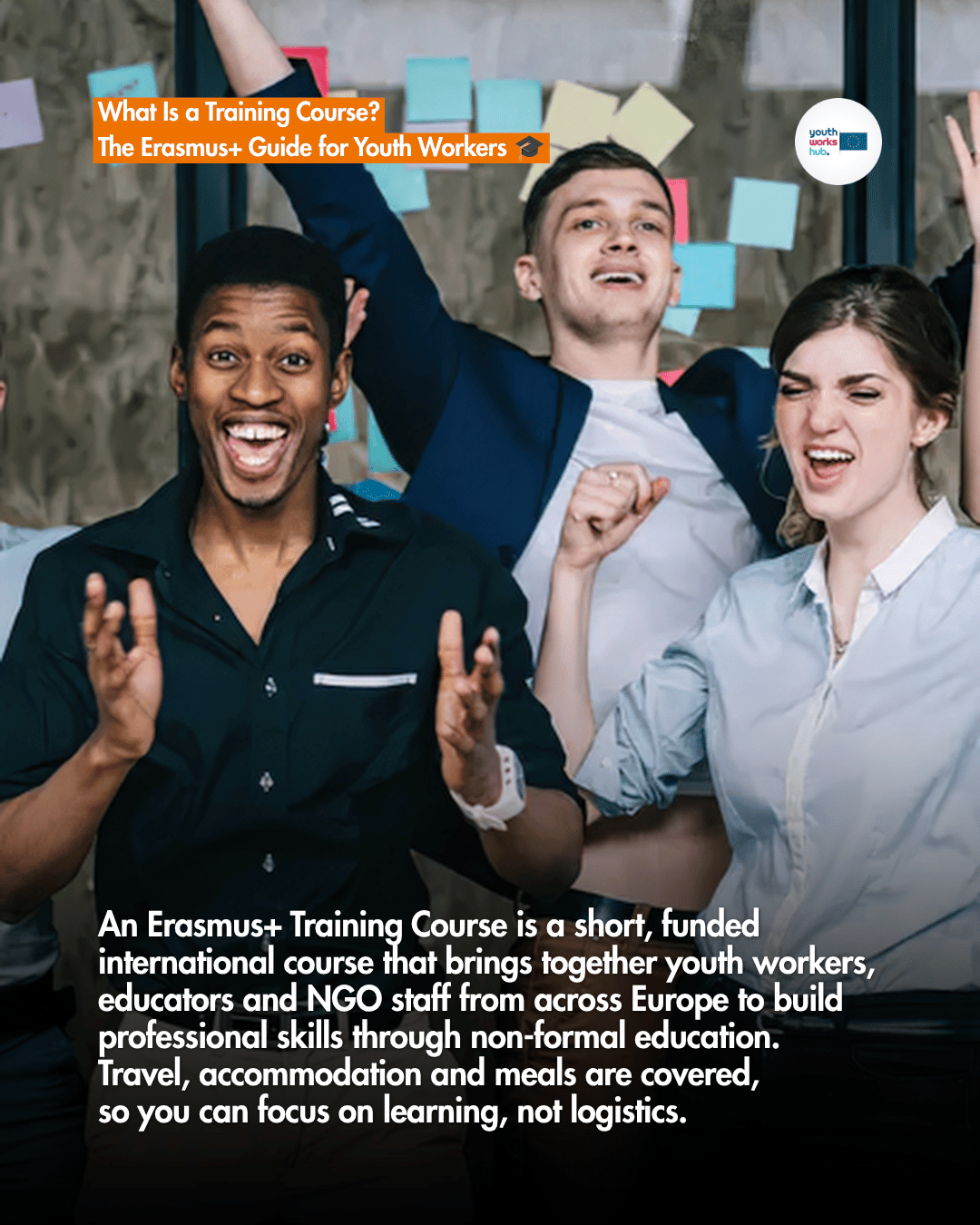
An Erasmus+ Training Course is a short, funded international course (usually 5 to 10 days) that brings together youth workers, educators and NGO staff from across Europe to build professional skills through non-formal education. Travel, accommodation and meals are covered, so you can focus on learning, not logistics.
If you work with young people and want new methods, tools and an international network, this is one of the most useful parts of the Erasmus+ Programme. This guide explains what a Training Course is, who can join, what is covered, and how to apply. 👇
What Is the Point of a Training Course? 🎯
Training Courses exist to raise the quality of youth work and to support the people who inspire young people every day. They help youth workers and educators to:
💬 Learn innovative non-formal education methods
🌱 Strengthen their competences in youth work
🤝 Build European partnerships and cooperation
💡 Explore topics like inclusion, digital skills, sustainability and mental well-being
What Happens in a Training Course? 🧭
Participants meet for 5 to 10 days in one European country and take part in interactive, hands on sessions, rather than sitting through lectures. A typical course mixes:
🧩 Workshops and simulations
💬 Group discussions and brainstorming
🎭 Role plays and creative problem solving
📚 Sharing best practices from different countries
🧠 Reflection and action planning sessions
It is practical, collaborative and designed for real impact you can take back to your own organisation.
Training Course vs Youth Exchange: What's the Difference? 🔎
People often confuse the two. A Training Course is for youth workers and educators (usually 18+) and focuses on professional skills and methods. A Youth Exchange is for young people aged 13 to 30 and focuses on peer learning and cultural exchange. There is also a related format for staff, mobility of youth workers and job shadowing, and longer thematic Erasmus+ seminars.
Who Can Join a Training Course? 🌍
Erasmus+ Training Courses are open to:
👩🏫 Youth workers, trainers, teachers and educators
🏢 NGO staff and project coordinators
🎯 Young leaders active in youth organisations
🌎 Participants from all Erasmus+ Programme countries
There are no academic requirements, just experience or genuine passion for youth work and learning. Most courses have no upper age limit. Not sure if your country is eligible? Check the full list of eligible countries, and see who can apply for the full picture.
What's Covered? Is a Training Course Free? 💰
Training Courses are funded by Erasmus+, so you do not pay to take part. Typically covered:
💶 Travel reimbursement, based on EU distance bands
🏠 Accommodation and meals provided
📚 Materials and learning tools
🛡️ Insurance coverage for the activity
⚠️ One honest note: travel is reimbursed within distance bands, so on very long trips it may not cover 100% of your ticket. Everything on the ground is provided. For the full breakdown, see what Erasmus+ covers.
Why Join a Training Course? 💬
Because great youth workers never stop learning. A Training Course helps you:
🎓 Gain new tools and creative methods for your work
🤝 Build an international network of professionals
💬 Improve your communication and intercultural skills
💡 Learn how to design and manage Erasmus+ projects
🌱 Get inspired to bring innovation to your organisation
Many participants use a Training Course as the springboard to coordinating their own European Solidarity Corps or Erasmus+ projects later on.
How to Apply for a Training Course 🧳
Getting in is straightforward:
1️⃣ Find open Training Courses on youthworkshub.org
2️⃣ Read the info pack carefully so you know the theme and expectations
3️⃣ Fill in your motivation form
4️⃣ Get selected and prepare for your learning adventure abroad 🎒
Two guides that lift your chances: how to write a motivation letter and our 10 application tips. It also helps to have a clean Europass CV ready, and you can review the general how to apply steps.
👉 Find your next Training Course: youthworkshub.org
Frequently Asked Questions ❓
How long does a Training Course last?
Usually 5 to 10 days, set by each project, not counting travel days.
Do I have to be a professional youth worker to join?
No. You need experience or genuine passion for youth work. NGO staff, volunteers and active young leaders are all welcome, with no academic requirements.
Is there an age limit for Training Courses?
Most Training Courses are for participants aged 18 and over, with no upper age limit. The exact rule is set by each project.
Is a Training Course really free?
Erasmus+ covers accommodation, meals, materials and insurance, and reimburses travel within distance bands, so very long trips may not be fully covered.
What is the difference between a Training Course and a Youth Exchange?
A Training Course develops the skills of youth workers and educators. A Youth Exchange is a group experience for young people aged 13 to 30 focused on cultural exchange and peer learning.
In Short 💙
Training Course = Learning + Connection + Europe 🌍
A space where youth workers grow, share and shape the future of young people, together.
👉 Start here: youthworkshub.org