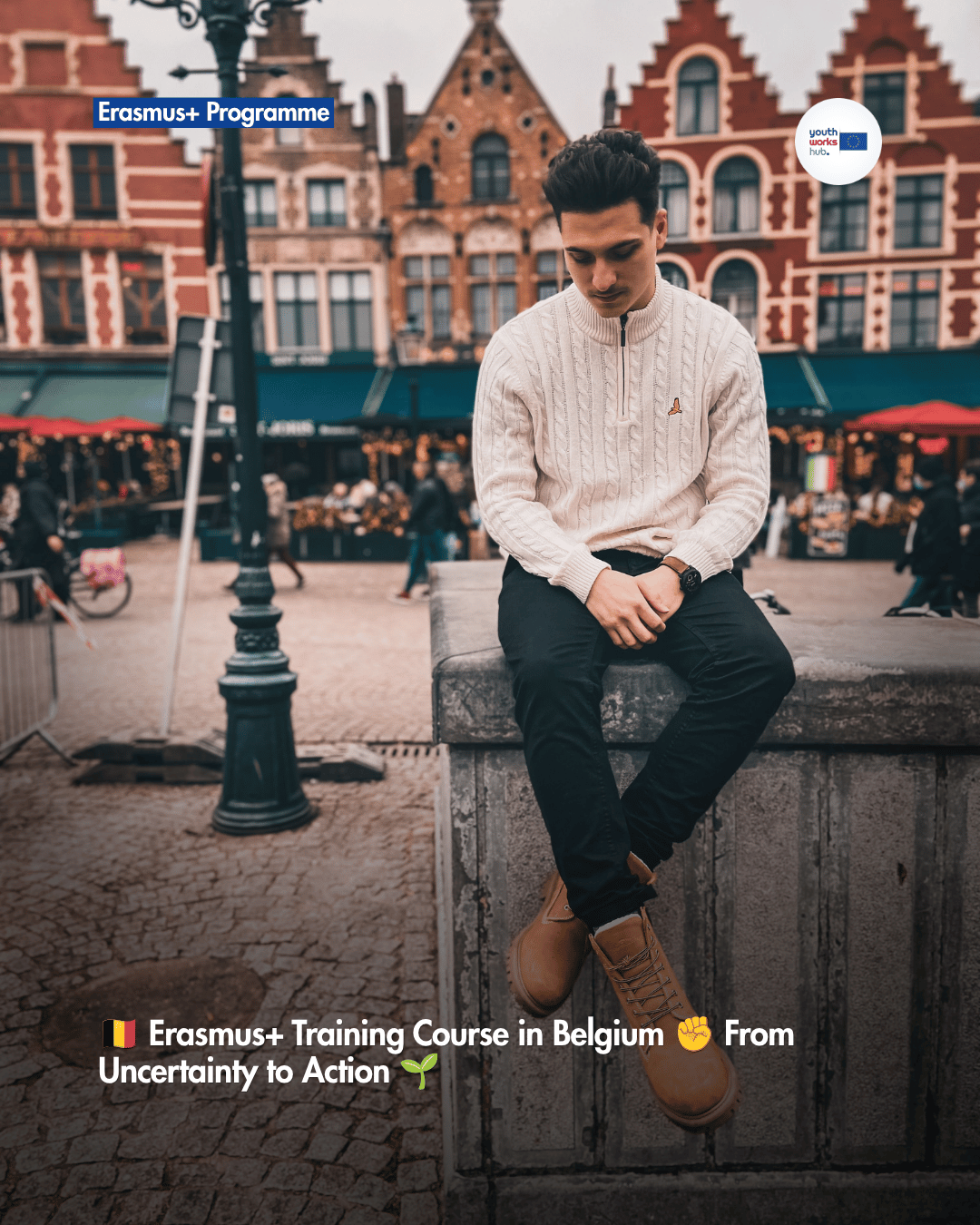
How do we break through the paralysis of crisis fatigue and reclaim our power to act in a world that feels increasingly out of our control? From Uncertainty to Action is an Erasmus+ Training Course for youth workers taking place in Antwerp, Belgium, from 7 to 11 December 2026, in line with the European focus on preparedness but adding a practical, youth-led perspective. At Youth Works Hub we gather fully funded Erasmus+ training for youth workers, and this one is a direct call to move past passive concern and step into active, collective, local initiative.
Why This Topic
We are living through times of ecological, social and political crisis. Geopolitical tensions, deep societal divisions, misinformation and environmental change have created a heavy, exhausting sense of uncertainty. For many young people this does not just cause worry — it leads to a deep feeling that nothing they do matters, pulling them into disengagement, frustration and social withdrawal. But waiting for the uncertainty to pass is not an option. The course starts from the conviction that lasting change requires both inner transformation (shifting our emotional relationship to the crises we face) and systemic transformation (rebuilding collective will and trust in others) — and that education and youth work are the key levers for this dual change. The aim is to transform crisis fatigue into a catalyst for community action.
🎓 New to this format and what it involves? Here's the essential guide: What Is a Training Course? → https://youthworkshub.org/trainingcourse
Main Objectives
✊ Co-create local initiatives: Equip participants with practical tools and participatory working methods to turn challenges into meaningful local initiatives that strengthen self-confidence;
🧠 Face the reality of uncertainty: Explore how current crises shape the mental well-being, disengagement and future confidence of young people today;
🔄 Apply dialectic reasoning to action: Work through a clear process — understanding our current state of being, identifying our ideal state of being, and finding the concrete, practical actions needed to bridge the gap;
🛠️ Action design: Co-create practical community activities to use back home;
🤝 Networking: Build lasting connections with European youth-work partners;
🛡️ Preparedness: Engage in the European discourse on preparedness from a practical and human point of view.
Educational Approach and Programme
The training is grounded in non-formal learning pedagogy. Alongside critical thinking and dialogue, the programme deliberately makes space for sharing, self-reflection and concrete action. The journey moves from mapping today's uncertainties, into introducing dialectic reasoning, and on to skills training for initiative-taking and community mapping — before participants translate their learning into concrete local action plans and build peer-support networks to sustain their efforts back home. The programme also includes theoretical insights into individual and community resilience, a study visit to relevant actors outside youth work, dialectic and self-reflection sessions, and action design. It is facilitated by Oscar Coppieters and Ayham Salloum.
Who Is This For
The course is designed for youth workers, young professionals and experienced volunteers (aged 18+) who support young people struggling with disengagement, frustration or a lack of future confidence, as well as educators, trainers and facilitators who want to deepen their methodological skills and confidence to support participants through times of crisis. It is recommended for youth workers, trainers, youth leaders, volunteering mentors and youth coaches, and is open to participants from Erasmus+ Programme countries. Participants need a good working level of English, since the course involves deep discussions, reflection sessions and collaborative planning. Participating organisations can delegate between 1 and 3 participants, and the course brings together 23 participants in total.
What to bring (your application should focus on): a real community challenge — a specific local issue, a sense of disengagement, or a neighbourhood space where you want to spark youth-led action; a willingness to connect — to discuss difficult topics, challenge your own assumptions and work collaboratively; and examples of what your organisation is currently doing to help young people build agency, handle pressure and take initiative. This is a space for real development, not standard motivation letters.
🤝 Curious how youth workers actually drive this kind of change? This explains the roles: The Role of Youth Workers in Erasmus+ and ESC Projects → https://youthworkshub.org/role-of-youth-workers
What Is Included
The Erasmus+ project budget fully covers:
✈️ Return travel to Antwerp, Belgium (up to the maximum travel limit set by Erasmus+ guidelines), plus all local transport within Belgium for programme activities;
🏨 Accommodation at the Pulcinella Youth Hostel in the city centre of Antwerp — shared same-gender rooms, each with a private bathroom;
🥗 A full plant-based/vegetarian meal plan (three meals a day, with halal options fully respected) plus snacks and drinks;
📚 All training materials, workshops and study visits.
There is a participation fee of €50, requested after selection before advancing into booking. The venue is accessible to people with disabilities.
🇧🇪 Also drawn to Belgium and human-rights work? Take a look at this ESC Volunteering — Arts Education and Human Rights in 🇧🇪 Belgium → https://youthworkshub.org/21706
Venue and Food
The course is hosted at the Pulcinella Youth Hostel, Bogaardplein 1, 2000 Antwerp, a short 15-minute walk from Antwerp Central Station in the historic city centre. Rooms are shared (same gender) with private bathrooms. Three full meals a day (breakfast, lunch, dinner) plus snacks and drinks are provided; the menu is primarily plant-based/vegetarian, and halal preferences are strictly respected when meat is served. Please notify the organisers in advance about allergies (nuts, gluten, lactose) or vegan diets — and you are welcome to bring your own games, cultural snacks and drinks to share.
Travel and Reimbursement
Do not book any travel without prior approval from EdUcAntwerp. After selection, send your proposed travel itinerary to khadija.educantwerp@gmail.com before purchasing, and book the most economical option (included baggage allowance: 10 kg hand luggage + 1 personal item). You can fly to Brussels Airport (Zaventem) and take the ~50-minute direct train to Antwerp Central, or arrive by train to Antwerp Central. Reimbursement rules: boarding passes are mandatory for all flights (without a boarding pass, travel costs cannot be reimbursed); keep all train/bus tickets and digital invoices (screenshots are acceptable); taxis, Ubers, private rides to other places and personal car travel will not be reimbursed.
What to Bring
🛂 Valid passport or national ID; 🩺 European Health Insurance Card (EHIC); 👟 comfortable walking shoes and rain gear (Belgian weather changes quickly); 📓 notebook and pen; 🎁 items/snacks from your country; ♻️ a reusable water bottle.
Frequently Asked Questions
❓ Who can apply? Youth workers, young professionals, experienced volunteers, educators, trainers and facilitators aged 18+ from Erasmus+ Programme countries, with a good working level of English.
❓ What are the dates and venue? 7–11 December 2026 (arrival Monday 7 Dec, departure Friday 11 Dec) at the Pulcinella Youth Hostel, Antwerp.
❓ What does it cost? Travel (Erasmus+ limits), accommodation and meals are covered; there is a €50 participation fee after selection.
❓ How many people per organisation? Each participating organisation can delegate between 1 and 3 participants.
Deadline
⏳ 15 September 2026 (24:00 UTC), with selection results by 5 October 2026. This one closes soon — Youth Works Hub keeps time-sensitive Erasmus+ training like this in one place so you can apply before it closes. Do not book travel until your participation is confirmed and your itinerary approved.
How to Apply
📝 Complete the online application form, focusing on a real community challenge you want to work on (not a standard motivation letter). For questions, contact Oscar Coppieters (EdUcAntwerp).