🔑 Key Information
Activity ⭐️ Title
Growing Youth Work in Eastern Europe and Caucasus
🇪🇺 What is Erasmus+? Erasmus+ is the EU's programme for education, training, youth and sport, with a €26.2 billion budget for 2021–2027. It funds study abroad, internships, youth exchanges, training courses and youth worker mobility. This overview covers who is eligible, every activity type and what's funded. 👉 https://youthworkshub.org/erasmusplus
Activity 🔶 Type | 📆 Dates | 📍Location
Seminar
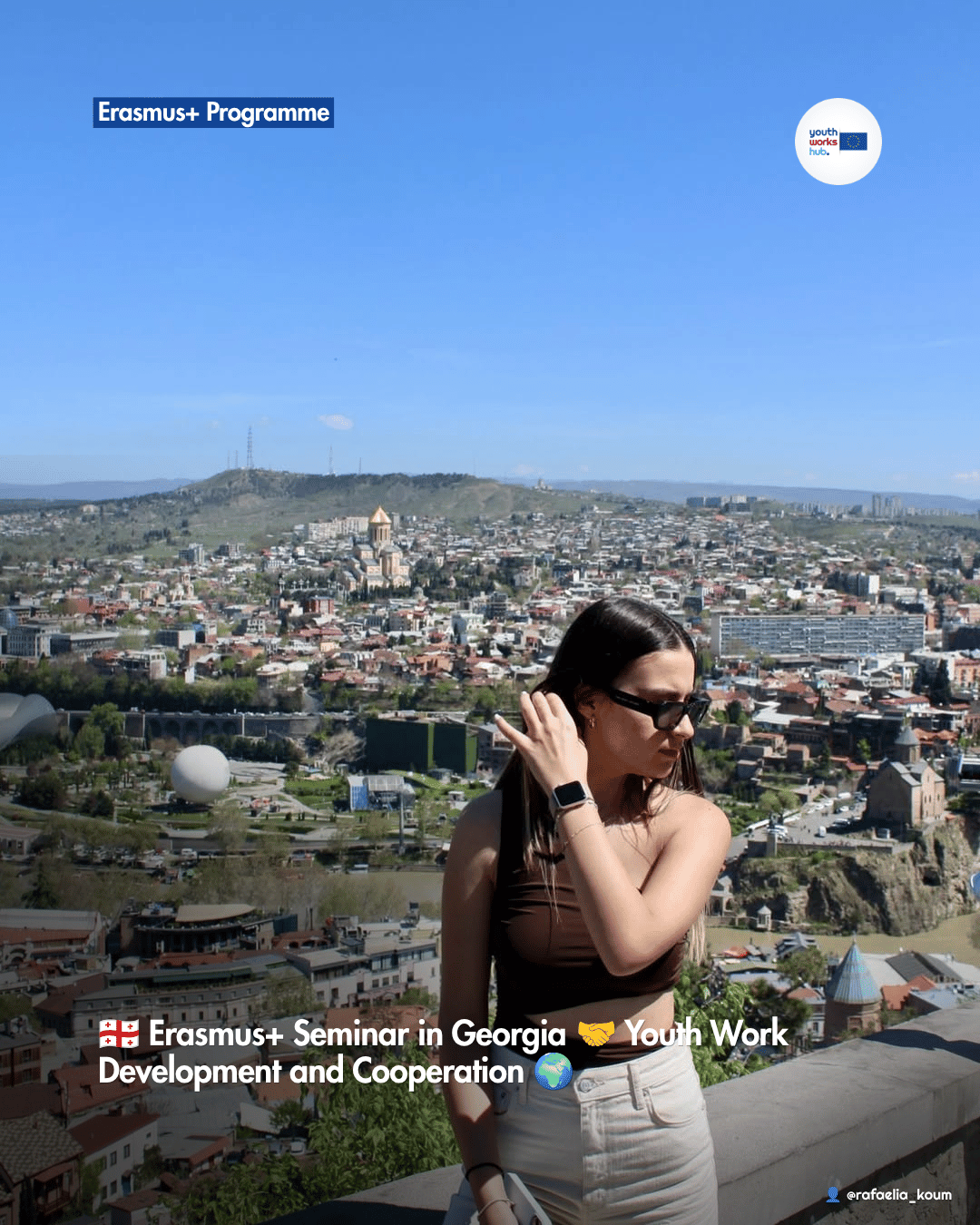
30 November - 4 December 2026 | Tbilisi, Georgia
❗️What Is This Training About?
A seminar exploring youth work in Eastern Europe and the Caucasus, offering space to exchange experiences, learn from one another, and explore how European cooperation can support youth work development across the region.
✅ Who can apply for Erasmus+ and ESC? Eligibility depends on activity: ages 13–30 for most Erasmus+ youth activities and 18–30 for ESC volunteering (up to 35 for humanitarian aid), plus country and residence rules. This guide covers roles, inclusion support, language needs and the profile coordinators look for. 👉 https://youthworkshub.org/whocanapply
ℹ️ Description About The Opportunity
Youth work does not develop in isolation. It grows through cooperation, exchange of experience and shared reflection across different national contexts.
New legislation, professional standards, competence frameworks, local youth centres and innovative forms of youth participation are emerging across the region. Practitioners and policy makers face common challenges: strengthening recognition of youth work, improving quality, creating sustainable support systems, responding to societal change, and ensuring that youth work remains relevant to young people's realities.
At the same time, youth workers in Eastern Europe and Caucasus are responding to challenges such as armed conflicts, democratic resilience, migration, digital transformation, shrinking civic space, mental health, social cohesion and the participation of young people in rapidly changing societies. Their experience of building resilient youth work systems under rapidly changing circumstances offers valuable lessons not only for the region itself but also for youth workers across Europe seeking to strengthen the resilience of young people, communities and youth work structures in the twenty-first century. These developments create a unique opportunity for mutual learning.
Rather than following a traditional capacity-building approach, this seminar is based on the principle that expertise exists in every participating country. It aims to create an equal partnership between participants. Instead of transferring ready-made models, participants will jointly explore how youth work can continue to grow while respecting different political, social and cultural realities.
Aim
To strengthen dialogue and cooperation between youth work practitioners, policy makers and supporting institutions from Erasmus+ Programme Countries, Neighbourhood East and Western Balkans in order to promote mutual learning and support the sustainable development, quality and recognition of youth work across Europe.
Objectives
Participants will:
- explore current trends, opportunities and challenges affecting youth work;
- exchange inspiring practices, policies and approaches supporting the development of quality youth work;
- reflect on the implementation of the European Youth Work Agenda and its relevance in different national contexts;
- discuss how youth work contributes to democratic participation, social cohesion, resilience and inclusion;
- strengthen cooperation between practitioners, policy makers, National Agencies, SALTO Resource Centres and other stakeholders;
- identify opportunities for future partnerships and transnational cooperation within Erasmus+ Youth and the European Solidarity Corps;
- contribute to strengthening regional and European youth work networks.
Methodology
The seminar is based on the principles of non-formal learning, peer learning and active participation. Participants are expected to contribute actively by sharing their experiences, challenges and good practices.
Participants will engage in:
- interactive workshops;
- peer exchange sessions;
- policy and practice dialogues;
- case study discussions;
- networking activities;
- thematic working groups;
- reflection sessions;
The seminar will provide space for both structured learning and informal networking, encouraging participants to establish long-term professional partnerships and strengthen cooperation across Europe.
Target group
The seminar is open to participants from Erasmus+ Programme Countries, Neighbourhood East and Western Balkans.
We invite applications from:
- youth workers;
- youth work managers and coordinators;
- representatives of youth organisations;
- representatives of local, regional and national public authorities responsible for youth policy;
- researchers and experts working on youth work development;
- representatives of national youth work platforms and networks.
Participants should:
- have experience in youth work practice or youth policy development;
- be interested in strengthening youth work systems and quality development;
- be willing to actively contribute to discussions and exchange experiences;
- be committed to sharing the learning outcomes within their organisations or institutions after the seminar.
📘 What is Erasmus+? (in-depth) Erasmus+ has run since 1987 and has had over 13 million participants, funding four main activities for young people. This pillar guide covers its history, funding, research-backed benefits, the full application process and an FAQ. 👉 https://youthworkshub.org/what-is-erasmus-plus
Training overview
This Seminar is
for 40 participants
from Eastern Partnership countries  , Erasmus+ Youth Programme countries , Western Balkan countries
and recommended for
Youth workers, Youth leaders, Youth project managers, Youth policy makers, Youth researchers
Accessibility info:
This activity and venue place are accessible to people with disabilities.
Working language(s):
English
Organiser:
SALTO Eastern Europe and Caucasus (SALTO Resource Centre)
Co-organiser(s):
- Fundacja Rozwoju Systemu Edukacji - Polish NA (National Agency)
💡 How do you prepare a strong Erasmus+ or ESC application? Read the call carefully, write specific motivation, show skills with examples, and state clear learning goals. This guide gives 10 practical tips plus the common mistakes that lead to rejection. 👉 https://youthworkshub.org/erasmus-application-tips
📥 Contact
Contact for questions:
Adrianna Wójcik
E-Mail:
Phone: -
💶 Costs
Participation fee
Participants from Eastern Partnership countries will not pay a participation fee. Participants from the Programme Countries are requested to contact their National Agency in order to clarify this issue. It will depend on each NA's policy.
Accommodation and food
The hosting National Agency or SALTO will organise the accommodation and cover the costs for accommodation and food.
Travel reimbursement
Please contact your National Agency (NA) or SALTO Resource Centre (SALTO) in order to know whether they would support your travel costs. If yes, after being selected, get in touch with your NA or SALTO again to learn more about the overall procedure to arrange the booking of your travel tickets and the reimbursement of your travel expenses.
📜 Certificate
Participants are entitled to receive a Youthpass certificate from the organiser, for recognition of their competence development during the activity. Read more about Youthpass:
https://youthworkshub.org/what-is-youthpass
⚠️ Important Dates
Application deadline (24h UTC): 13 September 2026
Date of selection: 30 September 2026
🎓 What is an Erasmus+ Training Course? A Training Course is a short funded course (5–10 days) for youth workers, educators and NGO staff to build skills through non-formal education. This guide explains who can join, what's covered and how it differs from a Youth Exchange. 👉 https://youthworkshub.org/trainingcourse
🔗 Official Link
⚖️ What's the difference between ESC and Erasmus+? The ESC is for volunteering and solidarity, while Erasmus+ is broad learning mobility (study, training, youth exchanges). This guide compares age, funding, duration and application route, and includes a "choose this if…" decision guide. 👉 https://youthworkshub.org/esc-vs-erasmus
🎂 What are the age limits for Erasmus+ and ESC? Youth Exchanges are 13–30, ESC volunteering is 18–30 (35 for humanitarian aid), and training, youth worker mobility and study/traineeships have no upper age limit. This guide breaks down every activity and how age is counted (at the start date). 👉 https://youthworkshub.org/erasmus-age-limits
💶 What costs does Erasmus+ cover? For youth activities (KA152–154) it covers travel by distance band, individual support, organisational support, preparation, inclusion support up to 100% and exceptional costs. This 2026 guide details each item and what Erasmus+ does not cover. 👉 https://youthworkshub.org/what-erasmus-covers


