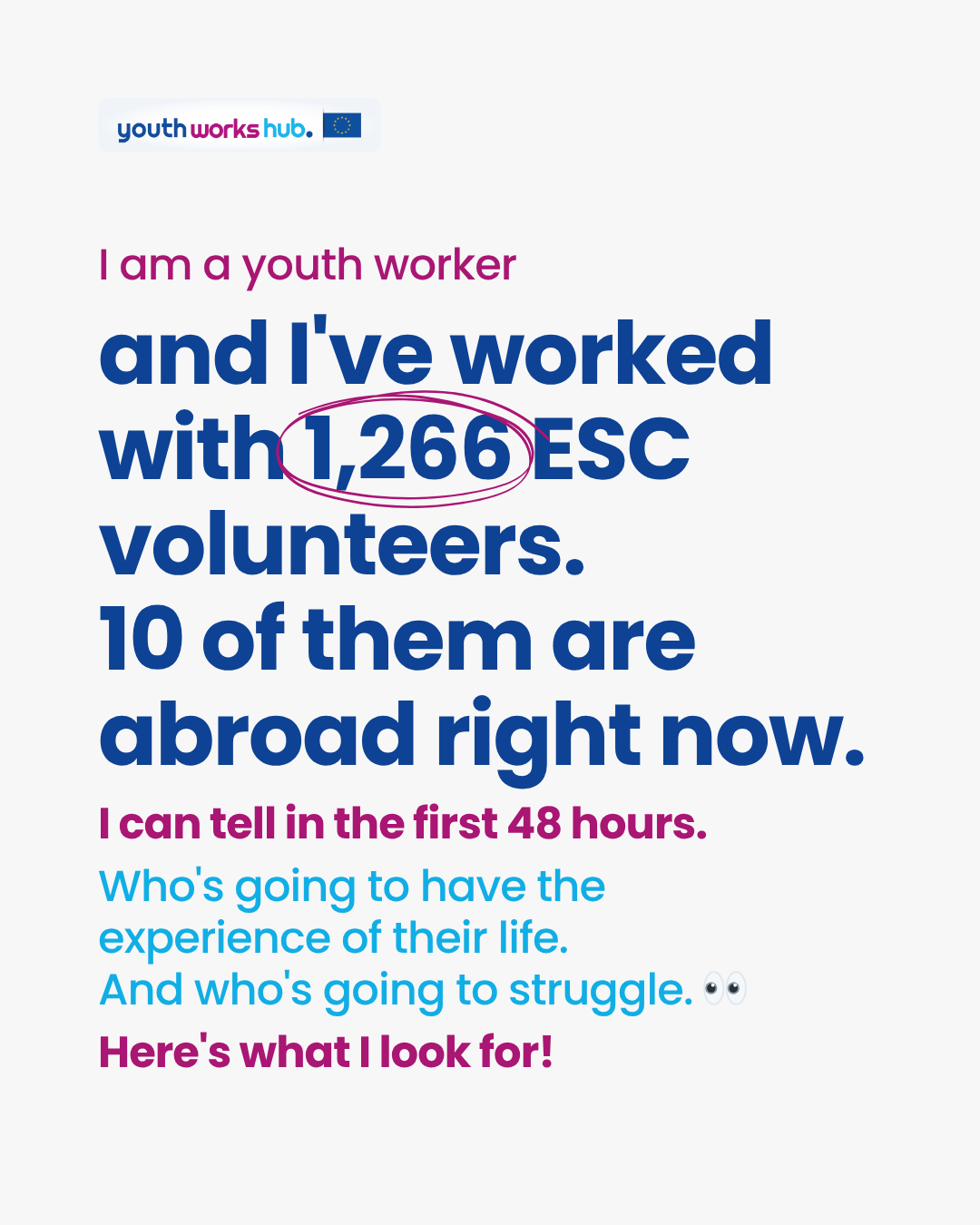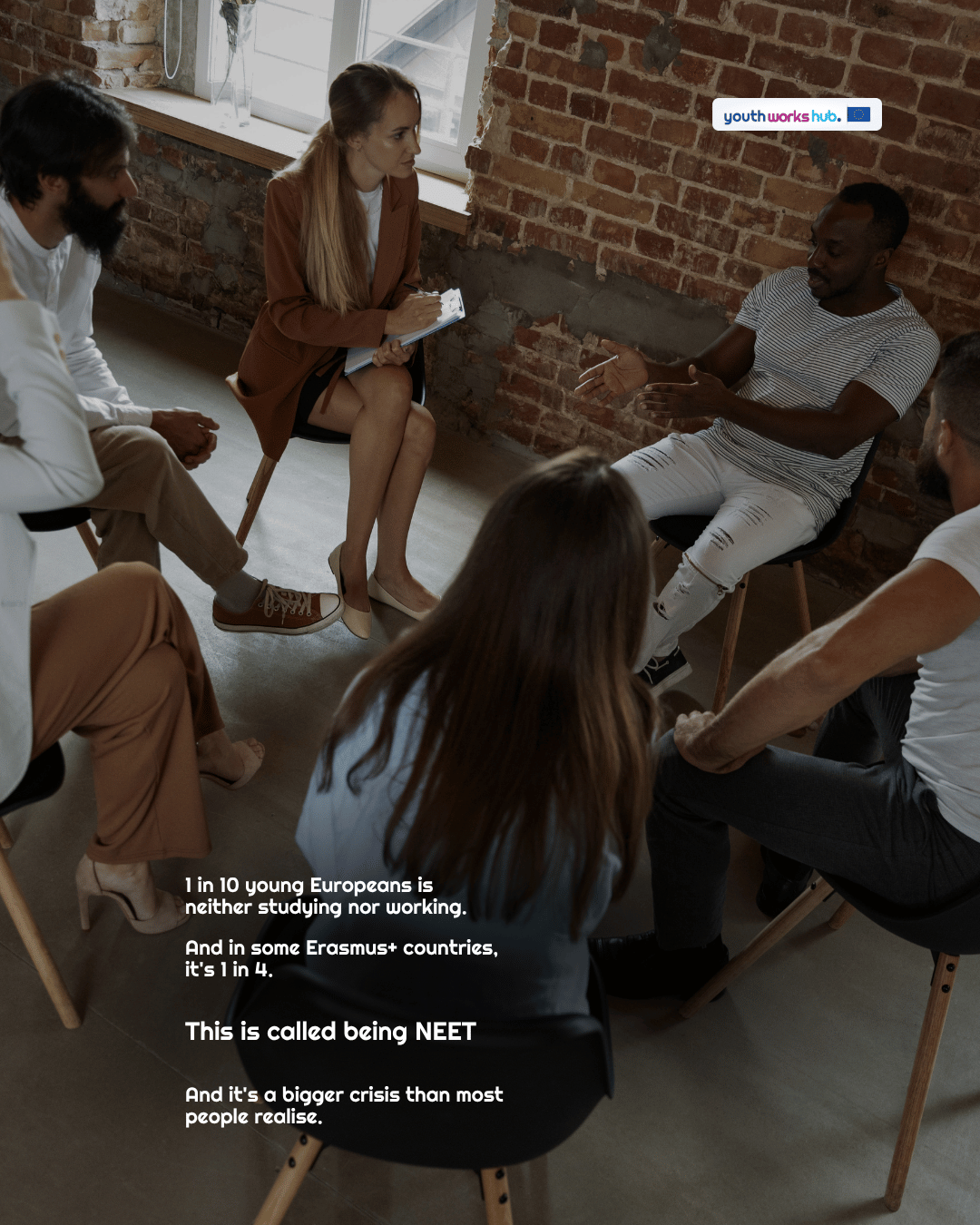
The Role of Youth Workers in Erasmus+ and ESC Projects — Who They Are and What They Actually Do
Behind every successful Erasmus+ Youth Exchange or ESC volunteering project, there are youth workers, facilitators, mentors, and coordinators making it all work. Here is exactly who they are, what each role involves, and how they support participants from start to finish.
When you join an Erasmus+ Youth Exchange or an ESC volunteering project, your experience is shaped almost entirely by the people running it behind the scenes. The venue, the programme, the learning activities, the support when things go wrong, the reflection process at the end — all of it is the work of youth workers, facilitators, mentors, and coordinators.
Most participants never fully see this infrastructure while they are inside it. You show up, and things work. But understanding who is doing what — and why — makes you a better participant and gives you a clearer picture of the profession you might want to enter yourself one day.
Who Are the Youth Workers in an Erasmus+ or ESC Project? — The Three Key Roles
The term youth worker covers a range of specific roles within Erasmus+ and ESC projects. In practice, most projects involve at least three distinct types of support professionals — each with a different focus and a different relationship to participants.
Facilitators / Youth Workers
The learning architects of every Erasmus+ and ESC project
Facilitators are the people who design and run the non-formal learning programme — the workshops, energisers, group activities, debates, simulations, and reflection sessions that make up the core of any Erasmus+ Youth Exchange or Training Course. They are not teachers in the traditional sense. They do not lecture. Their job is to create conditions in which learning happens through experience, discussion, and reflection.
A skilled facilitator can take a group of thirty people from eight countries who have never met, and within two hours create a functioning team that trusts each other enough to engage in genuine learning. That is a specific and demanding skill, developed through training and practice — and it is the foundation of every successful Erasmus+ project.
Facilitators also manage group dynamics in real time: noticing when someone is excluded, when a discussion is becoming unproductive, when the energy in the room needs resetting. They make these adjustments invisibly, so participants experience them not as interventions but as a naturally well-functioning group.
Mentors
The personal support layer for every ESC and Erasmus+ participant
Mentors provide individual, personal support to participants — particularly in longer-term projects like ESC individual volunteering placements, where participants are living and working in a foreign country for weeks or months. The mentor is the person you go to when the project is going well but something is quietly not working for you personally.
A mentor's responsibilities include helping participants adapt to a new cultural environment, managing the practical challenges of daily life abroad, processing emotional experiences — homesickness, culture shock, interpersonal friction — and guiding structured reflection on what the participant is learning through the experience.
In the context of ESC volunteering, the European Commission requires that every long-term volunteer has access to a designated mentor throughout their placement. This is not an optional extra — it is a programme requirement, because the evidence consistently shows that mentored volunteers have better outcomes and more meaningful learning experiences than those without support.
Project Leaders / Coordinators
The operational backbone of every Erasmus+ and ESC project
Project coordinators are the people who make the project exist in the first place. Before any participant arrives, a coordinator has written the application, secured the funding, established partnerships with organisations in multiple countries, arranged accommodation, negotiated the programme schedule, managed the budget, and ensured all legal and safety requirements are met.
During the project, coordinators handle real-time logistics — transport delays, accommodation issues, participant emergencies, budget overruns, communication with national agencies. They are the people who ensure that when something goes wrong (and something always goes wrong), it is resolved before participants notice.
After the project, coordinators are responsible for financial reporting to the national agency, collecting and validating participant evaluations, issuing YouthPass certificates, and documenting the project's outcomes for future applications. They also maintain relationships with partner organisations, because most successful Erasmus+ projects run repeatedly, and those partnerships are the foundation of continuity.
How Youth Workers Support Erasmus+ Participants — Before, During, and After
The work of youth workers in Erasmus+ and ESC projects is structured around three distinct phases of the participant's experience. Each phase has different needs, and different aspects of the youth worker role come to the fore at each stage.
- Explaining project goals, Erasmus+ rules, and programme structure
- Pre-departure training sessions
- Travel logistics and practical information
- Setting expectations and addressing participant anxieties
- Cultural preparation for the host country
- Running workshops, simulations, energisers
- Managing group dynamics and conflict resolution
- Creating safe, inclusive learning spaces
- Regular personal check-ins with participants
- Real-time problem solving and support
- Leading structured reflection on learning outcomes
- Supporting participants in writing their YouthPass
- Encouraging dissemination of the Erasmus+ experience
- Follow-up support during reverse culture shock
- Connecting participants to further opportunities
What Youth Workers Actually Create — The Real Impact on Participants
Consider what happens on the first day of an Erasmus+ Youth Exchange. A participant arrives. They do not know anyone. The environment is unfamiliar. The language is not their first. They are somewhere between excited and terrified.
"Your facilitator smiles, runs a quick ice-breaker, and suddenly you're laughing with twenty people from all over Europe. That's the magic youth workers create every single day."
That ice-breaker was not improvised. It was selected from a toolkit of activities built over years of facilitation experience, chosen specifically for a group at this stage of trust-building, adjusted for the cultural mix present in the room, and timed to last exactly long enough to warm the group without exhausting it. The facilitator who ran it made it look effortless. That is the highest level of professional skill.
By the end of the week, participants have developed teamwork, communication skills, intercultural competence, and genuine personal courage — often without consciously realising it was happening. That is precisely how non-formal learning works. And it is what skilled youth workers make possible.
What Makes a Great Youth Worker in Erasmus+ and ESC? — The Core Competences
The skills required of an effective youth worker in Erasmus+ and ESC projects are specific, trainable, and quite different from the skills required in formal education or conventional management roles. Here are the competences that consistently distinguish outstanding youth workers from adequate ones:
How to Make the Most of Youth Worker Support in Your Erasmus+ or ESC Project
If you are a participant in an Erasmus+ Youth Exchange or ESC project, understanding the role of the youth workers around you changes how you engage with them — and significantly improves your own experience.
4 ways to get more from youth worker support
Can I Become a Youth Worker Through Erasmus+? — Training and Career Pathways
Erasmus+ Training Courses are specifically designed for people who want to develop skills in youth work, non-formal education, and international project facilitation. These courses — funded through the same Erasmus+ programme that funds youth exchanges — provide professional development for youth workers, educators, NGO staff, and project coordinators.
A typical Erasmus+ Training Course for youth workers might cover facilitation methodology, intercultural learning theory, non-formal education design, conflict management, YouthPass facilitation, and project management. Participants receive a YouthPass certificate documenting their professional development, which can be used in career applications and professional portfolios.
If becoming a youth worker interests you, the best starting point is to participate in an Erasmus+ Youth Exchange as a participant first — then express that interest to your group leader or the hosting organisation. Most youth workers began exactly this way.
Why Youth Work Matters — The Bigger Picture
Behind every successful Erasmus+ or ESC mobility experience, there is a youth worker building bridges — between people, between cultures, between the person someone is when they arrive and the person they become by the time they leave.
Youth workers do not just teach. They empower. They do not just organise. They create conditions in which transformation becomes possible. And in doing so, they are one of the most important — and least visible — parts of one of the European Union's most impactful programmes.
Frequently Asked Questions About Youth Workers in Erasmus+ and ESC
Ready to find your Erasmus+ or ESC project?
Youth Works Hub lists open Erasmus+ Youth Exchange and ESC volunteering opportunities across Europe — updated regularly, free to browse.
Browse Open Opportunities → Interested in becoming a youth worker? Look for Erasmus+ Training Courses