If you’ve ever joined an Erasmus+ Youth Exchange, a Training Course, or an ESC Volunteering project, you’ve definitely heard terms like non-formal learning, learning by doing, or youth work methods.
But what do these actually look like in real life?
Why are these methods so popular in international projects?
And what can you actually learn from them?
Let’s break it down — clearly, simply, and with real examples you’ll recognise from European youth programmes. 🌍💙
🧠 1️⃣ What Is Non-Formal Education (NFE)?
Non-Formal Education (NFE) refers to structured learning outside the traditional school system.
There are no tests, no desks, no grades — yet the learning is powerful, intentional, and transformative. 🌱
What makes NFE unique?
✨ Voluntary — You choose to be part of it.
🎯 Goal-oriented — Each session is designed with a clear purpose.
🤝 Interactive — You learn by doing, participating, collaborating.
💡 Flexible — Activities adapt to participants’ needs, ideas, and energy.
In simple terms:
NFE helps you learn life skills, not just academic knowledge.
🎯 2️⃣ Why It Matters in Erasmus+ and ESC
Erasmus+ and ESC programmes rely heavily on non-formal methods because they create active, meaningful learning experiences, especially in multicultural groups.
Here’s what this means for you:
💬 No long lectures — Instead you play, explore, discuss, and reflect.
🌍 International teamwork — You collaborate with people from very different backgrounds.
💪 Personal growth — You develop confidence, leadership, empathy, creativity, and communication skills.
It’s not about being taught information —
It’s about discovering insights through experience.
That’s the power of non-formal learning.
🧩 3️⃣ Real Activity Examples You’ll Experience
NFE isn’t abstract. It’s practical, fun, and memorable.
Here are some real examples used in Erasmus+ and ESC projects:
🎮 Energisers & Ice-Breakers
These short, playful activities kick off sessions with energy and connection.
Popular examples:
• Fruit Salad 🍎
• Human Bingo 🧍♀️🧍♂️
• Rock–Paper–Scissors Championship ✊✋✌️
Goal: Break the ice, reduce stress, help participants learn names, and create a friendly atmosphere.
🧱 Simulation Games
Participants “step into the roles” of others to understand real-world issues.
Examples include:
• Simulated elections
• Experiencing a simplified refugee journey
• Practising job interviews
Goal: Build empathy, practise decision-making, and encourage active citizenship.
Outcome: You feel the topic, rather than just hearing about it.
🧑🎨 Creative Workshops
Art, theatre, movement, and music become tools for exploring deeper themes.
Examples:
• Theatre of the Oppressed 🎭
• Poster for Change 🎨
• Identity or inclusion storytelling activities
Goal: Promote expression, teamwork, creativity, and social awareness.
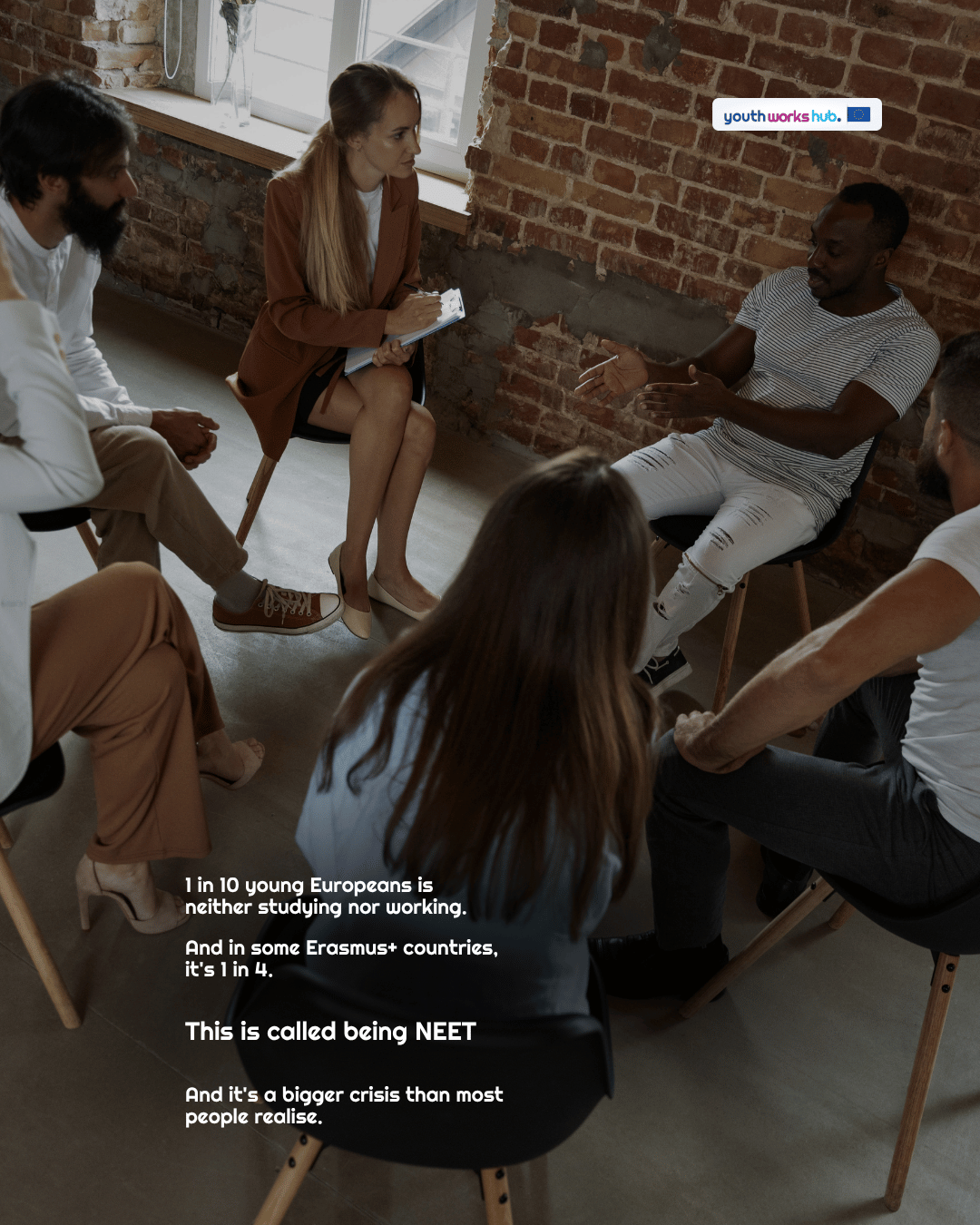
💬 Reflection Circles
At the end of each day, participants sit together to share what they felt, learned, or discovered.
Goal: Connect emotions with learning, improve self-awareness, and reinforce personal growth.
Many participants say reflection circles are where the real transformation happens.
🌍 Outdoor or Team Challenges
Learning also happens outside the workshop room.
Examples:
• City Hunt
• Treasure Map Europe
• Survival Missions
Goal: Develop leadership, teamwork, adaptability, and problem-solving — all while exploring the local environment.
📘 4️⃣ How a Non-Formal Session Actually Works
Most NFE sessions follow a simple structure:
1️⃣ Introduction → What we’re doing and why
2️⃣ Action → The game, task, or workshop
3️⃣ Reflection → What happened, how we felt
4️⃣ Conclusion → What we learned and how we can use it
This cycle is known as learning by doing — the core of NFE. 💪
🤝 5️⃣ How to Make the Most Out of It
To benefit fully from non-formal learning:
💡 Be open-minded — Even if an activity looks silly at first.
🎤 Participate actively — The more you give, the more you learn.
🧭 Reflect intentionally — Take time to understand your thoughts and emotions.
📓 Take notes — You might use these methods in your own youth work later.
NFE rewards engagement — not perfection.
🌟 6️⃣ The Real Magic of NFE
Non-Formal Education is not “fun instead of learning.”
It is fun AS learning.
It connects people, builds friendships, strengthens communities, and inspires social action.
This is why Erasmus+ and ESC trust NFE so deeply —
because the lessons gained through experience stay with you for life. 💙