Erasmus+ is the EU Programme in the fields of education, training, youth and sport for the 2021-2027 period. For projects relevant for the youth field, the main targets are young people from 13 to 30, youth workers, staff and members of organisations active in the youth field. Different age limits apply depending on the different types of activities. The Erasmus+ Project Results Platform provides access to information and results concerning all projects funded under the Erasmus+ Programme. On the Erasmus+ Project Results Platform, the content of each project page is provided as submitted by the coordinating organisation. Our guide on what Erasmus+ is covers the whole programme, and how Erasmus+ works explains where it comes from.
Last updated: November 2026.
What is a Youth Exchange, and what happens in one?
Youth Exchanges are meetings of groups of young people from at least two different countries who gather for a short period to implement jointly a non-formal learning programme on a topic of their interest. Eligible participants in Youth Exchanges are young people aged between 13 and 30 residing in the countries of their sending and receiving organisations. In Youth Exchanges and youth worker activities, food and accommodation are fully covered for participants; this is mandatory, not an exception.
🌲 Nature Vibes: Connect, Grow, Belong!: in this Youth Exchange project from Slovakia, Armenia, Georgia and Slovenia, the aim was to reconnect young people with nature and use this connection as a practical pathway to stronger well-being, resilience, inclusion and community participation. The first stage was the youth exchange in Armenia, implemented from 13 to 22 April 2026.
🏕️ Wilderness Survivors: the project from Norway, Greece, Italy and Spain is described on the Platform in these words: "This project was created through the motivation to reconnect young people with nature, learn practical survival skills, and understand how to stay safe and confident outdoors. We carried out a full week of outdoor and survival-based activities in the mountains of Lake Plastira, using non-formal learning methods and learning-by-doing."
Our guide on what a Youth Exchange is explains who can join, what is covered and how to apply.
What are Youth participation activities, and what do they look like?
Youth participation activities are activities outside formal education and training that encourage young people's participation in Europe's democratic life at local, regional, national and European level. Eligible participants are young people aged between 13 and 30 residing in the country of the participating organisations and decision-makers relevant to the topics addressed by the project. Youth participation activities can be national, at local, regional or national level, or transnational, with informal groups of young people and/or organisations from several participating countries.
📊 TineRețea: the project from Romania is described on the Platform in these words: "Young people in Constanța County, especially those in rural communes and small towns, want to get involved but do not know where to start and do not feel heard. Before the project, a survey of 150 young people showed that 74% saw no opportunities for involvement and over 70% did not feel heard by the authorities."
🎤 VoxPop (Equal Opportunities in Debate): the project from Hungary is described on the Platform in these words: "The primary objective of the project was to enhance the debate culture of young people aged between 13 and 30, with a specific focus on reaching groups that are heterogeneous in terms of their place of residence and educational or professional backgrounds."
Our guide on what Youth participation activities are sets out the rules, and Erasmus+ Youth Participation as a voice of change shows more projects.
What is a training course for youth workers, and what does one look like?
A training course is one of the forms that Professional Development Activities can take, and Professional Development Activities are learning activities abroad that support the professional development of youth workers. In a training course in a Mobility project for Youth Workers, participants must be at least 16 years old and must be resident in the country of their sending or receiving organisation. Professional development activities can also take the form of study visits and different types of assignments, such as job shadowing, youth worker exchanges and peer learning.
🧑🏫 Youth Workers Rescue!: the project was an 8-day residential Training Course in Pinhel, Portugal, bringing together 27 youth workers from seven countries (Portugal, Armenia, Bulgaria, Moldova, Poland, Ukraine and Germany). The course was designed to enhance youth workers' competencies in humanitarian response, youth participation and project development under the Erasmus+ framework.
🌱 EcoLogical: the project wanted to strengthen the competences of youth workers in the field of sustainability, environmental education and green youth work. The main activity was a training course for youth workers that took place in Malta from 21 to 29 March 2026.
Our guide on what a training course is explains the format, and what a seminar is, what a study visit is and mobility of youth workers and job shadowing cover the other formats.
What is DiscoverEU, and what does a DiscoverEU Inclusion Action project look like?
DiscoverEU offers 18-year-olds the opportunity to have a short-term individual or group travel experience throughout Europe. You will be offered a travel pass to move with the most environment friendly means of transport, like trains. The DiscoverEU Inclusion Action targets young people with fewer opportunities, aged between 18 and 21, to facilitate their participation in DiscoverEU on equal footing with their peers. The DiscoverEU Inclusion Action allows organisations and informal groups of young people to receive extra support to carry out projects for young people with fewer opportunities to explore Europe on equal footing with the DiscoverEU participants.
🚆 Discover & Connect: Ciao Bella Express: through this DiscoverEU Inclusion project in the Netherlands, the youth work department of Movactor organised a girls' trip and carried out a complete DiscoverEU Inclusion project with three participants, from application and preparation to implementation and follow-up.
🛤️ BRIDGE: Building Routes, Inspiring Democratic Group Experiences: through this DiscoverEU Inclusion project in Norway, the aim was to give young people who face fewer opportunities the chance to experience Europe in a safe, supported and meaningful way. The project was implemented as a learning journey by train across several European countries.
Our guide on what DiscoverEU is explains who can apply, and inclusion support in Erasmus+ and ESC covers the extra support for young people with fewer opportunities.
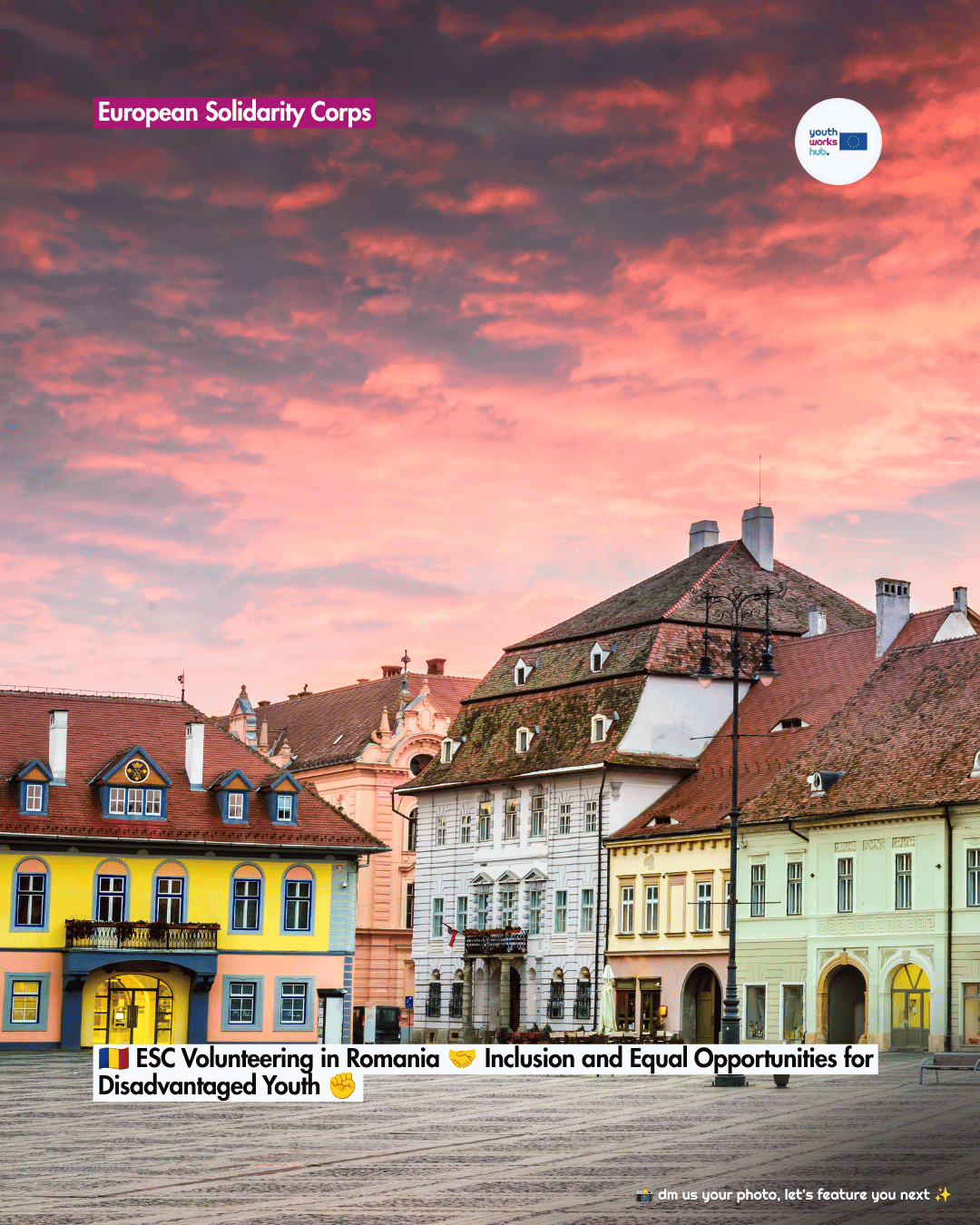
What is European Solidarity Corps volunteering, and what does it look like?
The European Solidarity Corps is the European Union programme that brings young people together to build a more inclusive society, support vulnerable people and respond to societal and humanitarian challenges. Volunteering is a full-time unpaid activity that has a duration of up to 12 months. Participation in volunteering activities must be free of charge for the volunteer.
☕ European Solidarity Corps volunteering project of Oxfam Wereldwinkel Gent-centrum: the project in Belgium aimed to involve young people in Oxfam's Fair Trade work in Ghent, focusing on local and international collaboration. One of the activities was Komaf Koffie, where refugees and newcomers in Ghent were trained as baristas.
🧩 European Solidarity Corps volunteering project of Spolocnost na pomoc osobam s autizmom: the project in Slovakia focused on raising awareness about autism in society, promoting understanding of the lives of people with autism spectrum disorder and strengthening their inclusion. The activities were mainly focused on the operation of a community center in Bratislava for people with autism.
Our guide on what the European Solidarity Corps is explains the programme, and ESC vs Erasmus+ compares the two programmes side by side.
How do you find an Erasmus+ or ESC project?
For Youth Exchanges, Volunteering Teams, training courses, seminars and study visits, young people apply to the call itself; the call may ask you to apply directly, or it may name a sending organisation in your country through which you have to apply, so you must read the details of each call. There is no single registration point for Erasmus+ youth projects: calls are published separately (also on Youth Works Hub), and you apply through each call as it explains. Youth Works Hub has a Match page that finds projects suited to you: it asks 8 questions and shows the results as a swipeable deck of cards, and saved projects stay on your profile page. SALTO training courses, seminars and study visits are pulled into Youth Works Hub automatically several times a day and appear in the Erasmus+ projects category. Our guide on how to find Erasmus+ and ESC projects shows where the offers are published, and how to apply for Erasmus+ or ESC takes the steps one by one.
Frequently asked questions
Can you still join the projects in this guide?
No: the projects in this guide have the Project Status Completed. Youth Works Hub has a Match page that finds projects suited to you; using Match requires creating an account on the site, and signing up with Google is available but not required. Our guide on how to find Erasmus+ and ESC projects shows where open calls are published.
Do you pay to take part?
No: no fee is ever asked for applying, in ESC or Erasmus+ youth projects; nobody should pay anything at the application stage. In Erasmus+ Youth Exchanges, training courses, seminars and study visits, about one in ten calls asks participants for a participation fee; Youth Works Hub does not support this practice. The participation fee is not a payment made in advance: it is usually deducted from the travel reimbursement. A participation fee like this is usually a contribution the organisation asks for its own institutional capacity, not a cost of the programme. If an organisation asks you to pay at the application stage, report it to the National Agency or the European Commission and let us know, so we can report it too. Our guide on what Erasmus+ covers explains the costs in detail.
Do you need to belong to an organisation to take part?
No: there is no requirement to be a member of the sending (support) organisation or to have taken part in its activities before. Being active in a youth organisation is important but not required; young people who understand how these projects work and cooperate with local organisations have a clear advantage. Our guide on who can apply to Erasmus+ and ESC goes through the conditions.
Which activity fits you?
Pick the activity that matches your age and what you want to do, then read its own guide before you apply.
Related pages: what Erasmus+ is · group meetings of young people from different countries · what a training course is · projects for young people in democratic life · what the European Solidarity Corps is
👉 Erasmus+ projects: youthworkshub.org/?tab=erasmus-projects
👉 ESC projects: youthworkshub.org/?tab=esc-projects