🔑 Key Information
Activity ⭐️ Title
Youth Workers as Mental Health Supporters
🇪🇺 What is Erasmus+? Erasmus+ is the EU's programme for education, training, youth and sport, with a €26.2 billion budget for 2021–2027. It funds study abroad, internships, youth exchanges, training courses and youth worker mobility. This overview covers who is eligible, every activity type and what's funded. 👉 https://youthworkshub.org/erasmusplus
Activity 🔶 Type | 📆 Dates | 📍Location
Training Course
1-10 October 2026 | Sakarya, Türkiye
❗️What Is This Training About?
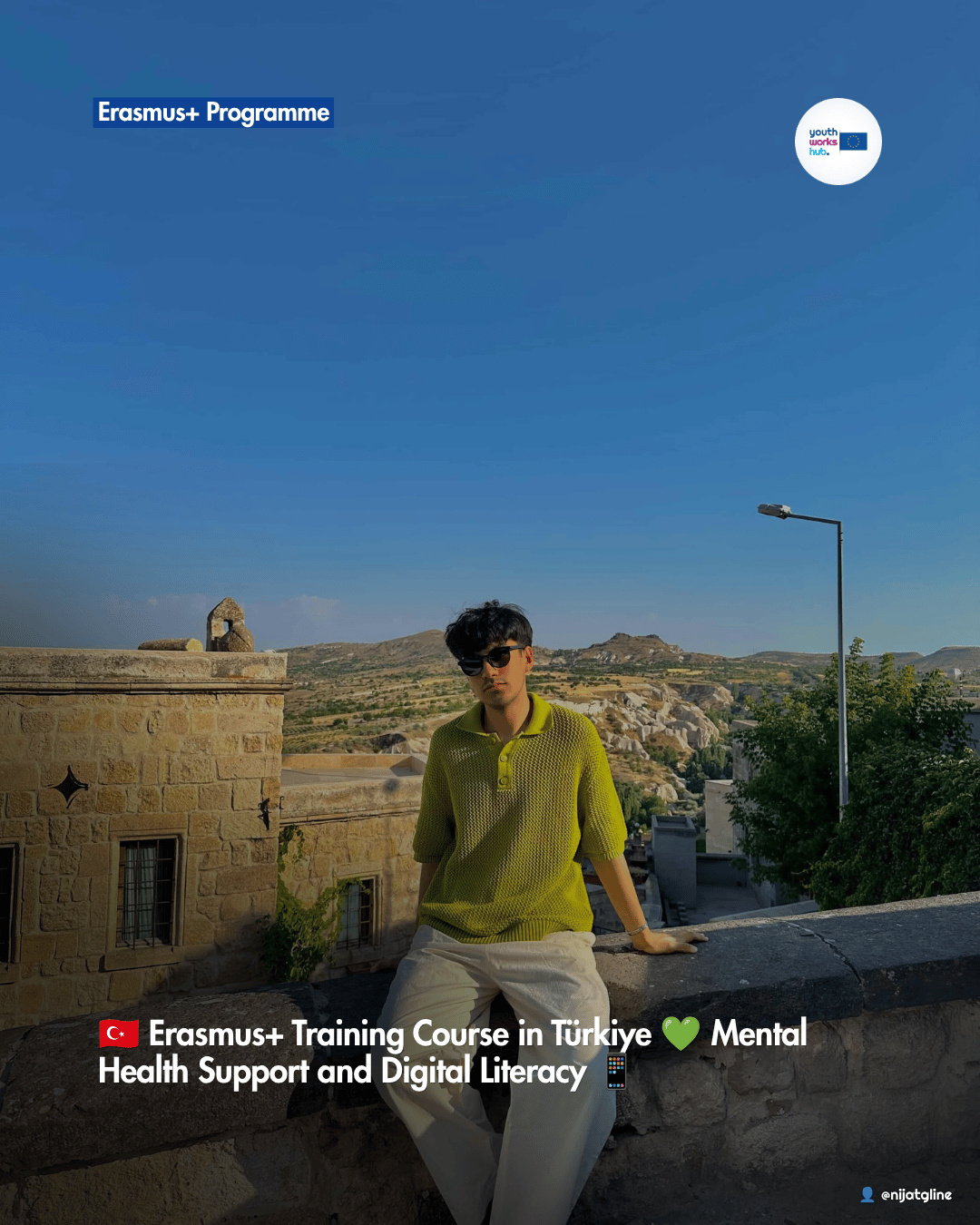
“Youth Workers as Mental Health Supporters” empowers 28 youth workers through mental health, empathy, communication and digital literacy training, helping them combat misinformation and support young people’s well-being in their communities.
✅ Who can apply for Erasmus+ and ESC? Eligibility depends on activity: ages 13–30 for most Erasmus+ youth activities and 18–30 for ESC volunteering (up to 35 for humanitarian aid), plus country and residence rules. This guide covers roles, inclusion support, language needs and the profile coordinators look for. 👉 https://youthworkshub.org/whocanapply
ℹ️ Description About The Opportunity
“Youth Workers as Mental Health Supporters” is an Erasmus+ KA153 Mobility of Youth Workers project designed to respond to the growing need to protect and promote young people’s mental well-being. The main objective of the project is to strengthen youth workers’ knowledge, practical skills and competences in the areas of mental health literacy, psychological well-being, empathy, effective communication, cultural understanding and digital literacy.
The main mobility activity, entitled “Mental Health Matters,” will take place in Türkiye from 1 to 10 October 2026. A total of 28 youth workers from different countries will participate in this professional development activity. Participants will have diverse professional backgrounds, including social work, psychology, family services, education, youth work, communication and non-formal education. The project also places a strong emphasis on the meaningful representation and active participation of people with fewer opportunities throughout the entire learning process.
The training programme combines theoretical knowledge with practical activities and experiential learning. Through empathy mapping, role-playing, group work, problem-solving activities, scenario-based exercises and project-based learning, participants will explore empathy, mental health first aid, interpersonal communication and general approaches to promoting psychological well-being. Intercultural learning will be an important component of the project. The programme will address culturally shaped stigma surrounding mental health, inclusive communication, language barriers and potential misunderstandings that may arise in intercultural contexts.
A distinctive component of the project is its focus on digital misinformation related to mental health. Young people are increasingly exposed to misleading, inaccurate or potentially harmful online content concerning psychological well-being and mental health. Therefore, participants will develop practical skills to critically evaluate digital content, identify misinformation and stereotypes, compare information sources, verify claims and promote reliable mental health information. The programme will also examine how social media can influence communication, self-expression, identity and psychological well-being.
The project is designed to create a sustainable multiplier effect beyond the mobility activity itself. Participants will be encouraged to transfer the knowledge, skills and tools gained during the activity to their organisations, colleagues and local communities. The project aims to achieve measurable outcomes, including the successful dissemination of the training results by at least 28 youth workers, increased mental health literacy, stronger active participation of young people with fewer opportunities, the production of at least 10 digital outputs, and increased awareness and resilience in addressing mental health misinformation.
In the long term, the project aims to contribute to improving young people’s well-being and strengthening youth work practices across Europe. The project results will be disseminated through local, national and European networks and will contribute to the broader objectives of the Erasmus+ programme. By bringing together mental health education, digital literacy, inclusion and intercultural learning, the project aims to empower youth workers to become more confident, informed and supportive figures for young people and to contribute to healthier, more resilient and inclusive communities.
📘 What is Erasmus+? (in-depth) Erasmus+ has run since 1987 and has had over 13 million participants, funding four main activities for young people. This pillar guide covers its history, funding, research-backed benefits, the full application process and an FAQ. 👉 https://youthworkshub.org/what-is-erasmus-plus
Training overview
This Training Course is
for 28 participants
from Erasmus+ Youth Programme countries 
and recommended for
Youth workers, Youth leaders
Working language(s):
English
Organiser:
Sakarya Aİle ve Sosyal Hizmetler İl Müdürlüğü (National Agency)
The Ministry of Family and Social Services is one of the main public institutions responsible for strengthening individuals, families and communities from social, economic and psychological perspectives. Its areas of responsibility cover a wide range of services, including strengthening families, protecting and supporting children, increasing young people’s participation in social life, empowering women, older people and persons with disabilities, supporting the relatives of martyrs and veterans, and promoting the social inclusion of disadvantaged individuals.
Within this broad framework, youth work represents an important component of the Ministry’s social service approach. Young people are not considered merely as beneficiaries of services, but as active individuals who should be empowered to participate in decisions affecting their lives and communities.
Our youth work activities focus on areas such as psychosocial support, social and cultural participation, volunteering, communication and life skills, prevention of addiction, digital awareness, mental health and well-being, social inclusion and support for young people with fewer opportunities. Particular importance is given to preventive and protective approaches that help young people recognise social and psychological risks at an early stage and access appropriate support mechanisms when needed.
We also encourage national and international projects, youth exchanges, training programmes, workshops and non-formal learning activities that bring young people from different cultural and social backgrounds together. These activities provide opportunities for young people to develop their self-confidence, social skills, intercultural communication competences and sense of social responsibility.
Our approach to youth work is based on identifying and strengthening young people’s existing capacities, developing their social support networks and helping them become more resilient, informed, active and socially responsible members of society. To achieve this, we cooperate with public institutions, local authorities, universities, non-governmental organisations and international partners in order to improve the quality, accessibility and impact of youth-oriented social services.
Through these efforts, we aim to create an environment in which every young person can develop their potential, participate actively in society and access the social and psychological support they need. This approach is particularly important in addressing contemporary challenges such as social exclusion, loneliness, mental health concerns, digital risks and the need for stronger community connections.
💡 How do you prepare a strong Erasmus+ or ESC application? Read the call carefully, write specific motivation, show skills with examples, and state clear learning goals. This guide gives 10 practical tips plus the common mistakes that lead to rejection. 👉 https://youthworkshub.org/erasmus-application-tips
📥 Contact
Contact for questions:
Osman
Phone: +905367940394
E-Mail:
Phone: +905319411995
💶 Costs
Costs
Participation fee
Participants will not be charged any fee for taking part in the project. Participation in all project activities is completely free of charge. Eligible travel, accommodation, meals and activity-related expenses will be covered in accordance with the project budget provided under the Erasmus+ programme. No additional participation or registration fees will be requested from participants.
Accommodation and food
Accommodation and meal expenses for project participants will be covered within the project budget. Participants will not be charged any fees for accommodation or meals.
Accommodation will be provided throughout the project period, and breakfast, lunch and dinner will also be covered by the project, including meals provided during the activities. No additional payment will be requested from participants for these services.
Travel reimbursement
Participants’ travel expenses for travelling to and returning from Türkiye, including flight tickets, train tickets, bus tickets and other eligible transportation costs, will be covered through the Erasmus+ project budget.
Participants will initially purchase and pay for their own flight tickets, train tickets, bus tickets and other eligible travel expenses. After the travel, they will submit the required travel documents to the project coordinator, such as tickets, invoices, payment receipts and other relevant proof of travel. Based on these documents, eligible Erasmus+ travel support will be reimbursed to the participants.
The amount to be reimbursed will be determined according to the distance band between the participant’s place of departure and the location of the project activity, as well as the type of transportation used. Therefore, participants must coordinate their travel plans with the project coordinator and obtain approval before purchasing their tickets.
Reimbursement will be provided in accordance with the travel support amounts and payment rules established under the Erasmus+ grant rules. If the actual travel expenses exceed the applicable Erasmus+ travel support amount, the difference cannot be covered by the project.
📜 Certificate
Participants are entitled to receive a Youthpass certificate from the organiser, for recognition of their competence development during the activity. Read more about Youthpass:
https://youthworkshub.org/what-is-youthpass
⚠️ Important Dates
Application deadline (24h UTC): 18 September 2026
Date of selection: 19 September 2026
🎓 What is an Erasmus+ Training Course? A Training Course is a short funded course (5–10 days) for youth workers, educators and NGO staff to build skills through non-formal education. This guide explains who can join, what's covered and how it differs from a Youth Exchange. 👉 https://youthworkshub.org/trainingcourse
🔗 Official Link
⚖️ What's the difference between ESC and Erasmus+? The ESC is for volunteering and solidarity, while Erasmus+ is broad learning mobility (study, training, youth exchanges). This guide compares age, funding, duration and application route, and includes a "choose this if…" decision guide. 👉 https://youthworkshub.org/esc-vs-erasmus
🎂 What are the age limits for Erasmus+ and ESC? Youth Exchanges are 13–30, ESC volunteering is 18–30 (35 for humanitarian aid), and training, youth worker mobility and study/traineeships have no upper age limit. This guide breaks down every activity and how age is counted (at the start date). 👉 https://youthworkshub.org/erasmus-age-limits
💶 What costs does Erasmus+ cover? For youth activities (KA152–154) it covers travel by distance band, individual support, organisational support, preparation, inclusion support up to 100% and exceptional costs. This 2026 guide details each item and what Erasmus+ does not cover. 👉 https://youthworkshub.org/what-erasmus-covers


