🔑 Key Information
Activity ⭐️ Title
Storytelling as a Tool for Change
🇪🇺 What is Erasmus+? Erasmus+ is the EU's programme for education, training, youth and sport, with a €26.2 billion budget for 2021–2027. It funds study abroad, internships, youth exchanges, training courses and youth worker mobility. This overview covers who is eligible, every activity type and what's funded. 👉 https://youthworkshub.org/erasmusplus
Activity 🔶 Type | 📆 Dates | 📍Location
Training Course
20-25 November 2026 | Statek Habri, Czech Republic
❗️What Is This Training About?
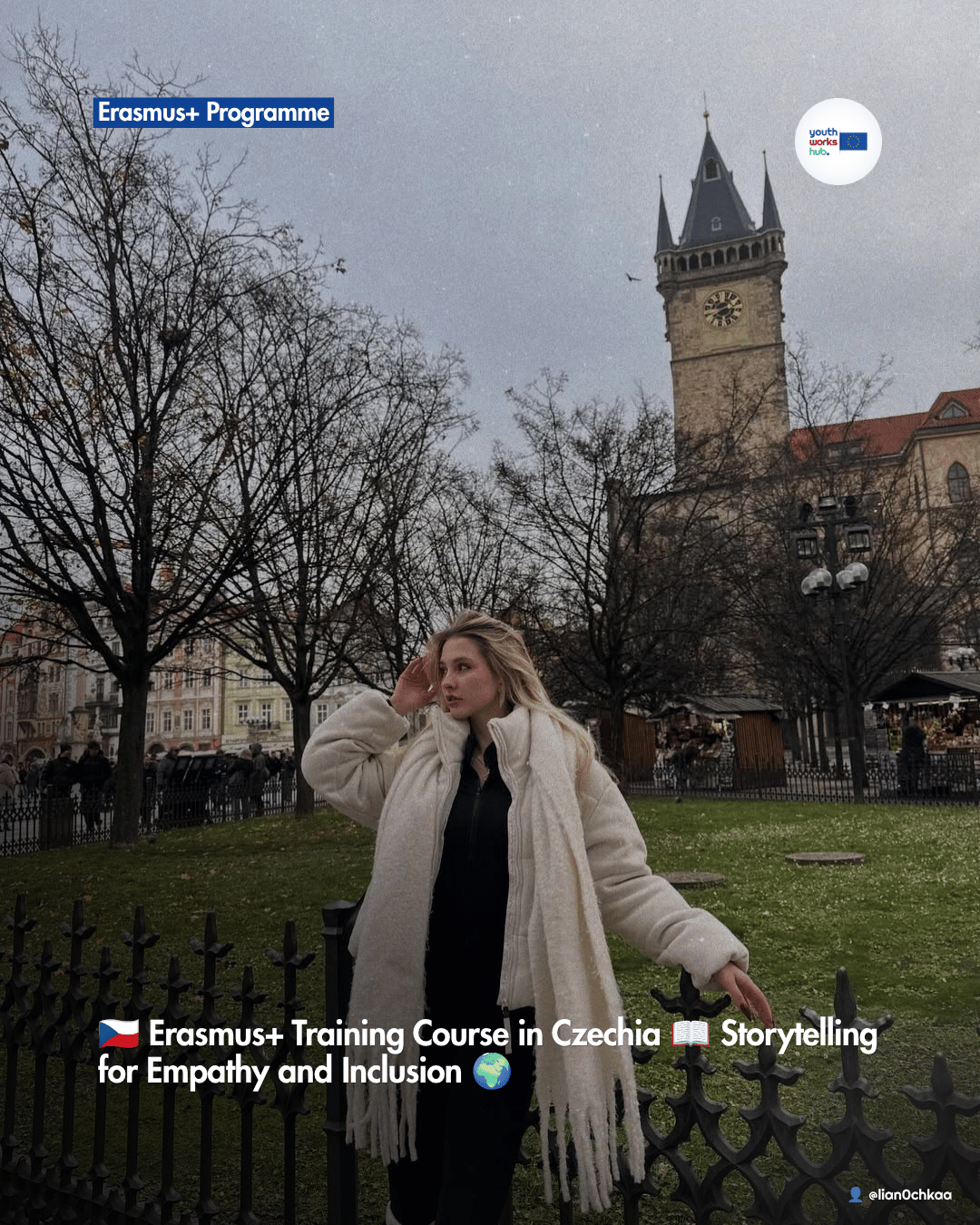
Erasmus+ call for an international youth worker training course "Storytelling as a Tool for Change" in the Czech Republic (Nov 2026). It trains workers to use narrative methods to foster empathy, inclusion, and connection in youth work.
✅ Who can apply for Erasmus+ and ESC? Eligibility depends on activity: ages 13–30 for most Erasmus+ youth activities and 18–30 for ESC volunteering (up to 35 for humanitarian aid), plus country and residence rules. This guide covers roles, inclusion support, language needs and the profile coordinators look for. 👉 https://youthworkshub.org/whocanapply
ℹ️ Description About The Opportunity
Storytelling as a Tool for Change
Erasmus+ Youth Worker Training Course | Czech Republic | November 2026
Target Audience:
This offer is strictly targeted at youth workers, non-formal educators, trainers, and project leaders working directly in non-formal learning and youth work contexts.
Activity Overview:
"Storytelling as a Tool for Change" equips youth work practitioners with practical narrative methodologies to foster empathy, social inclusion, and active connection among young people. Participants explore how personal and collective narratives serve as effective non-formal learning tools to bridge cultural divides, support vulnerable youth, and stimulate community change.
Key Objectives:
Methodological Development: Master non-formal storytelling tools (oral narrative, creative writing, and digital media) to engage young people.
Inclusion & Empathy: Utilize narrative techniques to address social exclusion, discrimination, and youth vulnerability.
Local Project Implementation: Create actionable storytelling activities to implement directly within home youth organizations.
European Networking: Build sustainable partnerships for future Erasmus+ non-formal learning initiatives.
For full schedule structures, organizational requirements, and detailed non-formal learning frameworks, refer to the attached document above.
📘 What is Erasmus+? (in-depth) Erasmus+ has run since 1987 and has had over 13 million participants, funding four main activities for young people. This pillar guide covers its history, funding, research-backed benefits, the full application process and an FAQ. 👉 https://youthworkshub.org/what-is-erasmus-plus
Training overview
This Training Course is
for 20 participants
from Erasmus+ Youth Programme countries 
and recommended for
Youth workers
Working language(s):
English
Organiser:
Nature Life (Youth NGO)
Co-organiser(s):
- ACUNAGUA (Spain) (Youth NGO)
- Vila Flora (Czech Republic) (Youth NGO)
💡 How do you prepare a strong Erasmus+ or ESC application? Read the call carefully, write specific motivation, show skills with examples, and state clear learning goals. This guide gives 10 practical tips plus the common mistakes that lead to rejection. 👉 https://youthworkshub.org/erasmus-application-tips
📥 Contact
Contact for questions:
Ivana Bartova
E-Mail:
Phone: +421907447763
💶 Costs
Costs
Participation fee
none
Accommodation and food
Vegan food and accomodation fully covered
Travel reimbursement
Czech Republic: Green travel (train, bus, or carpool) is required to minimize carbon footprint. Grant budget: €56 per participant.
Slovakia: Green travel (train, bus, or carpool) is required to minimize carbon footprint. Grant budget: €285 per participant.
Spain: Standard travel (flight allowed). Grant budget: up to €580 per participant.
📜 Certificate
Participants are entitled to receive a Youthpass certificate from the organiser, for recognition of their competence development during the activity. Read more about Youthpass:
https://youthworkshub.org/what-is-youthpass
⚠️ Important Dates
Application deadline (24h UTC): 15 September 2026
Date of selection: 22 September 2026
🎓 What is an Erasmus+ Training Course? A Training Course is a short funded course (5–10 days) for youth workers, educators and NGO staff to build skills through non-formal education. This guide explains who can join, what's covered and how it differs from a Youth Exchange. 👉 https://youthworkshub.org/trainingcourse
🔗 Official Link
⚖️ What's the difference between ESC and Erasmus+? The ESC is for volunteering and solidarity, while Erasmus+ is broad learning mobility (study, training, youth exchanges). This guide compares age, funding, duration and application route, and includes a "choose this if…" decision guide. 👉 https://youthworkshub.org/esc-vs-erasmus
🎂 What are the age limits for Erasmus+ and ESC? Youth Exchanges are 13–30, ESC volunteering is 18–30 (35 for humanitarian aid), and training, youth worker mobility and study/traineeships have no upper age limit. This guide breaks down every activity and how age is counted (at the start date). 👉 https://youthworkshub.org/erasmus-age-limits
💶 What costs does Erasmus+ cover? For youth activities (KA152–154) it covers travel by distance band, individual support, organisational support, preparation, inclusion support up to 100% and exceptional costs. This 2026 guide details each item and what Erasmus+ does not cover. 👉 https://youthworkshub.org/what-erasmus-covers