EU funded volunteering means exactly what it says: you volunteer abroad, and the European Union covers the costs, so you pay nothing to take part. The main programme behind it is the European Solidarity Corps (ESC), the EU's dedicated volunteering scheme for young people. This guide explains what EU funded volunteering really is, the routes available, who can join, what is genuinely covered, and, crucially, how to tell real EU funded volunteering apart from the "pay-to-volunteer" companies that charge you hundreds of euros for something the EU offers for free.
What "EU Funded Volunteering" Actually Means, and Who Pays 💶
The idea is simple: instead of you paying to volunteer abroad, the EU funds the experience. You give your time and energy to a solidarity project, and in return your travel, accommodation, food, insurance, and a small allowance are paid for through EU funding. The volunteering itself is unpaid, but it is not something you pay for either. This is the opposite of the commercial "volunteer abroad" packages you may have seen advertised, where the volunteer foots a large bill.
The key thing to remember: genuine EU funded volunteering never charges you a participation fee. If someone asks you to pay to join, it is not EU funded volunteering.
The European Solidarity Corps: The EU's Dedicated Volunteering Programme 🇪🇺
When people say "EU funded volunteering," they almost always mean the European Solidarity Corps (ESC). It is the EU's official, standalone funding programme for young people who want to take part in solidarity activities across Europe and beyond. It funds the organisations that host and support volunteers, which is how your costs get covered without you paying anything. For the full deep dive, see our ESC complete guide.
The Four Routes at a Glance 🧭
EU funded volunteering through the ESC comes in a few forms. Here they are in brief, each with a link to the full detail:
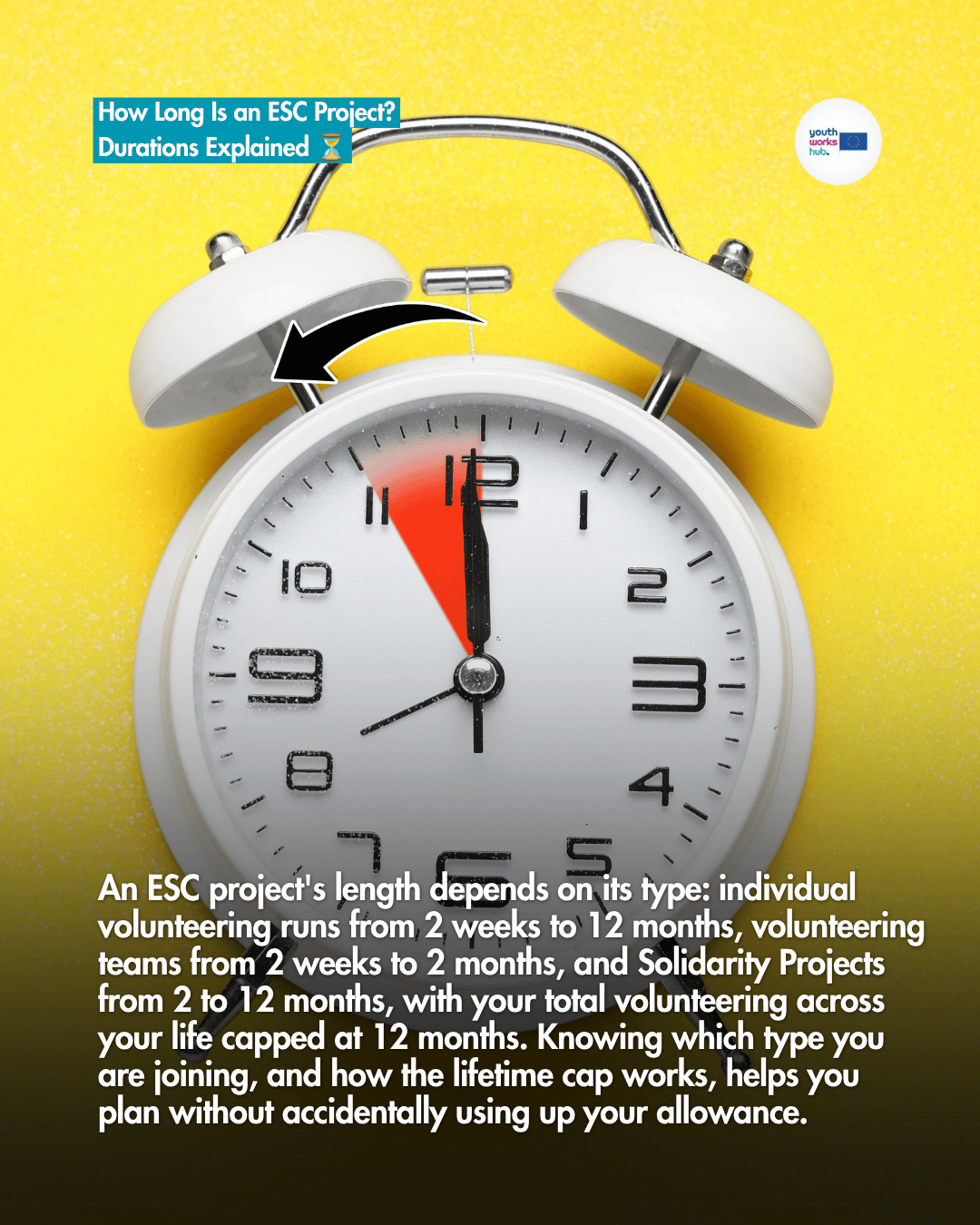
🔹 Individual Volunteering: volunteer solo on a project abroad or in your own country, from 2 weeks up to 12 months
🔹 Volunteering Teams: a group of volunteers from different countries work together on a shorter activity
🔹 Solidarity Projects: young people design and run their own local initiative, in their own country
🔹 Humanitarian Aid Volunteering: support humanitarian work in countries outside the EU, open up to age 35
Most people start with individual volunteering, but all four are part of the same EU funded family.
Whatever Happened to EVS? How EU Volunteering Changed in 2018 🔄
If you have heard of the European Voluntary Service (EVS), that was the EU's earlier volunteering scheme, run under Erasmus+. In 2018 it was folded into the new European Solidarity Corps, which became the single home for EU funded volunteering. So EVS no longer exists as a separate programme, its volunteering lives on inside the ESC.
This is also why you will not find a separate "Erasmus+ volunteering" track today. Erasmus+ still funds youth mobility like youth exchanges and participation activities, but volunteering is the ESC's job. If you are unsure which programme fits you, our guide on ESC vs Erasmus+ clears it up.
Who Can Take Part: Age, Residence, and the 12-Month Rule 👥
The eligibility rules are refreshingly simple:
🔹 Age: 18 to 30 for standard volunteering, and up to 35 for Humanitarian Aid Volunteering (you can register from 17, but activities start at 18)
🔹 Residence: you must legally reside in an EU country or a covered associated or partner country, which you can check in our eligible countries guide
🔹 Registration: you must sign up on the European Solidarity Corps Portal to access opportunities, which we walk through in how to register on the ESC Portal
🔹 The 12-month rule: your total ESC volunteering cannot exceed 12 months over your lifetime (Solidarity Projects do not count toward this)
For the full eligibility picture, see who can apply.
Is It Really Free? The Honest Funding Picture 🛡️
Yes, it is free to you, and here is exactly what EU funding covers:
🔹 ✈️ Travel to and from your project
🔹 🏠 Accommodation and 🍽️ food
🔹 💶 Pocket money for your personal expenses
🔹 🛡️ Insurance (a special free scheme for volunteers)
🔹 📚 Language support and training
⚠️ One honest nuance: travel is reimbursed as a fixed contribution based on distance band, not always 100 percent of your ticket, so on a very long or expensive journey there can be a small gap. For most projects everything is covered, which is why ESC volunteering is generally called fully funded. For the full breakdown, see is ESC fully funded and insurance for ESC volunteers.
Genuine EU Funded Volunteering vs Pay-to-Volunteer Voluntourism 🚩
This is the part that saves people the most money. Search "volunteer abroad" and you will find dozens of companies that charge you to volunteer, often hundreds or even thousands of euros for a few weeks. This is known as voluntourism, and it is completely different from EU funded volunteering:
🔹 EU funded volunteering (ESC): you pay nothing, the EU covers your costs, and projects are quality-checked
🔹 Pay-to-volunteer voluntourism: you pay a large fee, and often only a small share of that money actually reaches the local community
You do not need to pay a company to volunteer abroad when the EU funds it for free. If a programme charges a big participation fee, walk away and look at EU funded options instead.
Red Flags: How to Spot a Volunteering Scam 🔎
Protect yourself with a few simple checks. Be very cautious if you see:
🔹 A large upfront fee, deposit, or "program" charge to take part
🔹 No transparency about where your money goes
🔹 Pressure to pay quickly, or requests for your bank details early on
🔹 Short "no skills needed" placements doing work local people could do
🔹 Especially: orphanage or childcare "volunteering", which experts warn can harm children and fuel family separation, and which reputable organisations no longer offer
Genuine EU funded volunteering has none of these. It is free, transparent, and run through checked organisations.
Where to Find Legitimate Opportunities 💫
Real EU funded volunteering opportunities are out there, but they are spread across many organisations, which makes them easy to miss. Youth Works Hub gathers verified ESC and youth volunteering opportunities into one place, so you can browse, compare, and apply without paying anyone a fee. When you are ready to apply, our guide on ESC application tips helps you stand out.
Frequently Asked Questions ❓
What is EU funded volunteering?
It is volunteering abroad where the European Union covers your costs, so you pay nothing to take part. The main programme is the European Solidarity Corps, which funds your travel, accommodation, food, insurance, and a small allowance.
Do I get paid to volunteer?
No. EU funded volunteering is unpaid work, but it is not something you pay for either. Your costs are covered and you receive pocket money for personal expenses, but it is not a salary.
Is it really free?
Yes. Genuine EU funded volunteering never charges you a participation fee. Travel, accommodation, food, insurance, and language support are covered, with travel reimbursed by distance band. If a programme asks you to pay to join, it is not EU funded volunteering.
Do I need experience or qualifications?
No. EU funded volunteering is open to young people with no prior experience. Organisations select on motivation, not on your CV or diplomas.
Can I volunteer more than once?
Yes, as long as your total ESC volunteering does not exceed 12 months over your lifetime. Solidarity Projects do not count toward that limit.
In Short 💙
EU funded volunteering lets you volunteer abroad while the EU pays the costs, through the European Solidarity Corps, the EU's dedicated volunteering programme. It is open to young people aged 18 to 30 (up to 35 for humanitarian aid), it is free to take part, and it replaced the old EVS in 2018. Never pay a company to volunteer when the EU funds it for free, and always watch for the red flags of pay-to-volunteer schemes.
👉 Find your next opportunity: ESC and Erasmus+ projects on Youth Works Hub