🔑 Key Information
Activity ⭐️ Title
Supporting Volunteer`s Mental Health Through Mentoring
Activity 🔶 Type | 📆 Dates | 📍Location
Training Course
2-7 November 2026 | Lithuania
🌍 Erasmus+ explained — the complete beginner's guide to Europe's largest youth programme.Millions of young people have taken part in Erasmus+ since its launch, but many still don't fully understand what the programme actually includes, who it's for, or how to get involved. This in-depth guide breaks down everything: the different types of mobility, funding opportunities, eligibility criteria, and what you can realistically expect from participating. If you've ever wondered whether Erasmus+ is right for you, this guide gives you all the answers in one place. 👉 https://youthworkshub.org/15096/
❗️What Is This Training About?
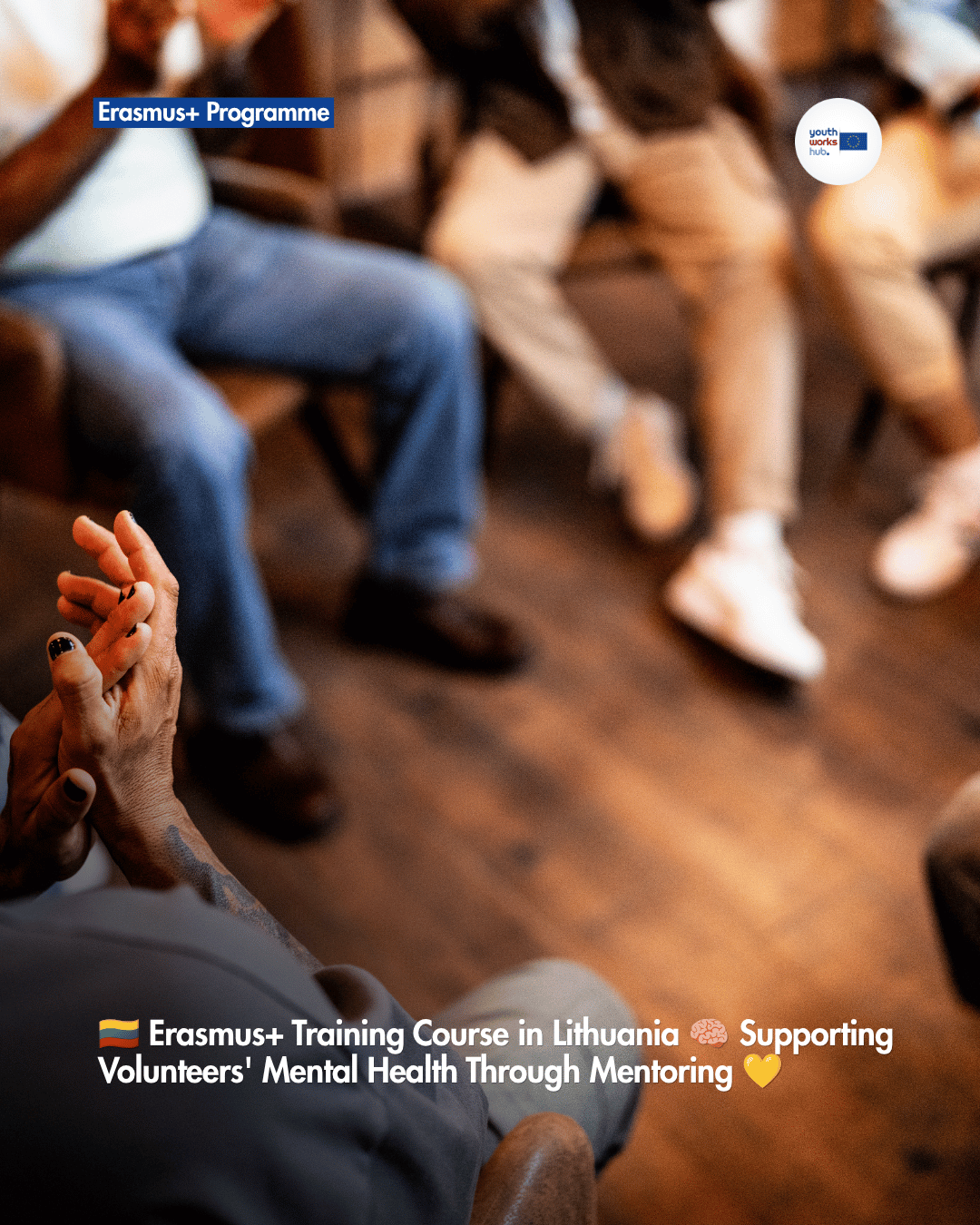
Mentoring is one of the key elements to ensure meaningful European Solidarity Corps volunteering projects. People who work directly with volunteers benefit from understanding better, how the volunteers’ mental health can be promoted and supported.
🏘️ How Erasmus+ youth projects create lasting change in local communities. The impact of Erasmus+ goes far beyond the individuals who participate. Local communities, host organisations, and even entire neighbourhoods are shaped by the projects that take place within them. This article explores the broader social impact of Erasmus+ youth exchanges — from building intercultural understanding to empowering grassroots organisations — and makes a compelling case for why these projects matter beyond the personal level. 👉 https://youthworkshub.org/3595/
ℹ️ Description About The Opportunity
Mentoring Promotes Mental Health
Supporting Volunteers’ Mental Health through Mentoring training focuses on supporting organisations and their mentors to better address the mental health needs of volunteers by strengthening their emotional and mental health skills.
Moreover, this training prepares the participants to recognise the support needed in different phases of volunteering project life cycle.
In this training you will gain an ability to
- Equip volunteers with coping mechanisms to build up resilience
- Create a supportive environment where open communication about mental health is encouraged
- Recognise potential signs of mental health difficulties in volunteers
- Prepare your organisation for potential challenges that volunteers may face
Objectives
- Raising awareness of mental health in the mentoring practices
- Developing mentor’s competences in supporting volunteers' mental health
- Understanding the role of mentors in promoting mental health in volunteering projects
- Explore practices useful in creation of supportive mental health environments
Mental Health from a preventive perspective
This training discusses mental health from the perspective of promotion and prevention.
In this training we do not approach mental health from the point of view of diagnosis, therapy or healing – these approaches belong to the professional work outside the work of European Solidarity Corps volunteering organisations.
Who can participate?
The training is open for you if you
- are working directly with European Solidarity Corps volunteers
- are working in a supporting role for volunteers
- are working in an organisation with a valid Quality Label for hosting
You can be a mentor, a tutor, a project coordinator or the main contact for volunteers in your organisation. It is important that your role is to support volunteers in their volunteering project.
The training is especially useful for you if you need better understanding on how to support the volunteers’ mental health in your work. No prior knowledge on mental health is needed.
This training is not open for mental health professionals, such as therapists, psychologists, clinical personnel.
Time and venue
The training will be hosted in Lithuania
Arrival on Monday 2nd November
Departure on Saturday 7th November
Preparatory tasks
Online training session: 2 October from 10:00 to 12:00 CET. Selected participants will receive preparatory tasks.
Program
Day 1: What is mental health and what is my role in promoting it?
Day 2: How stress affects me and volunteers. What can we do about it?
Day 3: How can I support volunteers in distress?
Day 4: What is my organisational and personal support system?
In this event, we follow the principles of a safer space. We strive to ensure that everyone is met as their own self and that no one has to fear discrimination or harassment. We want you to respect the same principle.
Our activities are accessible to people with different abilities. If you need a support person, accessible room and transport or other kind of support, we will provide it for you. You can tell your individual needs in beforehand so we can support you in your participation.
Training overview
This Training Course is
for 25 participants
from Eastern Partnership countries  , Erasmus+ Youth Programme countries , Southern Mediterranean countries , Western Balkan countries
and recommended for
Volunteering mentors
Working language(s):
English
Organiser:
Agency of Youth Affairs (National Agency)
✅ 10 practical tips to write a stronger Erasmus+ or ESC application and actually get selected. With growing competition for spots in Erasmus+ and ESC projects, a well-crafted application can genuinely make or break your chances. This guide shares 10 concrete, actionable tips based on what selection committees actually look for — covering everything from how to frame your motivation to the common mistakes that get applications rejected. If you're serious about getting selected, take the time to read this before you hit submit. 👉 https://youthworkshub.org/8396/
📥 Contact
Contact for questions:
Monika
E-Mail:
Phone: +37000000000
💶 Costs
Participation fee
This project is financed by the participating National Agencies (NAs) of the Erasmus+ Youth in Action Programme. The participation fee varies from country to country. Please contact your National Agency or SALTO Resource Centre (SALTO) to learn more about the participation fee for participants from your country.
Accommodation and food
Unless specified otherwise, the hosting NA or SALTO of this offer will organise the accommodation and covers the costs for accommodation and food.
Travel reimbursement
Please contact your NA or SALTO in order to know whether they would support your travel costs. If yes, after being selected, get in touch with your NA or SALTO again to learn more about the overall procedure to arrange the booking of your travel tickets and the reimbursement of your travel expenses.
📜 Certificate
Participants are entitled to receive a Youthpass certificate from the organiser, for recognition of their competence development during the activity. Read more about Youthpass:
⚠️ Important Dates
Application deadline (24h UTC): 6 September 2026
Date of selection: 27 October 2026
🔗 Official Link
⚠️ Important Notice
Youth Works Hub is not the organiser, partner, or representative of the listed projects. This listing is shared for information only, based on details from the source. Deadlines, eligible countries, dates, and other details may change or be withdrawn at any time, and all funding, reimbursements, and allowances are set by the project coordinator or National Agency. Applications go directly to the coordinator or hosting organisation through the official link. Listings may include third-party links (ESC Portal, infopacks, forms) that Youth Works Hub does not control. Always verify the details on the official project page before applying.


