🔑 Key Information
Activity ⭐️ Title
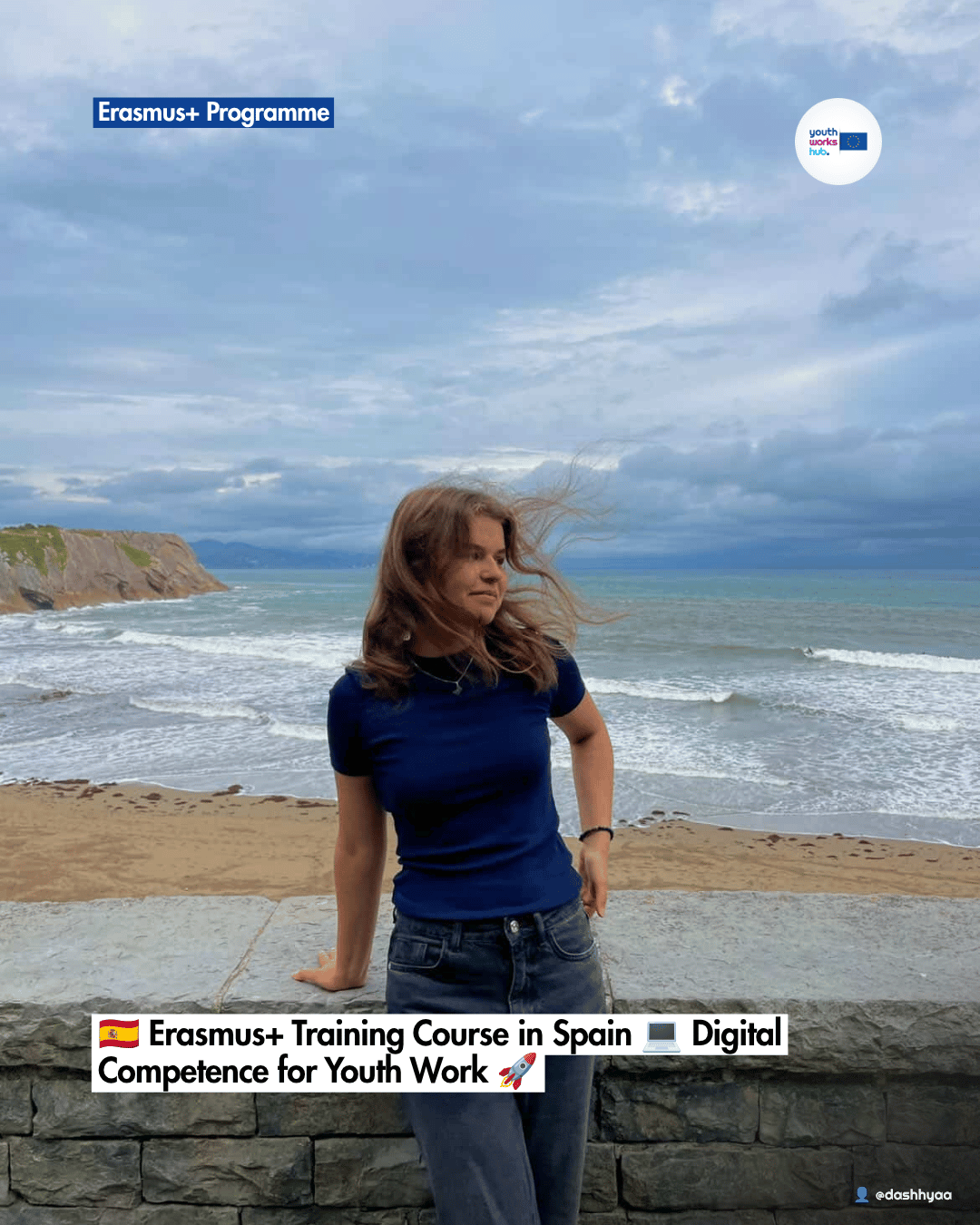
“Digi-Hack - A Journey Through Digital Competence”
Activity 🔶 Type | 📆 Dates | 📍Location
Training Course
18-25 September 2026 | Barcelona, Spain
🌍 Erasmus+ explained — the complete beginner's guide to Europe's largest youth programme.Millions of young people have taken part in Erasmus+ since its launch, but many still don't fully understand what the programme actually includes, who it's for, or how to get involved. This in-depth guide breaks down everything: the different types of mobility, funding opportunities, eligibility criteria, and what you can realistically expect from participating. If you've ever wondered whether Erasmus+ is right for you, this guide gives you all the answers in one place. 👉 https://youthworkshub.org/15096/
❗️What Is This Training About?
To deepen the understanding of digital competence and digital learning in non-formal education, explore practical tools for developing digital competences among young people, and gain the skills to design local-level digital learning activities.
🏘️ How Erasmus+ youth projects create lasting change in local communities. The impact of Erasmus+ goes far beyond the individuals who participate. Local communities, host organisations, and even entire neighbourhoods are shaped by the projects that take place within them. This article explores the broader social impact of Erasmus+ youth exchanges — from building intercultural understanding to empowering grassroots organisations — and makes a compelling case for why these projects matter beyond the personal level. 👉 https://youthworkshub.org/3595/
ℹ️ Description About The Opportunity
This training course offers youth workers the opportunity to deepen their understanding of digital competence within youth work and non-formal education contexts, and to strengthen their capacity to design and facilitate practical digital learning experiences for young people. Through non-formal education and experiential learning approaches, participants will explore key concepts from the DigComp 3.0 framework - including information search and evaluation, communication and collaboration, content creation, safety and wellbeing, and problem identification and solving - while gaining insight into practical tools and methods that promote responsible and confident digital engagement among youth.
The course places strong emphasis on the role of youth workers as facilitators of digital learning processes. Participants will examine how educational activities can be designed and facilitated in an engaging and empowering way, with particular attention to building digital confidence, encouraging critical and responsible use of digital technologies, supporting young people in recognising digital opportunities and risks, and connecting digital competences to real-life youth work contexts. By combining theoretical input with structured reflection and peer exchange, the training supports participants in critically analysing their own facilitation styles, professional practices, and the digital realities in their home countries.
Going beyond theory, the training course is highly participatory and practice-oriented. Participants will engage in interactive workshops, small-group design sessions, and hands-on activities focused on applying DigComp 3.0 principles in youth work, culminating in a hackathon in which participants identify real digital problems and co-create creative solutions. Special focus will be placed on developing concrete educational activities and local-level session designs that integrate digital competence into everyday youth work practice. By the end of the course, participants will have strengthened their facilitation competences, developed practical activity concepts, and gained tools and strategies to foster critical thinking, creativity, and responsible digital engagement among young people in their communities.
The training course is developed in line with Youth Goal 7: Quality Employment for All, and contributes to:
Ensuring equal opportunities for all young people to develop the necessary skills and gain practical experience in order to smoothen the transition from education to the labour market.
Ensuring equal access to quality information and adequate support mechanisms to prepare young people for the changing labour market and future of work.
The training course is grounded in non-formal education principles and experiential learning approaches. The programme is designed to equip participants with the knowledge, skills, and practical tools needed to understand digital competence, apply the DigComp 3.0 framework in youth work contexts, and design and facilitate digital competence learning activities for young people.
The initial phase of the training focuses on building a safe and supportive learning environment, fostering trust among participants, and creating a strong sense of group cohesion. During the first days, participants will engage in activities that explore similarities and differences, group alliance, and shared expectations. They will be introduced to the foundations of non-formal education and digital competence, the DigComp 3.0 framework, and the role of youth workers in fostering critical and responsible digital engagement among young people. This phase also includes reflection on country realities related to youth work and digital education programmes, as well as the Erasmus+ and Youthpass frameworks as tools for recognition and professional development.
As the training progresses, participants will deepen their understanding of the DigComp 3.0 competence areas, including information search, evaluation and management, communication and collaboration, and content creation. Through practical workshops and reflective exercises, they will strengthen their facilitation competences and explore methods for designing engaging digital competence learning experiences. Particular attention is given to empowering critical thinking, supporting young people in navigating digital environments safely and responsibly, and integrating digital competence approaches into everyday non-formal education practice. Participants will also explore local realities through a self-organised activity connected to the training topic, and deepen their understanding of safety, wellbeing and responsible use of digital technologies.
In the later stages of the programme, participants will focus on applying their learning through a hackathon format grounded in problem identification and solving. Working in teams, they will identify real digital problems relevant to youth work and co-create creative, human-centred solutions that integrate DigComp 3.0 competences into practice. Through structured teamwork, peer feedback, and presentation of their solutions, they will refine their ideas and reflect on how to adapt and transfer them to their local youth work contexts.
On the final day, participants will engage in structured reflection and evaluation of their learning journey, develop personal and professional commitment plans for the transfer of digital competence learning into their everyday youth work practice, and have their achievements recognised through the Youthpass ceremony, supporting further professional development.
Training overview
This Training Course is
for 35 participants
from Austria, Germany, Italy, Portugal, Spain
and recommended for
Youth workers, Trainers, Youth leaders, Youth policy makers, Volunteering mentors, Youth coaches
Working language(s):
English
Organiser:
Youth Power Germany e.V (Youth NGO)
A society with positive social values, healthy lifestyles, gender equality and zero discrimination is our main goal. In order to achieve that goal, we are continuously working with young people from all around Europe. Programs currently implemented by the organisation are directed towards non-formal education of young people on topics of entrepreneurship, cultural diversity, volunteerism, mental health, the inclusion of refugees and migrants, healthy lifestyles and violence prevention.
✅ 10 practical tips to write a stronger Erasmus+ or ESC application and actually get selected. With growing competition for spots in Erasmus+ and ESC projects, a well-crafted application can genuinely make or break your chances. This guide shares 10 concrete, actionable tips based on what selection committees actually look for — covering everything from how to frame your motivation to the common mistakes that get applications rejected. If you're serious about getting selected, take the time to read this before you hit submit. 👉 https://youthworkshub.org/8396/
📥 Contact
Contact for questions:
Veronica
E-Mail:
Phone: +49 15737879287
💶 Costs
Costs
Participation fee
None
Accommodation and food
All costs are covered by organizers and funded within the Erasmus+ program.
Travel reimbursement
-Travel costs will be reimbursed in line with the distance calculator. More info on the reimbursement rules (i.e. taking into consideration eco-friendly types of transportation*) can be checked in the infosheet - which can be downloaded.
*Sustainable means of transport (green travel) is defined as the travel that uses low-emissions means of transport for the main part of the travel, such as bus, train or car-pooling.
Overview of the amounts for travel reimbursements / by participating country:
Germany - 309,00 € / green travel 417,00 €
Austria - 309,00 € / green travel 417,00 €
Spain - 309,00 € / green travel 417,00 €
Portugal - 309,00 € / green travel 417,00 €
Italy - 309,00 € / green travel 417,00 €
📜 Certificate
Participants are entitled to receive a Youthpass certificate from the organiser, for recognition of their competence development during the activity. Read more about Youthpass:
https://youthworkshub.org/15122
⚠️ Important Dates
Application deadline (24h UTC): 12 August 2026
Date of selection: 18 August 2026
🔗 Official Link
🗂️ Documents
😄 How every Erasmus+ group chat starts vs. how it ends — a journey in messages. If you've ever been part of an Erasmus+ project group chat, you already know the energy: the awkward introductions, the overenthusiastic emojis, the plans that never happen, and the inside jokes that follow you for years. This article captures the evolution of every Erasmus+ group dynamic with humour and honesty — and if you haven't experienced it yet, consider this your preview of what's coming. 👉 https://youthworkshub.org/15112/
📖 The real story behind every Erasmus+ and ESC journey — what happens before, during, and after.Every Erasmus+ and ESC project has an official timeline: application, preparation, mobility, evaluation. But the real story is much richer than that. This article takes you through what genuinely happens at each stage of a project's life — the doubts, the breakthroughs, the unexpected friendships, and the quiet moments that change everything. A deeply human look at what these programmes mean beyond the paperwork. 👉 https://youthworkshub.org/15180/
🚨 How to spot a real Erasmus+ or ESC project — and protect yourself from fake offers. As the popularity of Erasmus+ and ESC grows, so does the number of fraudulent offers mimicking legitimate projects. Fake calls, scam organisations, and misleading listings can be difficult to identify — especially for first-time applicants. This guide gives you the specific red flags to watch for, the verification steps you should always take, and the key differences between genuine EU-funded projects and imitations. Stay informed, stay safe. 👉 https://youthworkshub.org/15135/
⚠️ Important Notice
1️⃣ Source of Information
This announcement has been prepared based on the information provided by the source.
2️⃣ No Affiliation
YouthWorks Hub is not the organiser, partner, or representative of the projects listed. All applications must be submitted directly to the project coordinator or hosting organisation through the original link, email, etc.
3️⃣ Content May Change
The project coordinator is solely responsible for the accuracy and details of the opportunity. Deadlines, eligible countries, activity dates, and other details may change, or the announcement may be withdrawn entirely, at any time after publication. Always check the original link before applying.
4️⃣ Funding
All funding, travel reimbursements, and allowances are determined and provided by the project coordinator or National Agency. YouthWorks Hub is not responsible for any payments or financial matters.
5️⃣ External Links
Listings may contain links to third-party websites, forms, or documents (e.g. the ESC Portal, infopacks, application forms). YouthWorks Hub is not responsible for the content, accuracy, or security of these external sources.
💡 Final Note: All listings are shared for informational purposes only. Please always verify details directly through the official project coordinator or programme website before applying.