
Javna ustanova Park prirode Vransko jezero
BIOGRAD NA MORU, Croatia
⭐️ Activity Title
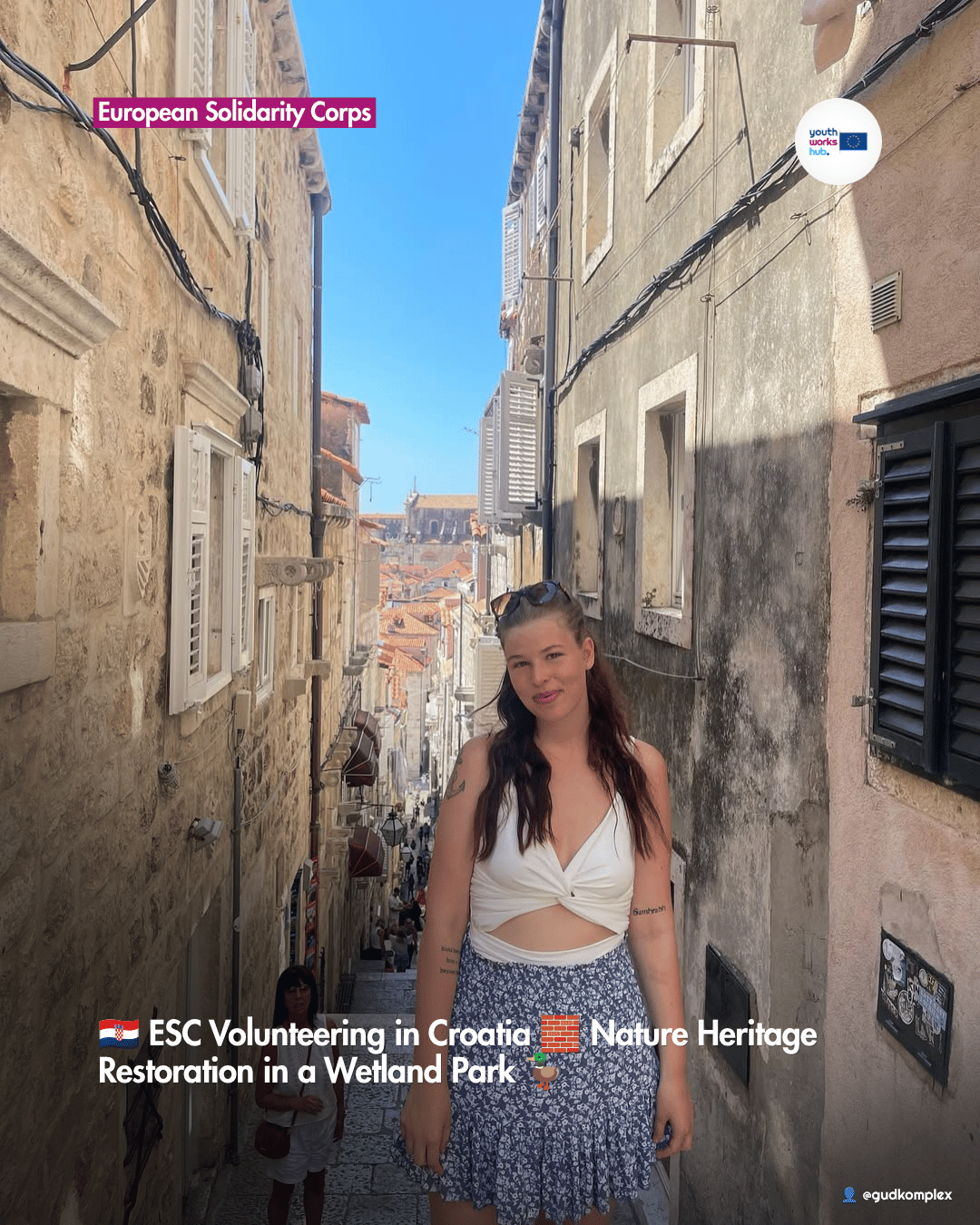
Solidarity for Natural Heritage in the wetland Nature park
🌍 What is the European Solidarity Corps (ESC)? The ESC is the EU programme that funds young people aged 18–30 (up to 35 for humanitarian aid) to volunteer on solidarity projects across Europe, with travel, accommodation, food, insurance and monthly pocket money covered. This overview explains who can join, the project types, durations and how to apply. 👉 https://youthworkshub.org/esc
🔷 Activity Details
Description
Get involved in the "Solidarity for Natural Heritage" volunteer program through the restoration of the dry walls of the largest olive grove in Dalmatia and the restoration of flooded meadows, in the Ornithological Reserve. Help educate and raise awareness about Nature restoration to the community.The needs of the project is the practice of environmental protection, sustainable development, and climate action with its goal to protect, conserve and enhance biodiversity, as well as digital transformation since the participants will be using digital tools needed to share their experience. This objective showcases the importance of the preservation and restoration of flooded meadow habitats, the related wealth of ornithofauna, and other endangered and/or rare plant and animal species in a favourable state of conservation. Besides the importance of flooded meadows as a scarce habitat type on the European level, restoration of flooded meadows is especially important as these habitats have a significant function in regulating the water regime, as well as in the purification of water that flows from agricultural land surrounding the ornithological reserve into the lake. It is important to keep the flooded meadow ecosystems in balance in order to achieve their resistance to climate change and extreme weather events.
The volunteer restores dry-stone walls that were built by a traditional technique without the use of mortar or binder and clears the areas covered by vegetation that has overgrown the dry-stone walls and the flooded meadows, restores the wooden educational trail of Park by painting it, helps collect the mowed hay from the meadow and hand picks invasive plant species, informs the public about the project activities, contributes to the preservation of traditional knowledge, as well as the cultural and natural heritage of the Park . The workhours optimally 6 hours a day, during 33 days of the program, during the weekdays, and 2 days off duirng the weekend (including 4 possible days of travel to and from the activity). Participation is mandatory for the entire duration of the program.
Accommodation, food and transport arrangements
The volunteers will work in several location In the Vransko lake Nature Park. Accommodation will be organised in Biograd na moru in shared bedrooms. Park will procure and deliver groceries for the volunteers. The volunteers will prepare their meals independently in the accommodation.
Training during the activity
Learn traditional knowledge, master the technique of drystone walling, and help enrich the cultural and biological diversity of the Nature Park Vransko jezero in Croatia, while informing the public (Park visitors) about volunteer activities by ocasionally creating short dissemination texts and photos. Volunteers will learn the traditional knowledge of the drystone walling technique, needed for restoration and building of the dry-stone walls, which are a non-material heritage, declared by UNESCO. They will get to know the Mediterranean wetland and its biodiversity, the importance of wet meadows for the protection of numerous bird species. Volunteers will be shown how to hand-pick invasive species, collect hay, clear unnecessary woody (shrub) vegetation covering rare and endangered flooded meadows, and will also have the opportunitiy to help out painting the wooden infrastructure.
Participant profile
Due to the specificity of the planned activitiese, we are looking for volunteers with the following characteristics: • readiness for demanding physical work and being in the sun/wind/ outdoor conditions for up to 6 hours per day • hiking and willingness to spend the whole day in the outdoors • ability to work independently but also to act as a part of the team (equally sharing the duties around the accomodation, cooking ,cleaning, and organising free time) • patience and dedication • desire for informal learning and intercultural exchange • good will and flexibility IMPORTANT NOTE: potential candidates will have an online interview as a part of the selection process. We strongly encourage applications from young people with fewer opportunities. All applications must be submitted exclusively via the European Youth Portal.
✍️ How do you write a motivation letter for ESC and Erasmus+? Research the project first, then follow a five-part structure that shows motivation, relevant skills and learning goals. This guide includes a full annotated example, how to adapt it per activity, and the mistakes that cause rejection. 👉 https://youthworkshub.org/esc-motivation-letter
💡 How do you prepare a strong Erasmus+ or ESC application? Read the call carefully, write specific motivation, show skills with examples, and state clear learning goals. This guide gives 10 practical tips plus the common mistakes that lead to rejection. 👉 https://youthworkshub.org/erasmus-application-tips
🔑 Key Information
Activity dates
From 02/11/2026 to 04/12/2026
Activity location
Kralja Petra Svačića 2, BIOGRAD NA MORU, Croatia
Activity type
Volunteering teams
Looking for participants from
Austria, Belgium, Bulgaria, Croatia, Czechia, Denmark, Estonia, Finland, France, Germany, Greece, Hungary, Iceland, Ireland, Italy, Latvia, Liechtenstein, Poland, Portugal, Romania, Slovakia, Slovenia, Spain, Sweden
Activity topics
Environment and natural protection
Education and training
Creativity and culture
Deadline for applications
Application deadline: 05/10/2026 12:00
Project code
2026-1-HR01-ESC51-VTJ-000401404
⚖️ What's the difference between ESC and Erasmus+? The ESC is for volunteering and solidarity, while Erasmus+ is broad learning mobility (study, training, youth exchanges). This guide compares age, funding, duration and application route, and includes a "choose this if…" decision guide. 👉 https://youthworkshub.org/esc-vs-erasmus
🔗 Official Project Page
https://youth.europa.eu/solidarity/opportunity/54133_en
🔐 How do you register on the ESC Portal? You create an EU Login with two-factor authentication, then complete your profile on the official ESC Portal. This step-by-step guide also fixes common problems like "0 opportunities" and the country-list lock. 👉 https://youthworkshub.org/register-esc-portal
🩺 What insurance do ESC volunteers get? Every ESC volunteer gets free group insurance (currently Henner) that complements the EHIC and covers medical, accident, hospitalisation, liability and travel. This guide explains what's insured, the coverage period (home-to-return plus two months) and how your organisation enrols you. 👉 https://youthworkshub.org/esc-insurance
🌍 What is ESC Humanitarian Aid Volunteering? It's the ESC strand (EVHAC) that sends people aged 18–35 to work full-time in countries outside the EU, after mandatory two-stage training. This guide details the training, the application steps and what's covered. 👉 https://youthworkshub.org/esc-humanitarian-aid-volunteering
💰 Is ESC volunteering fully funded? Yes for core costs: travel is reimbursed by distance band (€28–1,735+), and accommodation, food, local transport, insurance, language support and daily pocket money are covered. This guide gives the official 2026 figures and the honest travel-band caveat — note there is no salary. 👉 https://youthworkshub.org/is-esc-fully-funded


