🔑 Key Information
Activity ⭐️ Title
Harry Totter and the Facilitator's Stone
🇪🇺 What is Erasmus+? Erasmus+ is the EU's programme for education, training, youth and sport, with a €26.2 billion budget for 2021–2027. It funds study abroad, internships, youth exchanges, training courses and youth worker mobility. This overview covers who is eligible, every activity type and what's funded. 👉 https://youthworkshub.org/erasmusplus
Activity 🔶 Type | 📆 Dates | 📍Location
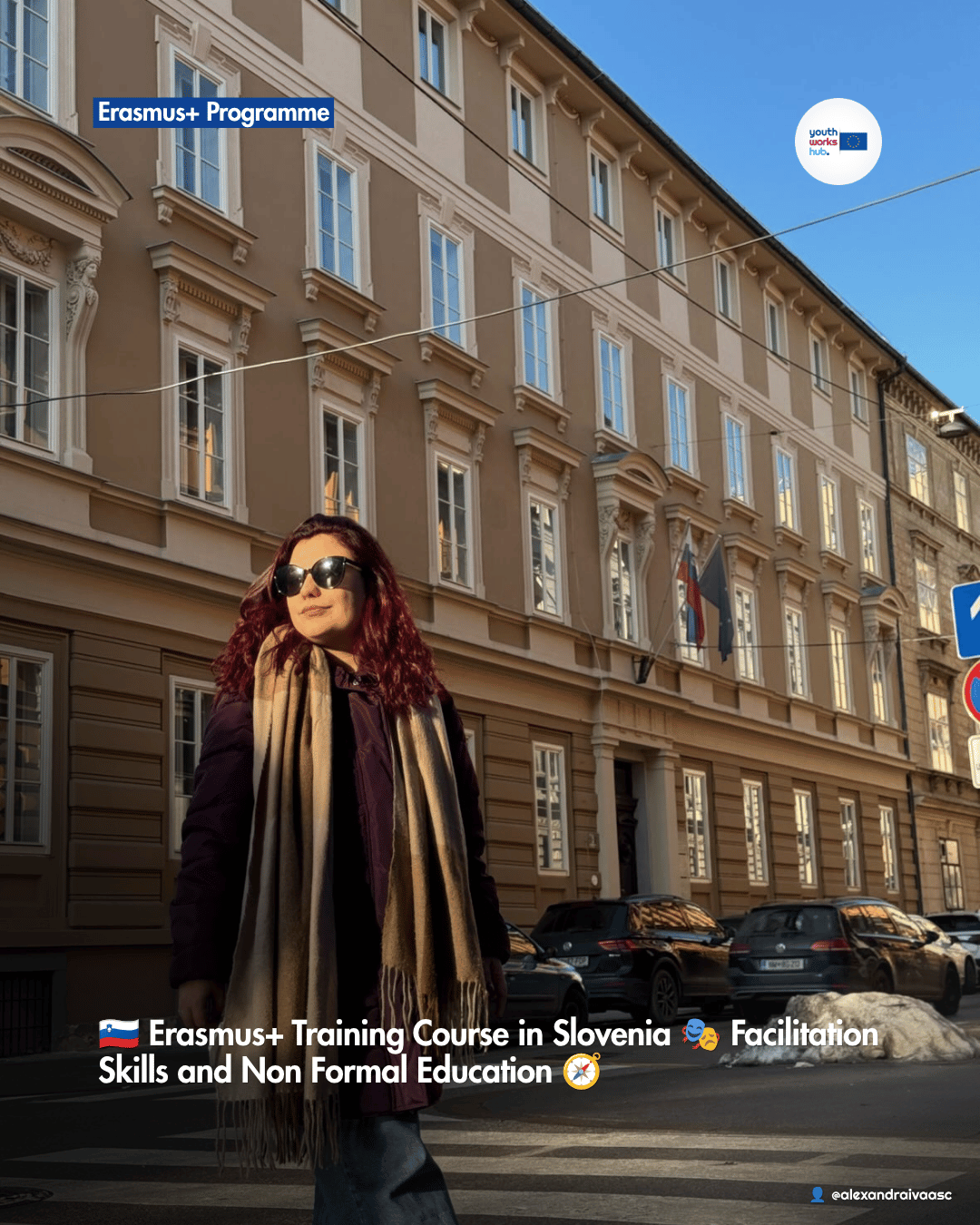
Training Course
11-18 October 2026 | Slovenia
❗️What Is This Training About?
Facilitation is more than leading activities. Explore how to create safe, meaningful and impactful learning experiences, develop your own facilitation style, and deepen your understanding of non-formal education.
✅ Who can apply for Erasmus+ and ESC? Eligibility depends on activity: ages 13–30 for most Erasmus+ youth activities and 18–30 for ESC volunteering (up to 35 for humanitarian aid), plus country and residence rules. This guide covers roles, inclusion support, language needs and the profile coordinators look for. 👉 https://youthworkshub.org/whocanapply
ℹ️ Description About The Opportunity
Facilating a group is about much more than leading activities or collecting methods. Behind every learning experience lies a series of choices: how we create a safe and inclusive environment, how we support individual and group learning processes, and how we ensure that participants can transfer what they learn into their everyday lives.
This training course is designed for youth workers, trainers, educators, youth leaders and other professionals active in the field of non-formal learning who want to strengthen their facilitation skills and deepen their understanding of meaningful educational work.
Through a combination of practice, reflection and experiential learning, participants will explore the role of the facilitator and discover how to design learning experiences that are engaging, inclusive and impactful. The course will offer practical tools and methodologies from non-formal education while also creating space to reflect on personal facilitation style, values and educational purpose.
Participants can expect a diverse learning experience that combines theory, experiential learning, group processes and creative approaches. The training will draw on established frameworks for quality learning and competence development while remaining grounded in the realities of youth work and community education.
Topics explored during the course include:
• the role and responsibilities of a facilitator;
• non-formal education methodologies and learning design;
• creating safe, inclusive and participatory learning environments;
• supporting individual and group learning processes;
• designing educational experiences with lasting impact;
• developing a personal facilitation style;
• building partnerships and cooperation among youth workers and organisations.
The course will also provide opportunities to exchange practices, learn from peers across Europe and build meaningful professional connections. Particular attention will be given to inclusion, participation, critical reflection and the social role of education.
This training is especially suitable for new trainers and youth workers who facilitate groups and wish to improve the quality of their educational activities. It is also open to youth leaders, educators and teachers who are interested in using non-formal education approaches in their work.
Together, we will explore not only how to facilitate activities, but how to create learning experiences that truly matter.
📘 What is Erasmus+? (in-depth) Erasmus+ has run since 1987 and has had over 13 million participants, funding four main activities for young people. This pillar guide covers its history, funding, research-backed benefits, the full application process and an FAQ. 👉 https://youthworkshub.org/what-is-erasmus-plus
Training overview
This Training Course is
for 26 participants
from Austria, Estonia, France, Germany, Italy, Latvia, Lithuania, Poland, Republic of North Macedonia, Serbia, Slovenia, Spain, Türkiye
and recommended for
Youth workers, Trainers, Youth leaders
Organiser:
Cirkus La Bulle (Youth NGO)
💡 How do you prepare a strong Erasmus+ or ESC application? Read the call carefully, write specific motivation, show skills with examples, and state clear learning goals. This guide gives 10 practical tips plus the common mistakes that lead to rejection. 👉 https://youthworkshub.org/erasmus-application-tips
📥 Contact
Contact for questions:
Noemie
E-Mail:
Phone: +38668603150
💶 Costs
Participation fee
There is no participation fee.
Accommodation and food
The food and accomodation are provided by the hosting organization.
Travel reimbursement
Travel costs will be reimburshed acordingly:
Slovenia: 28 EUR (Green travel: 56 EUR)
Serbia: 211 EUR (Green travel: 285 EUR)
Spain, France, Italy, Lithuania, Latvia, Poland, Germany, North Macedonia, Turkey,: 309 EUR (Green travel: 417 EUR)
📜 Certificate
Participants are entitled to receive a Youthpass certificate from the organiser, for recognition of their competence development during the activity. Read more about Youthpass:
https://youthworkshub.org/what-is-youthpass
⚠️ Important Dates
Application deadline (24h UTC): 11 September 2026
Date of selection: 18 September 2026
🎓 What is an Erasmus+ Training Course? A Training Course is a short funded course (5–10 days) for youth workers, educators and NGO staff to build skills through non-formal education. This guide explains who can join, what's covered and how it differs from a Youth Exchange. 👉 https://youthworkshub.org/trainingcourse
🔗 Official Link
⚖️ What's the difference between ESC and Erasmus+? The ESC is for volunteering and solidarity, while Erasmus+ is broad learning mobility (study, training, youth exchanges). This guide compares age, funding, duration and application route, and includes a "choose this if…" decision guide. 👉 https://youthworkshub.org/esc-vs-erasmus
🎂 What are the age limits for Erasmus+ and ESC? Youth Exchanges are 13–30, ESC volunteering is 18–30 (35 for humanitarian aid), and training, youth worker mobility and study/traineeships have no upper age limit. This guide breaks down every activity and how age is counted (at the start date). 👉 https://youthworkshub.org/erasmus-age-limits
💶 What costs does Erasmus+ cover? For youth activities (KA152–154) it covers travel by distance band, individual support, organisational support, preparation, inclusion support up to 100% and exceptional costs. This 2026 guide details each item and what Erasmus+ does not cover. 👉 https://youthworkshub.org/what-erasmus-covers


