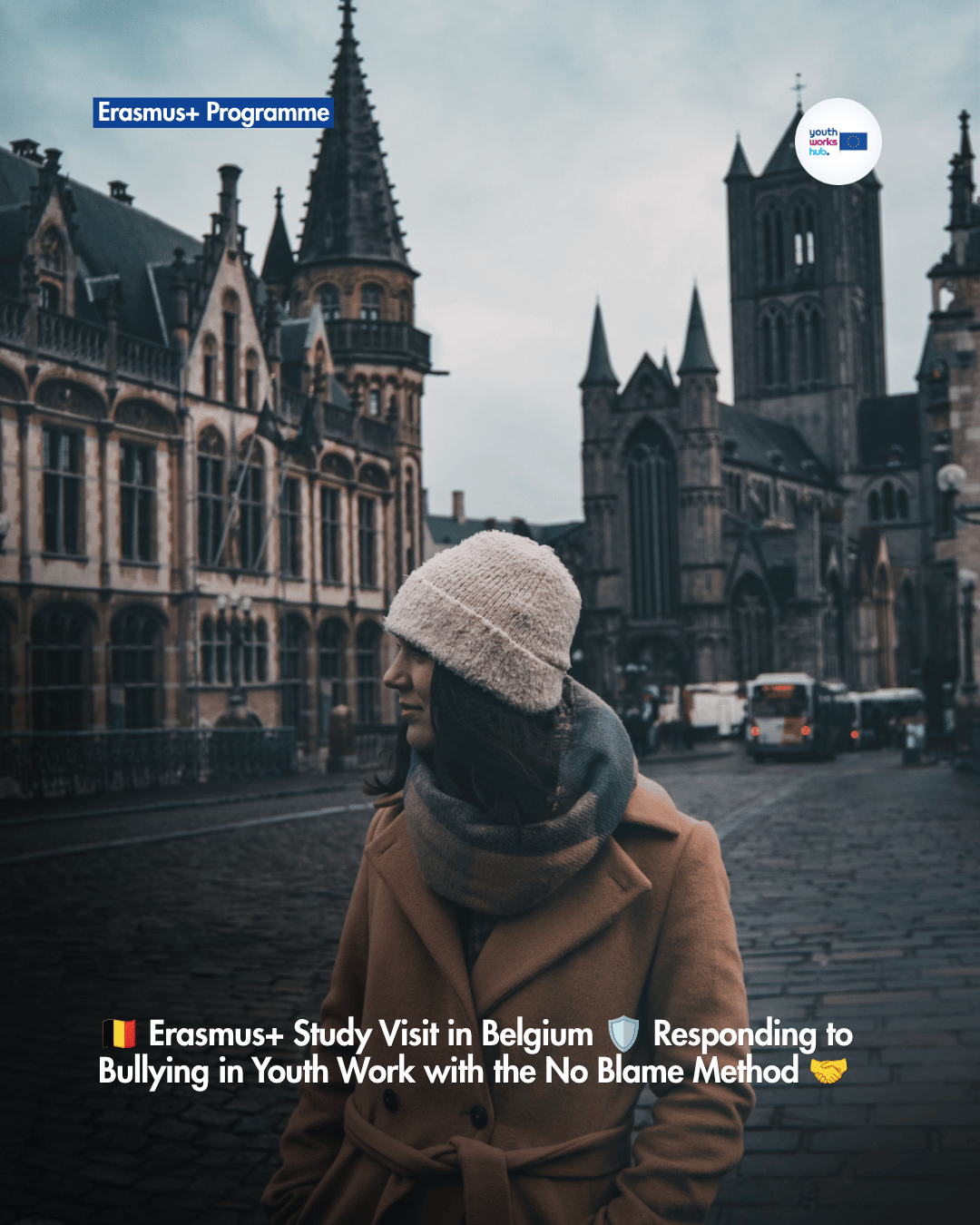
What can youth workers across Europe learn from each other about responding to bullying? "Under Construction: Together towards a reaction policy on bullying" is a KA151 Erasmus+ Study Visit that brings youth workers and professionals to Brussels to exchange tools, experiences, and practical approaches for creating safer environments for young people. From prevention to intervention, participants learn from each other to make a bigger impact.
The idea originated within Netwerk Kies Kleur tegen Pesten, a Flemish network of organisations working on bullying prevention and response through awareness-raising, knowledge sharing, and supporting youth professionals and volunteers. Strong expertise already exists in Flanders around prevention and quality policy, but one question kept emerging: what can we learn from youth workers across Europe, particularly in responding to bullying situations? Because youth work in Flanders is largely volunteer based, there is a real need for practical, accessible approaches to intervention, including non-confrontational methods such as the no blame approach, aftercare, and clear response strategies.
🎯 Aims and Objectives
This study visit facilitates exchange between European youth workers and other professionals, allowing them to share tools, experiences, and practices while strengthening both the Flemish network and its international connections. Its core aims are:
🛡️ To strengthen the capacity of youth workers to intervene effectively in situations of bullying within youth groups, ensuring safe, inclusive, and respectful learning environments
💛 To promote a culture of empathy, active bystandership, and mutual respect in youth work settings, equipping youth workers with practical tools and methodologies to address bullying and its underlying dynamics
🧭 To support youth workers in responding to bullying in a structured, ethical, and youth-centered manner, while safeguarding the emotional wellbeing and rights of all young people involved
🔄 To facilitate peer learning and exchange among youth workers, creating a space for mutual inspiration, shared experiences, and collective reflection
The study visit is built on the belief that empowering youth workers with practical tools, shared experiences, and ethical frameworks strengthens their capacity to create safe, inclusive, and respectful environments, installing a culture of empathy and active bystandership.
🤝 The No Blame Method
No Blame is an anti-bullying approach that originated with the UK organisation Lucky Duck, was introduced in Flemish schools by Leefsleutels vzw, and was adapted for youth work by Tumult. It is also known as the Support Group Method. You will learn about it during the training, and here are some of its key principles:
🫂 Bullying is a common social reality. It is never acceptable, but it is something many children and young people encounter. Rather than labeling bullies as bad, the approach helps them understand the harm they cause and encourages positive change through trust and support.
👥 Bullying is a group problem. It usually involves not only the bully but also supporters, bystanders, and the wider group. Since the group often enables bullying, the group can also help stop it, so No Blame actively involves peers in finding solutions.
💗 The approach increases empathy. Bullies often fail to recognise the emotional impact of their actions. By helping young people understand the victim's feelings, empathy grows and positive group influence can emerge.
🗣️ Feelings matter more than facts. The focus is on how the victim feels rather than on proving exactly what happened, which reduces defensiveness and makes it easier for group members to empathise.
🌱 The emphasis is on problem-solving, not punishment. Young people are encouraged to help find solutions themselves, the atmosphere stays positive and non-threatening, and even small improvements are valued.
📅 Programme
The study visit runs from 22 to 28 November 2026, with the core working days from 23 to 27 November.
🛬 22/11 Arrival day: arrival before 18:00, followed by dinner and getting to know each other
🧩 23/11 – 27/11 Working days: setting personal and group goals and agreements; understanding the No Blame / Support Group Method; exchanging realities and sharing local context and needs; expert sessions from organisations in the field; personal and group reflection; exploring the policy framework and its do's and don'ts; collective work to create a policy framework; and planning follow-up and dissemination. The programme also features free evenings and time to explore Brussels, and will be fine-tuned based on participants' interests and experiences.
🛫 28/11 Departure day: breakfast at 08:00, after which the project finishes. Flights are recommended only after 13:00 to allow time to reach the airport.
👥 Which Organisations and Participants Are We Looking For?
The project seeks youth organisations that actively organise activities for children and young people and are already engaged in developing and implementing an anti-bullying policy in their daily practice. These organisations should have existing experience, knowledge, and concrete approaches to responding to bullying, and be motivated to strengthen their work through international exchange. Both locally or regionally active organisations and those with no prior international experience are welcome, as long as they are open to mutual learning and contributing as equal partners.
It is essential that selected participants are directly involved in their organisation's work on bullying, so they can bring concrete practices and tools to the study visit, and are able to transfer the knowledge gained back into their organisation.
The primary target group is youth workers aged 21 and older (the open call is stated for youth workers 18+), whether professionals (paid youth workers) or volunteers. The project is looking for people who:
🌟 Are youth leaders enthusiastic about expanding their competences on intervention
🏘️ Are youth workers actively involved with partner organisations, including those working in formal education, NGOs, youth centres, art organisations, and community-based initiatives
🎓 Are educators, trainers, and facilitators in various non-formal settings, working directly with youth and youth workers
🔁 Have some experience in youth work, take an active role in their organisation, can pass on the competencies to fellow youth workers, and stay open-minded, curious, and eager to share
🎁 What's In It for Participants and Organisations
🛡️ Strengthening capacity to respond effectively to bullying by exploring practical approaches such as the No Blame method
🔄 Meaningful exchange and peer learning with European youth workers, where all partners contribute as equals
🔍 Broadening perspectives by sharing and comparing experiences, tools, and practices related to bullying responses
💭 Reflecting on their own practices and identifying opportunities to improve ethical and effective response strategies
🌱 Bringing back fresh ideas and applicable methodologies to enhance daily youth work
🌐 Reinforcing connection to an international network of youth organisations and strengthening the Flemish network
📍 Also drawn to Belgium and to work that gives young people a voice? This solidarity placement fits that mission: ESC Volunteering in 🇧🇪 Belgium 🤝 Advocacy and Communication for Refugee Rights 📣 → https://youthworkshub.org/21044
🏢 Who Organises This Project
The grant-receiving and coordinating organisation is JOETZ, a national youth association recognised by the Flemish government. JOETZ's mission is to be a health promoter for children and young people aged 3 to 30 in Flanders and Brussels, working through health projects, activities and holidays, and trainings, always starting from a fun and playful non-formal youth-work approach. For this project, JOETZ ensures the quality of the content together with the facilitator, supports a safe project atmosphere, handles financial and administrative matters including reimbursements, provides Youthpasses, and supports the wider implementation of the project in youth work in Flanders and beyond.
🏠 Accommodation
Participants stay at Hostel JES SleepInn, in the heart of Brussels, a 25-minute walk from Brussels Central Station and a great base to explore the city after the sessions.
🛏️ Due to the busy high season, only shared bedrooms with 8 beds are available, but participants are accommodated with a maximum of 5 people per room, across 3 rooms, with gender preference taken into account
🍽️ Accommodation, food (breakfast, lunch, dinner, and coffee breaks during residential meetings), and travel expenses during the study visit dates are 100% covered by the Erasmus+ grant, based on planned budgets
🛡️ Privacy, Wellbeing and Health
🎥 Partner organisations may use audiovisual materials (pictures, videos, livestream, project movie) for dissemination; participants who do not wish to appear can inform the team
🤝 JOETZ places great importance on everyone's wellbeing and integrity and does not accept any form of transgressive behaviour; an Integrity Contact Person is available during the project
🩺 Use of drugs during the project cycle is strictly forbidden; participants need their own travel and health insurance (not covered by the project) and are responsible for their own health, first aid kit, and medication
💶 Funding and Travel
The Erasmus+ Programme offers travel funding up to a maximum amount depending on the distance from each partner organisation to the venue. Participants first cover their travel and are reimbursed after the follow-up phase, and only pre-approved tickets are reimbursed. The most ecological and economical option is required, in economy or 2nd class.
🇧🇪 Belgium: no reimbursement offered
✈️ Germany and Netherlands: up to €156 (air travel), up to €230 (green travel)
✈️ Latvia, Slovenia and Romania: up to €254 (normal travel), up to €362 (green travel)
🌿 Travelling 100% green (train, bus, or carpooling) entitles participants to 2 additional travel days with a small allowance. Reimbursement requires 100% attendance from arrival to departure, proof of tickets, a completed evaluation form, and completion of the follow-up activity, and can take up to three months after the project ends.
📩 How to Apply
Read all the information on the project website carefully, then apply by completing the digital form in full. You can note any specific support needs or barriers to participation when you register. After the application deadline, JOETZ will inform all applicants whether they have been selected during the week of 7 September, so keep an eye on your mailbox. After selection, participants sign an agreement on the project terms, then arrange travel together with their sending organisation and wait for confirmation from JOETZ before buying tickets. Note that fully ChatGPT-generated applications are not accepted.
⏰ Deadline
1 September 2026 (12:00).
🔗 Links
📄 Infopack: https://sites.google.com/view/studyvisitunderconstruction/
📝 Application form: https://docs.google.com/forms/d/e/1FAIpQLScEBNeAYPQVGVuNQ27vTbCiVJVjx-UbkBxkO_CCjg53CWsNKg/viewform
⚠️ Important Notice
Youth Works Hub is not the organiser, partner, or representative of the listed projects. This listing is shared for information only, based on details from the source. Deadlines, eligible countries, dates, and other details may change or be withdrawn at any time, and all funding, reimbursements, and allowances are set by the project coordinator or National Agency. Applications go directly to the coordinator or hosting organisation through the official link. Listings may include third-party links (ESC Portal, infopacks, forms) that Youth Works Hub does not control. Always verify the details on the official project page before applying.