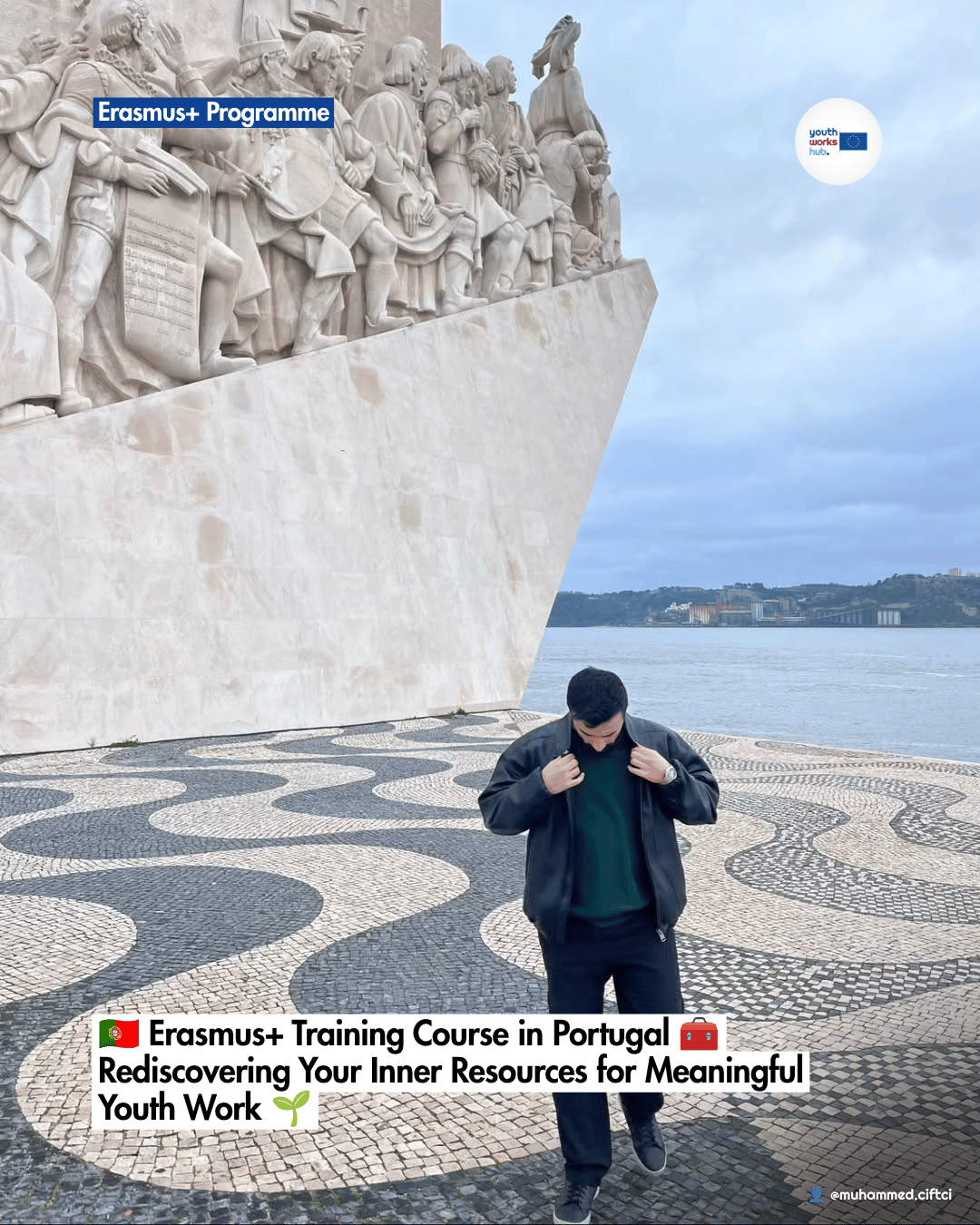
What if the most powerful tools for your youth work are already inside you? The Human Toolbox is an Erasmus+ Training Course in the Portuguese town of Lousã, supporting youth workers in rediscovering their strengths, values, self-esteem, and communication skills through storytelling, personal reflection, and peer learning, so they can create more meaningful, human-centred learning experiences for young people.
About the Project
The Human Toolbox is a Training Course for youth workers focused on self-awareness, personal resources, and professional growth. Through storytelling, autobiographical reflection, creative expression, experiential learning, and peer exchange, participants explore their strengths, values, life experiences, and interpersonal skills.
The training addresses themes such as self-esteem, inner dialogue, empathy, creativity, and authentic communication, helping participants recognise the resources they already carry within themselves and understand how these influence their work with young people. Combining personal exploration with practical application, participants also design and facilitate workshops, experiment with non-formal education methods, and develop tools that can be transferred to youth work settings.
Please note that this is not a form of therapy; it is personal development training. It is important to be in a stable psychological state so you can fully benefit from the experience.
Focus and Goals
🔍 Self-awareness through the rediscovery of your own inner resources and skills
📖 Increase self-awareness by exploring and rediscovering personal resources, strengths, and competencies
🌱 Reflect on significant autobiographical experiences and life milestones as sources of learning, resilience, and personal growth
💭 Explore the impact of self-esteem, inner dialogue, and self-limiting beliefs on personal and professional development
🤝 Strengthen empathy, active listening, and authentic communication in relationships and youth work
✨ Foster creativity, curiosity, and confidence as resources for navigating challenges and supporting young people
Methods
🎙️ Storytelling
🪞 Individual and group reflection
🧪 Experiential learning
✍️ Creative writing
👥 Peer learning
📋 Self-assessment tools
Who Can Apply
🎂 Youth workers, trainers, youth leaders, volunteering mentors, youth coaches, and educators (professionals and new aspiring ones) aged 18 and over
🌍 Open to participants from most European countries (Erasmus+ programme countries) who do not require a visa to enter Portugal
🗣️ Basic knowledge of English
🤝 Committed to attending all sessions, interested in the topic, comfortable in multicultural settings, and willing to keep up with all communication channels
📣 Willing to engage in follow-up and dissemination activities within 6 weeks of returning home
If selected, you will need an NGO partner from your country; if you are not involved with or do not know an NGO, your application is still considered and the host will select one from its network.
The Venue
🏨 Participants stay at the Bem Estar Hotel in Lousã, Coimbra, sharing rooms of 2 or 3 people
🌡️ Sockets are Type C and F, and daytime temperatures are around 22 to 23°C, cooler at night
Food and Costs
🍽️ Accommodation, food, and coffee breaks are covered by the project, with vegetarian and specific menus available if requested in advance
🩺 It is mandatory to bring your European Health Insurance Card (EHIC); the project does not cover health or travel insurance, which participants arrange themselves (travel insurance is not reimbursed)
Travel and Reimbursement
Travel costs are reimbursed after the project, through bank transfer, once all invoices, tickets, boarding passes, and proof of follow-up activities are provided. Green travel means using only public transport (bus, train) to Lousã and back. Indicative travel budgets by distance band (standard / green):
💶 10 to 99 km: €28 / €56; 100 to 499 km: €211 / €285; 500 to 1999 km: €309 / €417; 2000 to 2999 km: €395 / €535; 3000 to 3999 km: €580 / €785
Only economy-class flights and second-class bus/train tickets are covered, and you must not book tickets before the organisers approve your travel. You may stay up to 2 extra days before or after the project (4 for green travel) at your own expense.
Follow-up and Dissemination
You are expected to carry out one follow-up activity and disseminate the project online, such as compiling the methods experienced into a shareable document, running a non-formal education or Erasmus+ information session, filming a testimonial documentary, or writing an article, along with a short report.
Getting There
✈️ Arrive at Porto or Lisbon airport (both roughly the same distance), then reach Coimbra by train or bus (Rede Expressos, FlixBus), and take the MetroBus from Coimbra to Lousã, followed by a 10-minute walk to the hotel
Host Association
🌈 The host is BLOOM Associação Socio Cultural, active in youth mobility since 2008, experienced in Erasmus+ KA1 and KA2 and the European Solidarity Corps, with strong work in inclusion, disability, LGBTIQ+ and minority backgrounds, and youth worker mental wellbeing
Selection Process
📝 Stage 1: complete the application form by the deadline (the form may close earlier if many applications are received)
💬 Stage 2: shortlisted applicants are invited to book an interview by 13 July, with interviews between 14 and 18 July and final selection emails by 20 July
Applying to Erasmus+ and want to strengthen your application? Read these tips first: https://youthworkshub.org/8396/
How to Apply
Read all the information carefully, then complete the online application form, providing an NGO contact from your country if you have one. Selection follows a two-stage process with an online interview.
Deadline
10 July 2026
Links
🔗 Application form: https://forms.gle/1r6n48wuQTssqvir8
🔗 Infopack: https://drive.google.com/file/d/1ZQmW7ijvHly_b-_XywpZKa7WhiHQBZQW/view