DESCRIPTION
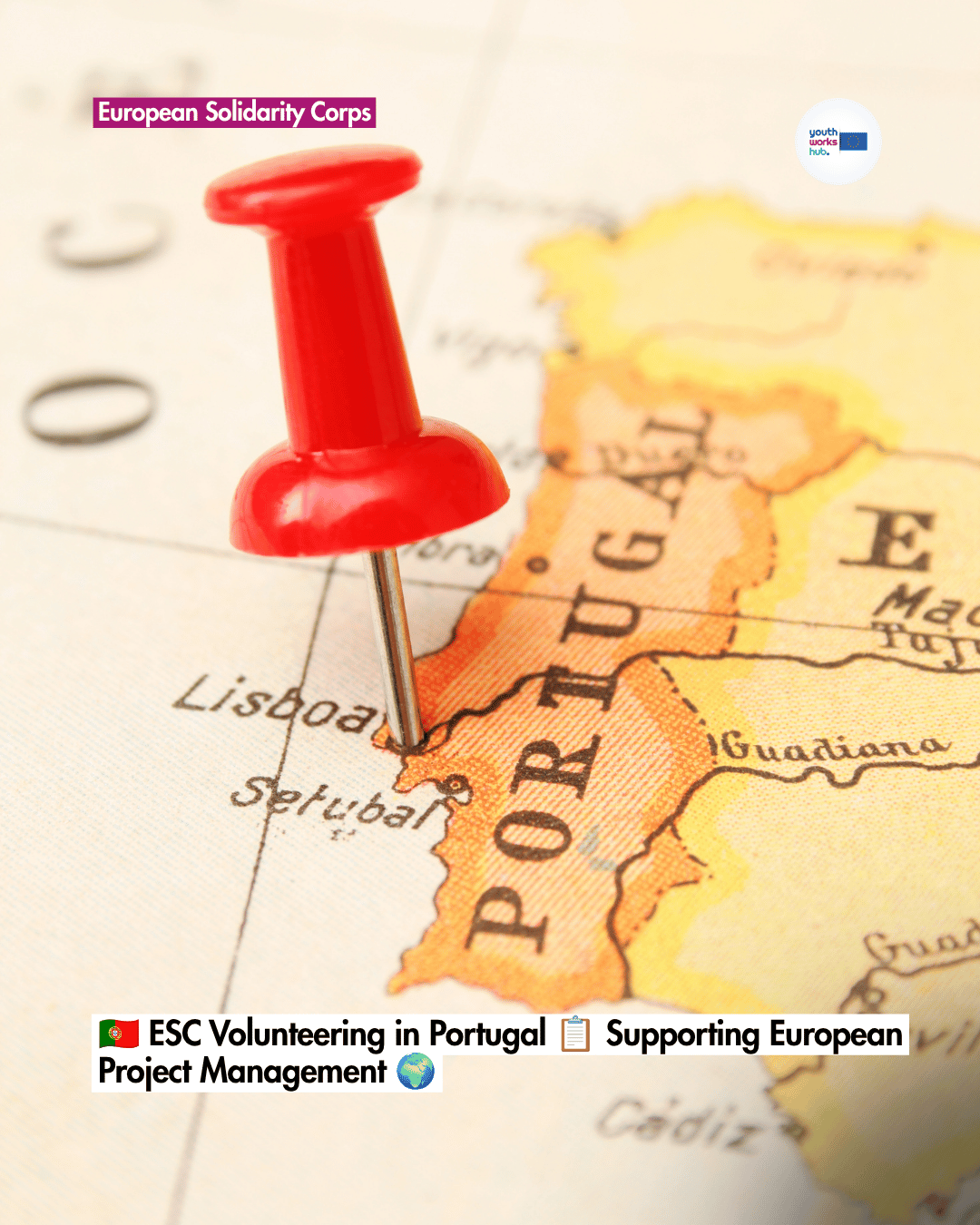
New Footsteps on the Camino”, promoted by the Portuguese Federation of the Camino de Santiago within the framework of the European Solidarity Corps Quality Label, aims to engage young people in the preservation, enhancement, and sustainable promotion of the Camino de Santiago routes in Portugal. Volunteers will support environmental and heritage conservation actions, collaborate with local communities, take part in awareness-raising activities, foster intercultural dialogue, and contribute to the production of the Federation’s digital content and tools. Activities include assisting pilgrims, clean-up and waymarking campaigns, collecting and systematising heritage information, community workshops, and promoting sustainable tourism.
ACCOMMODATION, FOOD AND TRANSPORT ARRANGEMENTS
Volunteering may take place in one of the following clusters: -Coastal Camino (Viana do Castelo, Caminha, Matosinhos) -Central Camino (Albergaria, Tomar, Alvaiázere) -Interior Camino (Castro Daire, Santa Marta de Penaguião, Vila Pouca de Aguiar) -Torres Camino (Pinhel, Trancoso, Braga) -Eastern Camino (Fundão, Guarda, Covilhã) The host provides shared, fully equipped accommodation, food (allowance or meals), and covers local transport for project activities.
TRAINING DURING THE ACTIVITY
Volunteers will receive ongoing training throughout the project, including an initial welcome and cultural integration session, basic language support, and guidance on project goals. They will learn by doing, join regular reflection moments, and be mentored by local coordinators. They may also attend trainings offered by the National Agency and will be supported in recognising their skills through the Youthpass process.
PARTICIPANT PROFILE
-Young people aged 18 to 30;
-Excellent command of English, French and/or Portuguese;
-Motivation to take part in volunteering activities;
-Interest in environmental sustainability, cultural/natural heritage, and the Camino de Santiago routes;
-Full availability to participate for the defined volunteering period;
-Ability to work in a team, with a strong sense of responsibility and proactivity;
-Flexibility and ability to adapt to different contexts (including rural settings);
-Openness to intercultural dialogue and to living alongside local communities and pilgrims;
-Respect for the principles of hospitality, inclusion, and European values.
ACTIVITY DATES
From 25/05/2026 to 04/09/2026
ACTIVITY LOCATION
RUA DR HENRIQUE BOTELHO, VILA POUCA DE AGUIAR, Portugal
ACTIVITY TYPE
Individual volunteering
LOOKING FOR PARTICIPANTS FROM
France, Italy, Portugal, Spain
ACTIVITY TOPICS
Environment and natural protection
Health and wellbeing
Creativity and culture
DEADLINE FOR APPLICATIONS
No application deadline
PROJECT CODE
2025-1-PT02-ESC51-VTJ-000347954
📋 Everything you need to know about applying for ESC volunteering — all in one place. The European Solidarity Corps (ESC) is one of the most life-changing opportunities available to young people across Europe, yet many applicants walk in without a clear picture of what to expect. This complete guide covers how ESC works, who can apply, what costs are covered, what your daily life as a volunteer looks like, and how to strengthen your application from the start. Whether you're applying for the first time or exploring your options, this is the one resource you should read before anything else.
👉 https://youthworkshub.org/15101/
🌍 Erasmus+ explained — the complete beginner's guide to Europe's largest youth programme.Millions of young people have taken part in Erasmus+ since its launch, but many still don't fully understand what the programme actually includes, who it's for, or how to get involved. This in-depth guide breaks down everything: the different types of mobility, funding opportunities, eligibility criteria, and what you can realistically expect from participating. If you've ever wondered whether Erasmus+ is right for you, this guide gives you all the answers in one place.
👉 https://youthworkshub.org/15096/
🎭 Ever wondered what actually goes into planning an Erasmus+ Youth Exchange? Behind every successful youth exchange is weeks — sometimes months — of careful preparation that participants rarely see. From writing project proposals and coordinating partner organisations to designing non-formal education activities and managing logistics across borders, the behind-the-scenes work is enormous. This article pulls back the curtain and gives you a real look at how these projects are built, which is invaluable knowledge whether you're a participant, a youth worker, or an organisation thinking about hosting.
👉 https://youthworkshub.org/15107/