The European Solidarity Corps (ESC) is the European Union's programme that funds young people aged 18 to 30 to volunteer on solidarity projects across Europe and beyond. It covers travel, accommodation, food, insurance and monthly pocket money, so money is not what stops you from making an impact. This complete guide walks you through every type of ESC activity, who can join, what is covered, how long projects last, and exactly how to apply.
2026 is a special year for the programme: it marks the 10th anniversary of the European Solidarity Corps and 30 years of organised EU volunteering. 🎉
What Is the European Solidarity Corps? 🇪🇺
The ESC is the EU's flagship programme for volunteering and solidarity. It gives young people the chance to help communities tackle real challenges, from social inclusion and the environment to education, health and humanitarian aid, while growing personally and professionally.
Its aims are simple but powerful:
💙 Promote inclusion and equal opportunities for all
🌱 Support communities and sustainable living
🌍 Strengthen European values through real action
💫 Boost the personal and professional growth of young people
The scale is serious too. The 2021 to 2027 programme runs on a budget of around €1 billion and aims to support at least 270,000 young people, with a further €175.3 million dedicated to 2026 alone. This is not just volunteering, it is solidarity in motion. 🚀
Who Can Join the ESC? 🙌
You can take part if you meet these conditions:
🔹 You are aged 18 to 30 (you can register from 17 and start a project once you turn 18)
🔹 For Humanitarian Aid Volunteering only, the range is 18 to 35
🔹 You are legally resident in an EU country, an associated country, or an eligible partner country
🔹 You are registered on the ESC Portal, the official database organisations search
🔹 Your lifetime total of ESC volunteering does not exceed 12 months
You do not need a degree, work experience or perfect languages. Check exactly who can apply and which countries are eligible. Note that hosting organisations must hold an official Quality Label, which is your sign that a project is genuine.
The Types of ESC Activity 🤝
The ESC is not one single thing. It covers several formats, so you can pick what fits your life.
Individual Volunteering 🌱
The classic ESC experience: you join a hosting organisation, on your own, to work on a community project.
📅 Long term runs from 2 to 12 months
📅 Short term runs from 2 weeks to 2 months, often used to open the door to young people with fewer opportunities
Volunteering Teams 👥
A group of volunteers from at least two different countries works together on a shared cause for a shorter period. It is a great option if you prefer doing your first project as part of a team. Learn more about ESC Volunteering Teams.
Solidarity Projects 💡
Instead of going abroad, you and a team of at least 5 young people design and run your own local initiative to improve your community, with ESC funding and support. See what ESC Solidarity Projects are.
Humanitarian Aid Volunteering 🕊️
A separate strand that contributes to humanitarian aid in safe regions outside the EU. This is the only ESC path open to 18 to 35 year olds. Read how ESC Humanitarian Aid Volunteering works.
How Long Do ESC Projects Last? ⏳
There is no single length, which is part of the appeal:
📅 Individual long term volunteering: 2 to 12 months
📅 Individual short term and team volunteering: 2 weeks to 2 months
Whatever the format, your total ESC volunteering across your life is capped at 12 months. The exact dates are always set in the individual project, so check each listing.
Where Can You Volunteer? 🌎
You can join projects across the Erasmus+ Programme countries and selected partner countries. Popular destinations include:
🇮🇹 Italy 🇪🇸 Spain 🇵🇹 Portugal 🇬🇷 Greece 🇩🇪 Germany 🇫🇷 France 🇵🇱 Poland 🇭🇺 Hungary 🇱🇹 Lithuania 🇹🇷 Türkiye and many more!
Every destination offers something different, from eco-farms and youth centres to NGOs and creative hubs. The full country breakdown is in our eligibility guide.
What Does the ESC Cover? 💶
The ESC is built so money is not your barrier. In most projects you receive:
✈️ Travel to and from the project, funded within set distance bands
🏠 Accommodation provided by the host organisation
🍽️ Food or a food allowance
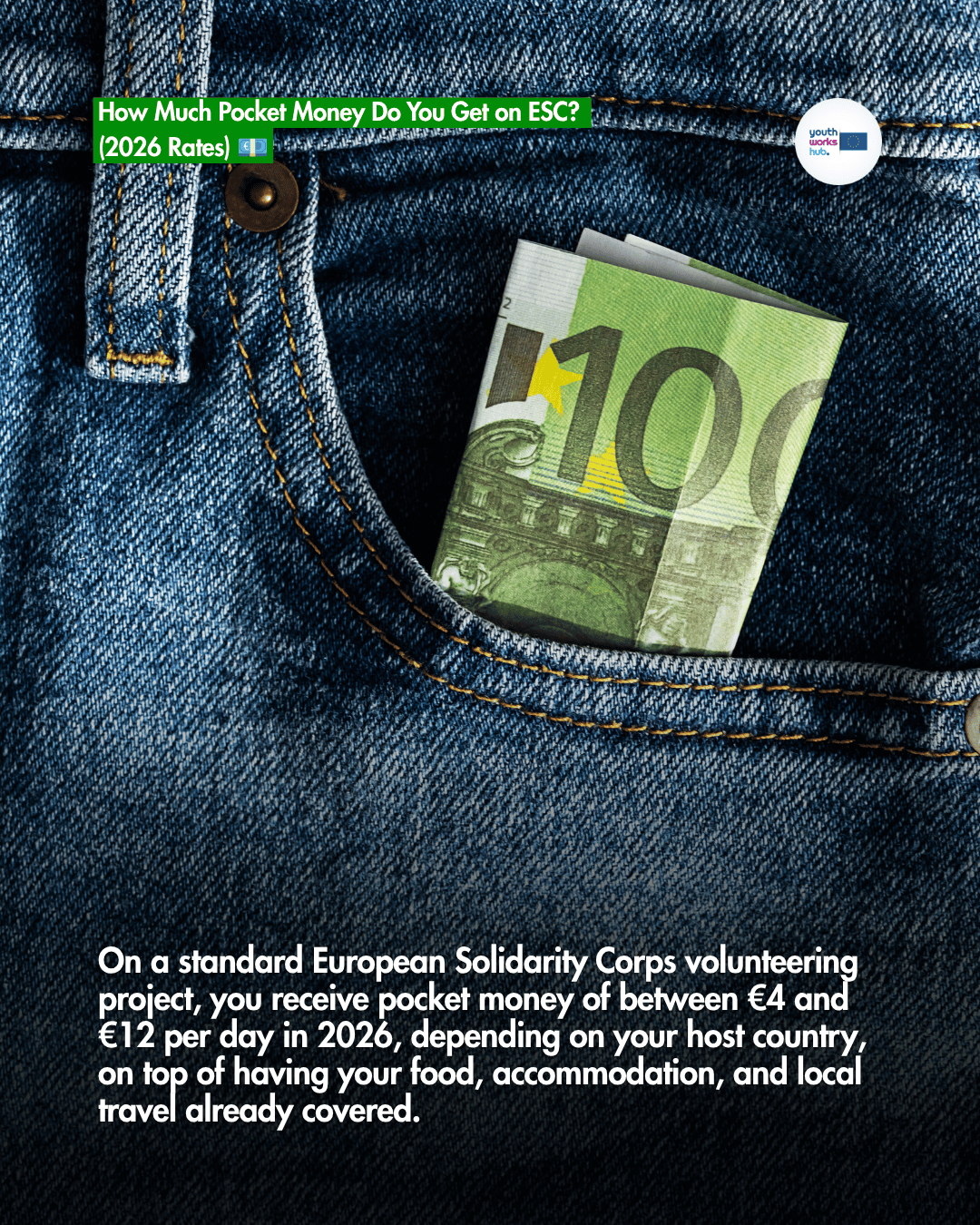
💶 Monthly pocket money, which depends on the host country and typically ranges from around €155 to €360
🛡️ Insurance through the official ESC scheme
🗣️ Online language support (OLS) to prepare for your placement
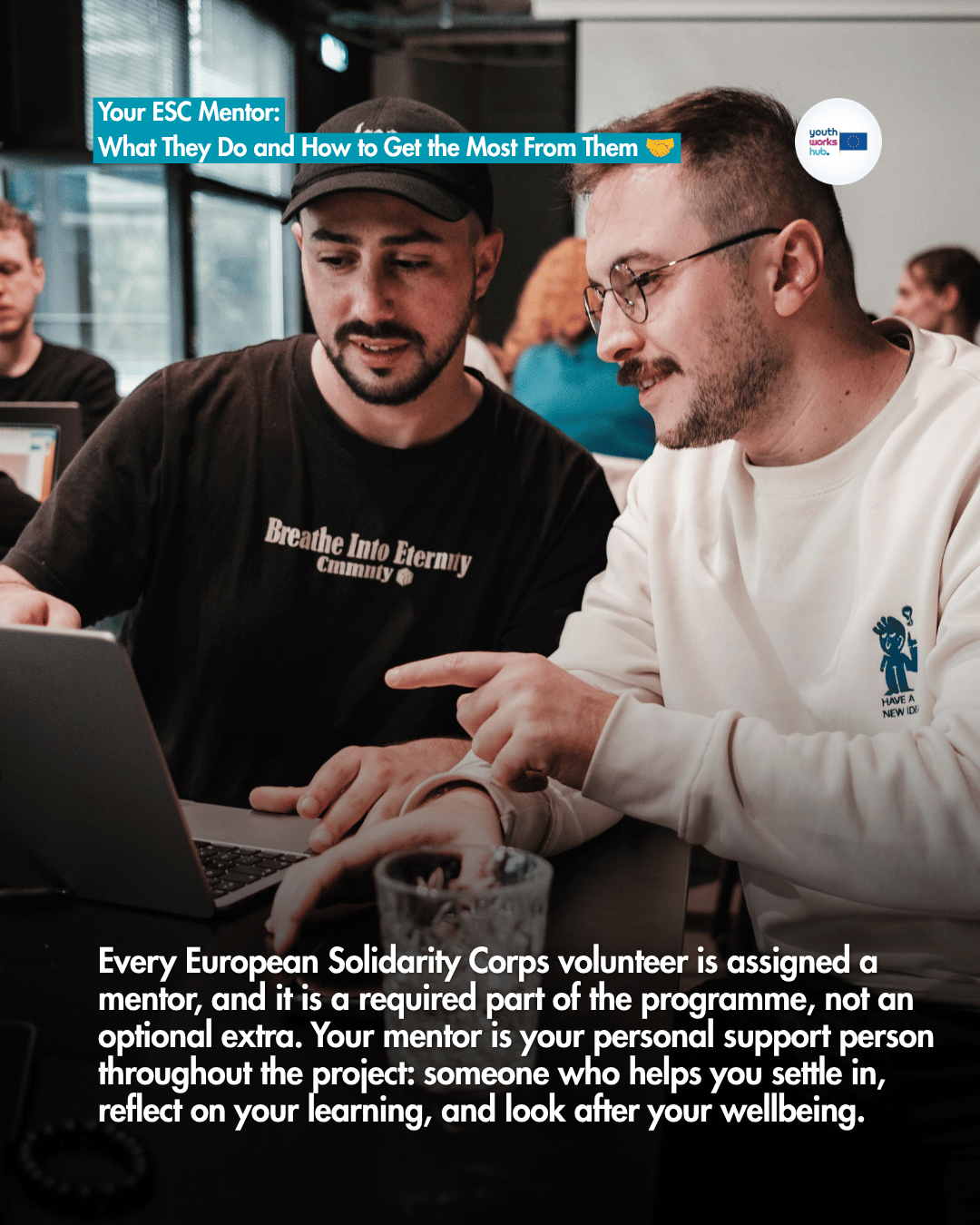
🧑🏫 A mentor and ongoing training throughout
🎓 A Youthpass certificate at the end, recognising what you learned
⚠️ One honest note: travel is reimbursed by distance band, not always the full ticket price, so on very long flights the band may not cover 100% of the cost. Everything else is genuinely covered. For the detail, see is ESC fully funded, what Erasmus+ covers, how ESC insurance works, and what Online Language Support is. You can also read what a Youthpass is.
Registering on the ESC Portal 🛡️
Before you can be selected, you create your ESC volunteer profile so organisations can find you. Our step by step guide explains exactly how it works: how to register for ESC volunteering.
How to Apply for the ESC 🧭
Applying is simpler than most people expect:
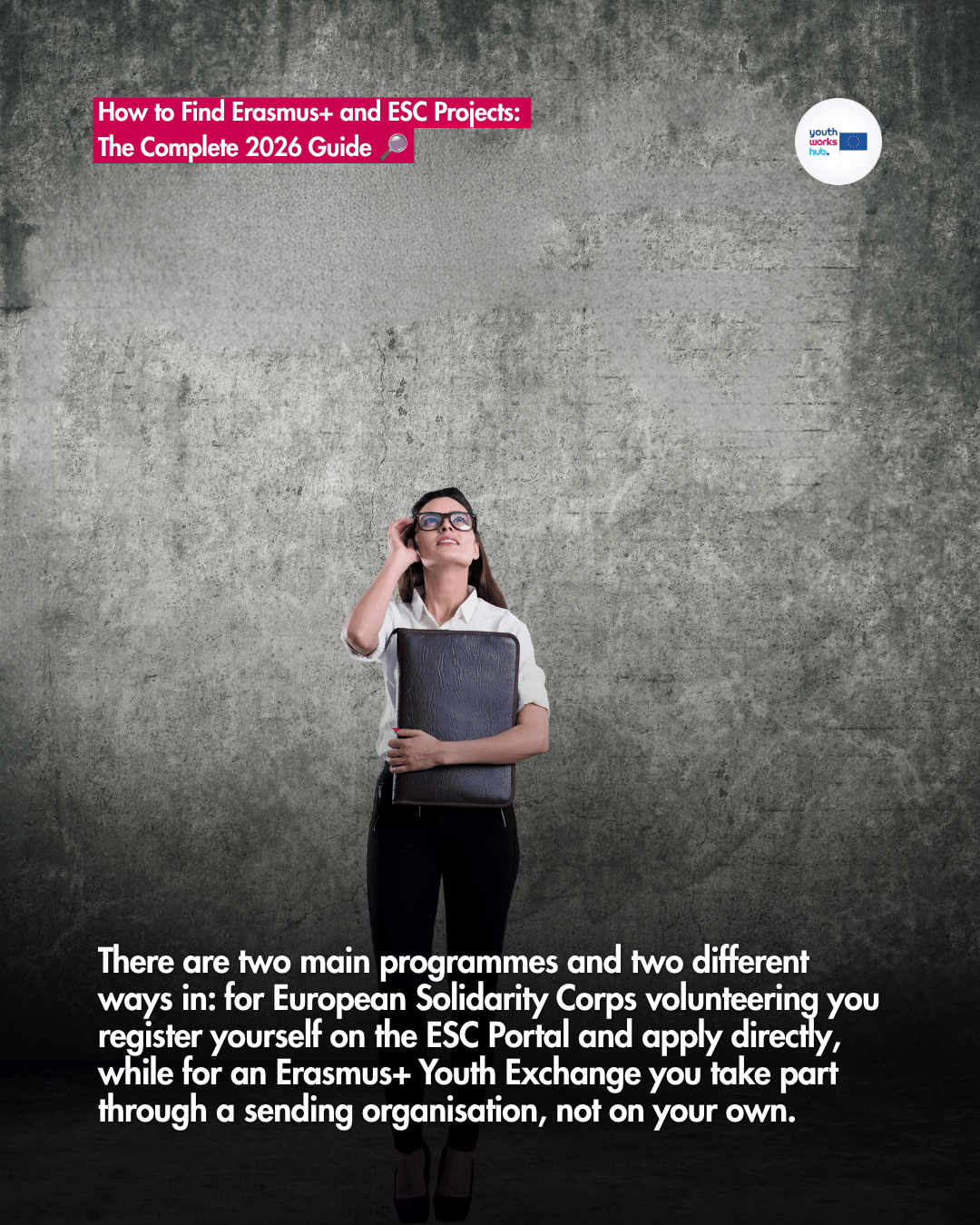
1️⃣ Browse open ESC placements on youthworkshub.org
2️⃣ Find a project that fits you and read the listing carefully
3️⃣ Apply directly and, if selected, confirm your place
4️⃣ Pack your bags and start your journey 🎒
To stand out, prepare a strong motivation letter, a clean Europass CV, and review our 10 application tips and full how to apply guide.
Why Join the ESC? ✨
Because helping others changes you too:
🌍 Live abroad and gain real, hands on experience
💬 Improve your language and intercultural skills
🌱 Contribute to causes that genuinely matter
💼 Build teamwork, communication and leadership skills
💙 Become part of a strong European community
This is where purpose meets adventure.
Common ESC Myths ❌
"I'm not qualified enough." "I don't speak the language." "It's too expensive." These are the reasons young people talk themselves out of applying, and they are almost always wrong. We break them down in 4 ESC myths that are stopping you from applying.
ESC vs Erasmus+: What's the Difference? 🔎
People mix these up all the time. In short, the ESC is specifically about volunteering and solidarity, while Erasmus+covers a broader range of learning mobility like youth exchanges, training and studies. Read the full comparison in ESC vs Erasmus+, or start with what Erasmus+ is. Prefer a shorter overview of the ESC? See our ESC overview page.
Frequently Asked Questions ❓
Is ESC volunteering fully funded?
Most core costs (accommodation, food, insurance and pocket money) are covered, and travel is funded within distance bands. On very long trips the travel band may not cover the full ticket.
How old do you have to be for the ESC?
18 to 30 for standard volunteering, and 18 to 35 for Humanitarian Aid Volunteering. You can register from 17 and start once you turn 18.
How much is ESC pocket money?
It depends on the host country and typically ranges from around €155 to €360 per month, paid on top of covered accommodation and food.
How long can an ESC project last?
From 2 weeks up to 12 months, depending on the format. Your lifetime ESC total cannot exceed 12 months.
Do you get paid to volunteer with the ESC?
It is not a salaried job. You receive monthly pocket money and a food allowance, plus covered accommodation and insurance.
What do you get at the end?
A Youthpass certificate that records the skills and experience you gained.
In Short 💙
ESC = Solidarity + Volunteering + Europe 🌍
It is your opportunity to help others, grow personally, and leave your mark, with the costs covered so you can focus on the experience.
👉 Find and apply for open ESC placements: https://youthworkshub.org/category/esc-projects