
NGO MONDO
UGANDA PIONEERS ASSOCIATION
KAMPALA, Uganda
⭐️ Activity Title
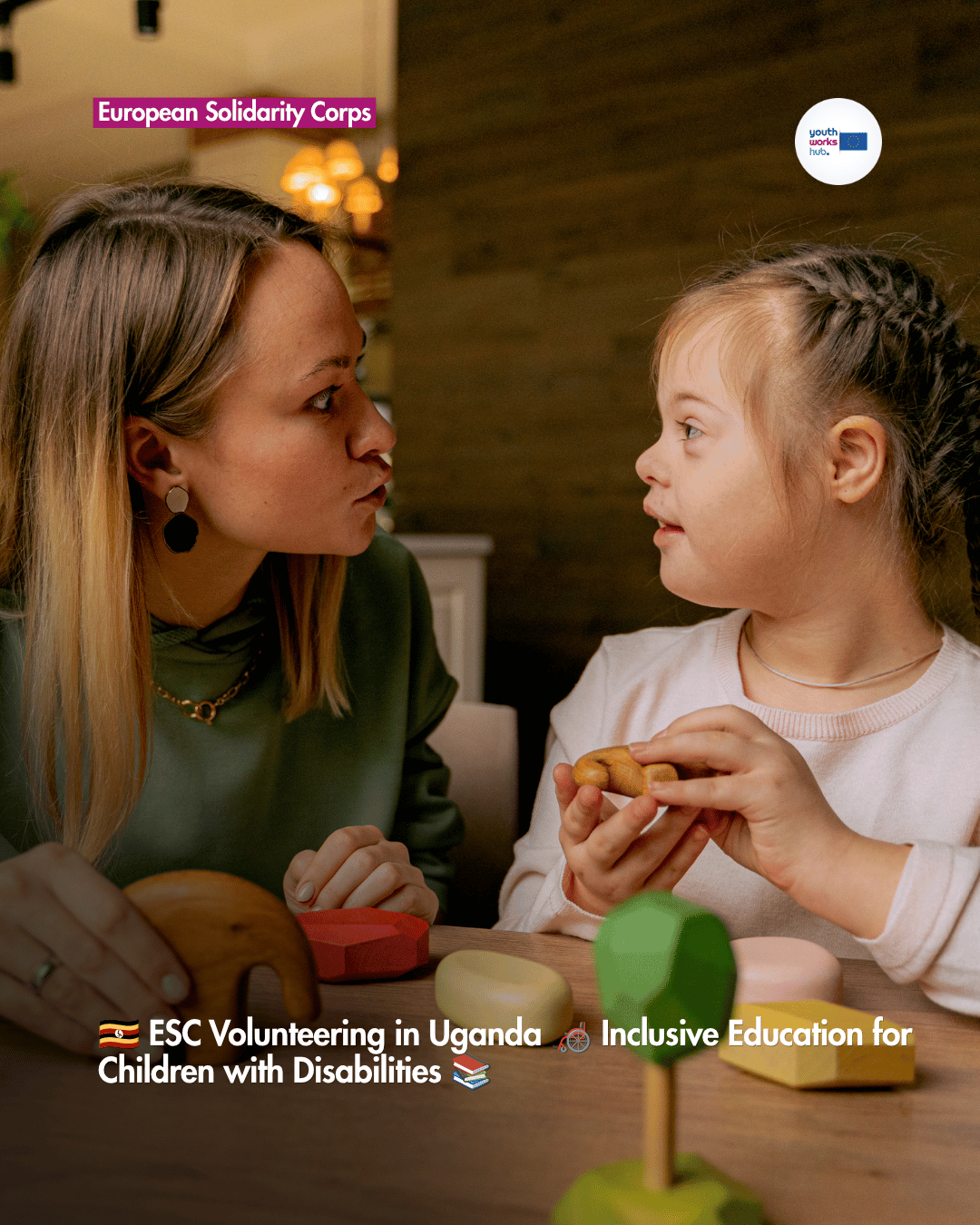
Inclusive Education Support Volunteer
🌍 What is the European Solidarity Corps (ESC)? The ESC is the EU programme that funds young people aged 18–30 (up to 35 for humanitarian aid) to volunteer on solidarity projects across Europe, with travel, accommodation, food, insurance and monthly pocket money covered. This overview explains who can join, the project types, durations and how to apply. 👉 https://youthworkshub.org/esc
🔷 Activity Details
Description
Kampala School for the Physically Handicapped (KSPH) is a Ugandan primary school for children with physical disabilities, founded in 1968 by parents of children with cerebral palsy. Its aim is to educate, rehabilitate, and equip learners for self-reliance and development. The school follows the national curriculum and offers sports, music, dance, drama, spiritual fellowship, and education tours. It also provides vocational training in tailoring, screen printing, crafts, tie and dye, and basic computer skills for children who cannot continue to further education. KSPH has 100 pupils aged 6–18 with disabilities such as cerebral palsy, muscular dystrophy, spina bifida, and polio. It has 13 teachers, 5 trained in special needs education, including 2 disabled former students. Volunteers support classroom learning, extracurriculars, wheelchair repair (voluntary), therapy exercises, teacher training, fundraising, and basic computer teaching.
Accommodation, food and transport arrangements
Volunteers will stay at Villa Mamu, Mengo, Kampala, a residence with WiFi, a warm shower, a kitchen, and pets. The volunteer shall prepare their own meals and living in own room. Other accommodation options in Kampala can be arranged based on safety and convenience. Local transport mainly consists of boda-bodas (motorcycle taxis). The project is in Kampala and in a walkable distance from Villa Mamu.
Training during the activity
The project offers volunteers the possibility to engage in local languages classes or intercultural activities, and benefit from three sides of mentoring (from the supporting organisation, the hosting organisation, and an alumni volunteer). Prior to the deployment, volunteers will go through pre-departure training activities. This opportunity is part of the RISE project, promoting inclusion and empowerment in vulnerable communities.
Participant profile
We are seeking emotionally resilient and compassionate volunteers with a genuine interest in working with children with special needs. This role requires individuals who demonstrate empathy, patience, and a strong commitment to supporting children with diverse physical and developmental challenges. Previous experience working with children with disabilities is highly valued. Additional skills in areas such as caregiving, occupational therapy, or physiotherapy will be considered a strong advantage. Volunteers should possess good communication skills and the ability to interact effectively with children, caregivers, and team members. Working with physically disabled and special needs children can be demanding and, at times, emotionally and physically challenging. Therefore, volunteers must be patient, composed, and prepared to navigate difficult or frustrating situations with understanding and professionalism. At the same time, it is essential to approach this role with an open and compassionate mindset, ensuring that every child is treated with dignity, respect, and care. Eligibility Criteria Candidates must: Be between 18 and 35 years of age Reside in an eligible country (EU Member State, North Macedonia, Iceland, Liechtenstein, or Turkey) Have successfully completed the Humanitarian Aid Volunteering training Not have previously participated in an individual Humanitarian Aid Volunteering placement *Please note that the total duration of participation in EU volunteering programmes, including this opportunity, must not exceed 12 months.
✍️ How do you write a motivation letter for ESC and Erasmus+? Research the project first, then follow a five-part structure that shows motivation, relevant skills and learning goals. This guide includes a full annotated example, how to adapt it per activity, and the mistakes that cause rejection. 👉 https://youthworkshub.org/esc-motivation-letter
💡 How do you prepare a strong Erasmus+ or ESC application? Read the call carefully, write specific motivation, show skills with examples, and state clear learning goals. This guide gives 10 practical tips plus the common mistakes that lead to rejection. 👉 https://youthworkshub.org/erasmus-application-tips
🔑 Key Information
Activity dates
A total of 26 week(s) during the period 28/10/2026 to 30/11/2028
Activity location
8 MILES HOIMA ROAD, KAMPALA, Uganda
Activity type
Individual volunteering
Looking for participants from
Austria, Belgium, Bulgaria, Croatia, Cyprus, Czechia, Denmark, Estonia, Finland, France, Germany, Greece, Hungary, Iceland, Ireland, Italy, Latvia, Liechtenstein, Lithuania, Luxembourg, Malta, Netherlands, North Macedonia, Poland, Portugal, Romania, Slovakia, Slovenia, Spain, Sweden, Türkiye
Activity topics
Social challenges
Education and training
Creativity and culture
Deadline for applications
Application deadline: 27/09/2026 23:59
Project code
2025-1-EACEA-VOLUN-101251290
⚖️ What's the difference between ESC and Erasmus+? The ESC is for volunteering and solidarity, while Erasmus+ is broad learning mobility (study, training, youth exchanges). This guide compares age, funding, duration and application route, and includes a "choose this if…" decision guide. 👉 https://youthworkshub.org/esc-vs-erasmus
🔗 Official Project Page
https://youth.europa.eu/solidarity/opportunity/54176_en
🔐 How do you register on the ESC Portal? You create an EU Login with two-factor authentication, then complete your profile on the official ESC Portal. This step-by-step guide also fixes common problems like "0 opportunities" and the country-list lock. 👉 https://youthworkshub.org/register-esc-portal
🩺 What insurance do ESC volunteers get? Every ESC volunteer gets free group insurance (currently Henner) that complements the EHIC and covers medical, accident, hospitalisation, liability and travel. This guide explains what's insured, the coverage period (home-to-return plus two months) and how your organisation enrols you. 👉 https://youthworkshub.org/esc-insurance
🌍 What is ESC Humanitarian Aid Volunteering? It's the ESC strand (EVHAC) that sends people aged 18–35 to work full-time in countries outside the EU, after mandatory two-stage training. This guide details the training, the application steps and what's covered. 👉 https://youthworkshub.org/esc-humanitarian-aid-volunteering
💰 Is ESC volunteering fully funded? Yes for core costs: travel is reimbursed by distance band (€28–1,735+), and accommodation, food, local transport, insurance, language support and daily pocket money are covered. This guide gives the official 2026 figures and the honest travel-band caveat — note there is no salary. 👉 https://youthworkshub.org/is-esc-fully-funded