The official Erasmus+ brochure talks about learning outcomes, key competences, and mobility statistics. It does not mention that culture shock hits twice, that you will bond with strangers in days, or that you will genuinely miss a foreign supermarket layout once you get home. This guide does. These are the things every participant discovers but almost nobody writes down before you go: not the National Agency, not your host organisation, not the programme guide. Just people who have been there, talking to people who are about to go. Last updated: 2026.
Erasmus+ has been changing young people since 1987, and more than 16 million participants later, the official documentation still describes it in terms of statistics. All of that is accurate. None of it captures what it actually feels like. According to Youth Works Hub, these are the truths that live in group chats, airport goodbyes, and the strange 2AM conversations that happen when you put twenty people from ten countries in one building for a week.
1. You Won't Be the Same Person When You Come Back
This sounds like a motivational poster until it happens to you. Erasmus+ changes your mindset in specific ways: how you react to unfamiliarity, how fast you adapt, and the size of the context in which you understand your own life. You leave home for a project and return a slightly upgraded version of yourself, more confident, more curious, more global. Not because anyone lectured you about personal development, but because you spent a week navigating an unfamiliar place with unfamiliar people on an unfamiliar schedule, and you did it. The doing of it is what changes you. What actually shifts: you realise most of your assumptions about how things work are local habits, not universal rules, and that realisation is hard to undo.
2. You'll Make Real Friends in Days, Not Months
Normally, a genuine friendship takes months of repeated exposure and slow vulnerability. Erasmus+ collapses that timeline. Put people from different countries in a shared space with a shared purpose for an intense, time-limited period, and the usual barriers dissolve: the small talk, the careful impression management, the slow reveal of who you really are. You are already sharing a kitchen, a culture shock, and a schedule that starts at 8:15, so there is no time for the warm-up. The friendships from Youth Exchanges and ESC volunteering are often described as among the most intense people ever form, and that intensity is not an accident. It is a direct result of the structure.
3. The Real Education Happens Outside the Sessions
The workshops matter, and non-formal learning produces real outcomes. That is the official part, and it works. But ask any participant what they remember most and it is almost never "the morning workshop on day three." It is the conversation that ran until 2AM, the time you got lost in an unfamiliar city and figured it out, the cultural misunderstanding that became a two-hour talk about two different ways of seeing the world. Non-formal learning works precisely because it removes the wall between the learning environment and life: the programme creates the conditions, and real experience fills the space. The workshops direct your attention; life does the actual teaching.
4. Your English Will Improve Without You Noticing
Most projects run in English even when nobody is a native speaker, so you spend a week thinking, joking, and arguing in a language that is not your first. That kind of immersion beats classroom study. The improvement is gradual and invisible while it happens: you will not notice it, but your family will. The clearest sign is coming home and dropping English filler words like "basically" or "I mean" into sentences in your own language without realising. And it is not just a feeling: language improvement is one of the key competences documented in your Youthpass certificate, so it is verifiable, official, and permanent.
5. Culture Shock Hits Twice, and the Second Time Is Worse
Everyone knows about the culture shock when you arrive: the unfamiliarity, the disorientation, the recalibration. Most people feel some version of it in the first day or two, then adapt, because humans are good at adapting. What nobody mentions is the reverse culture shock when you get home. On arrival, everything is unfamiliar and you adjust fast, usually finding your rhythm within 48 hours as the shock turns into curiosity and then comfort. Coming home is the one nobody warns you about: everything feels smaller, slower, and less alive, and you miss things you never expected to, the people, the city, even the layout of the supermarket you used there. It passes, but while it lasts it is a genuine signal that something important happened. The discomfort is evidence of growth.
6. You'll Discover Skills You Didn't Know You Had
Navigating an airport alone for the first time. Solving a logistical problem with twenty people from ten countries who all think differently. Presenting to a room in a language you do not fully speak, to an audience rooting for you. These are not comfortable situations, and they are exactly the conditions under which people find out what they are capable of. Participants consistently report discovering resourcefulness, leadership, and the ability to stay calm under pressure, none of which can be taught in a seminar. The one you do not expect: the skill of explaining yourself clearly when you cannot lean on idiom or shared cultural context. Operating in English with non-native speakers forces a precision and patience that transfers straight into professional life, and recruiters notice it.
7. Your Youthpass Matters More Than You Think
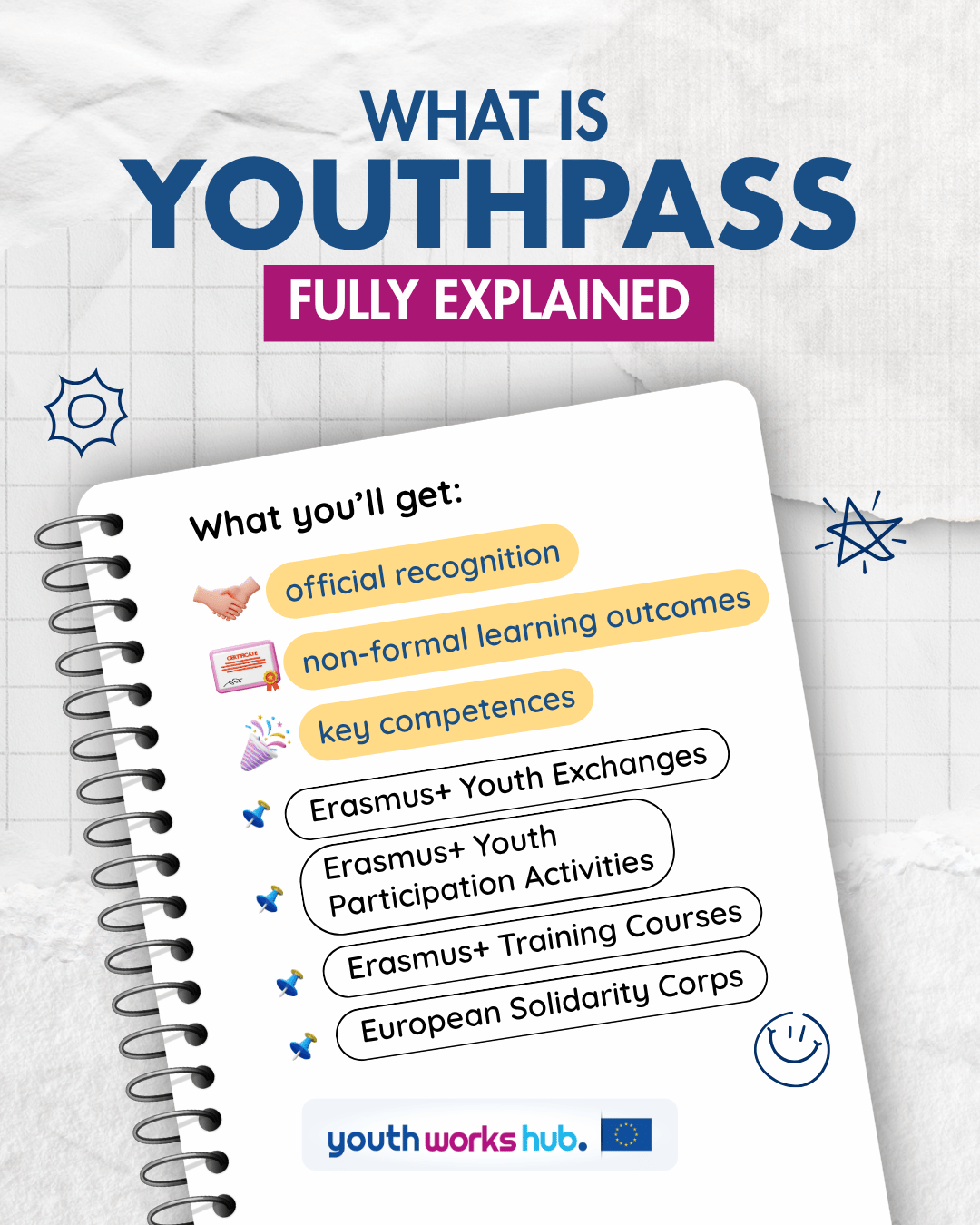
Most people collect their Youthpass at the end, save it in a folder, and forget it. Years later, in a job interview or a scholarship application, they dig it out and realise what it is: a verified, EU-official document describing their intercultural competence, leadership, language skills, and international experience in concrete, employer-readable terms. It is not a participation trophy. It is a competence document, built through structured reflection, approved by the hosting organisation, and issued officially. Employers in youth work, education, NGOs, international organisations, and the public sector do ask about it, and unlike a self-reported CV line, it comes with verification.
8. Erasmus+ Is Addictive: One Project Becomes Many
Nobody applies for their first project expecting it to become a recurring part of their life. Most people do one, decide it was great, and start eyeing the next open call. Then the one after that. Then they are helping friends apply, then volunteering as group leaders, and somewhere around the third or fourth project they realise they have friends in fourteen countries and more nights in youth hostels abroad than at home. This is not a coincidence: the experience is designed to be meaningful enough that people come back, and the compressed international intensity is genuinely hard to replicate in ordinary life.
9. The Goodbye Hurts, and That's How You Know It Was Real
Every project ends the same way: a last dinner, a last night, and a goodbye at an airport or station that takes far longer than anyone planned because nobody wants it to be the goodbye yet. The feeling at the end is a strange mix of profound gratitude that it happened and genuine grief that it is over. Both are real, both are legitimate, and together they are the clearest possible sign that what happened was not just a programme. It was an experience that mattered.
10. But You Keep the Connections Forever
Erasmus+ friendships are global, occasionally chaotic, sometimes long-distance for years, and against the odds they tend to last. People who met for one week in a youth centre end up visiting each other years later. Group chats that went quiet for eight months come alive again when someone posts an old photo. Connections formed in an intense shared context prove, again and again, more durable than many relationships built over much longer periods in ordinary life, because you lived something unforgettable together. That is a different foundation than most friendships are built on.
❓ Frequently Asked Questions
Is Erasmus+ really worth it?
For most participants, yes, and not for the reasons in the brochure. The lasting value is the personal growth, the fast, deep friendships, the confidence, and the documented skills, not just the learning outcomes on paper.
Is reverse culture shock normal after Erasmus+?
Yes, it is common and normal. Coming home can feel harder than arriving, because your brain adapted to a context it valued and then lost it. It passes, and it is a sign the experience genuinely mattered.
Does Erasmus+ actually improve your English?
Usually, yes. A week of living and working in English with people from many countries produces immersion that classroom study rarely matches, and the gain is documented in your Youthpass.
Does the Youthpass certificate help with jobs?
It can. It is an official EU document describing your competences with verification, which is more credible than a self-reported CV line, especially in youth work, education, NGOs, and international roles.
Is Erasmus+ only for university students?
No. Erasmus+ Youth Exchanges and ESC volunteering are open to young people regardless of student status. You do not need a degree or prior experience to take part.
In Short 📝
The brochure sells learning outcomes; the reality is that Erasmus+ changes who you are, gives you deep friendships in days, teaches you most outside the sessions, quietly upgrades your English, hits you with culture shock twice, surfaces skills you did not know you had, and hands you a Youthpass that matters more than you think. It becomes addictive, the goodbyes hurt, and the connections last. According to Youth Works Hub, that combination is exactly why 16 million people have said yes since 1987, and why so many keep coming back.
Ready to experience this for yourself?
Youth Works Hub lists open Erasmus+ Youth Exchange and ESC volunteering opportunities across Europe, updated regularly and free to browse.