🔑 Key Information
Activity ⭐️ Title
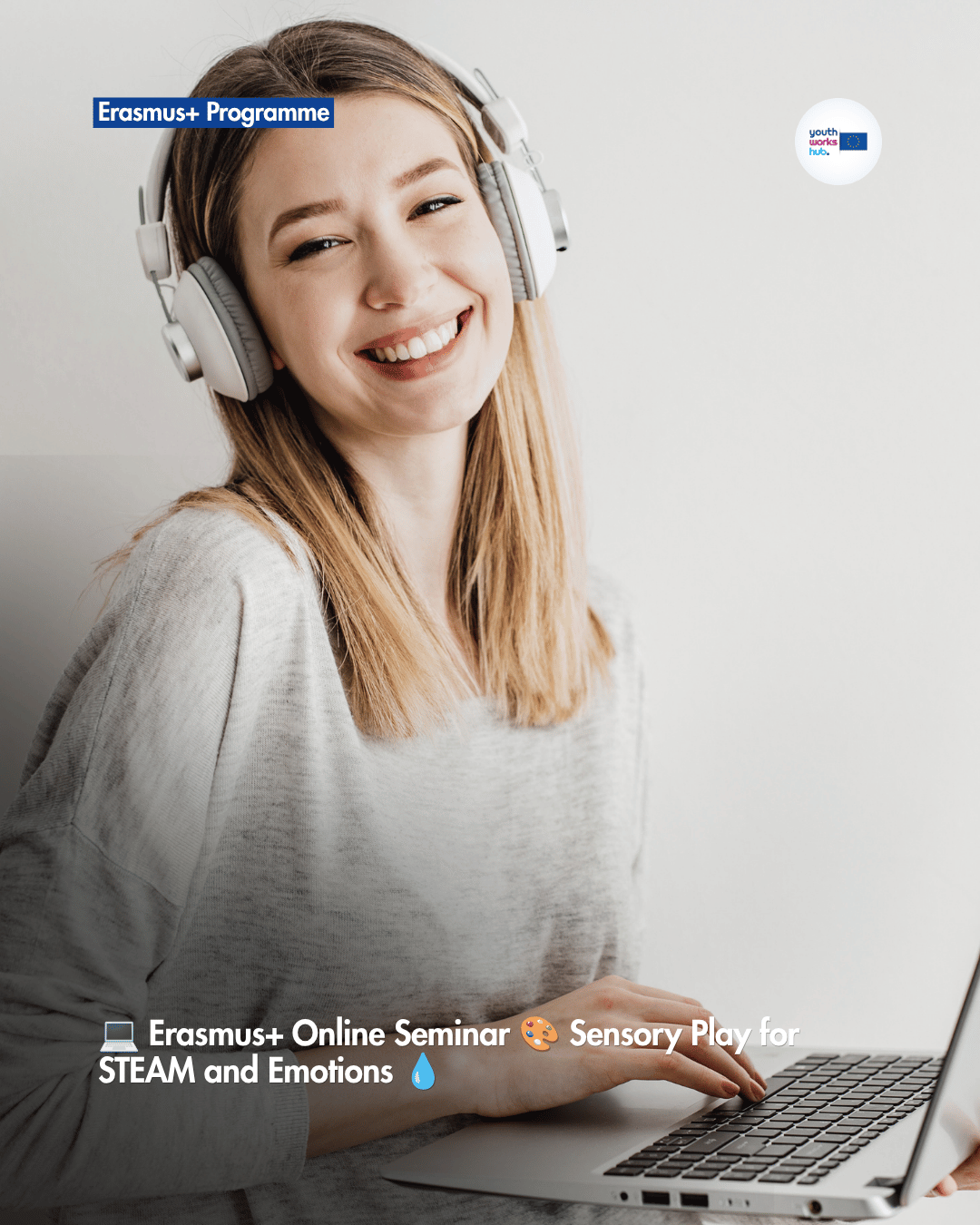
Messy STEAM & Emotions: Sensory Play for Regulation and Discovery
Activity 🔶 Type | 📆 Dates | 📍Location
Seminar
22 September 2026 | Zoom, Greece
🌍 Erasmus+ explained — the complete beginner's guide to Europe's largest youth programme.Millions of young people have taken part in Erasmus+ since its launch, but many still don't fully understand what the programme actually includes, who it's for, or how to get involved. This in-depth guide breaks down everything: the different types of mobility, funding opportunities, eligibility criteria, and what you can realistically expect from participating. If you've ever wondered whether Erasmus+ is right for you, this guide gives you all the answers in one place. 👉 https://youthworkshub.org/15096/
❗️What Is This Training About?
An online workshop for trainers who want to use messy, sensory play to connect STEAM exploration with emotional regulation. Participants design activities that support curiosity, calm and safe expression of feelings.
🏘️ How Erasmus+ youth projects create lasting change in local communities. The impact of Erasmus+ goes far beyond the individuals who participate. Local communities, host organisations, and even entire neighbourhoods are shaped by the projects that take place within them. This article explores the broader social impact of Erasmus+ youth exchanges — from building intercultural understanding to empowering grassroots organisations — and makes a compelling case for why these projects matter beyond the personal level. 👉 https://youthworkshub.org/3595/
ℹ️ Description About The Opportunity
An online workshop for trainers, youth workers and educators who want to intentionally use messy, sensory play as a bridge between STEAM learning and emotional wellbeing.
Rather than seeing messy play as “just fun” or “too chaotic”, this training explores how materials like water, colours, clay, sand, foam and simple natural elements (stones, leaves, sticks, soil) can become structured experiences that help young people:
- explore basic STEAM concepts (mixing, flow, texture, patterns, cause and effect)
- notice, name and regulate feelings such as curiosity, frustration, excitement, calm or overwhelm.
Participants begin by reflecting on their own relationship with mess, control and emotion in their trainer role. Through short prompts and sharing, they identify situations where learners’ emotions (boredom, anxiety, hyper‑energy, shutdown) make facilitation challenging – and where sensory experiences could support regulation instead of adding more stress.
The workshop then introduces key principles of sensory‑rich STEAM activities:
- starting from simple questions (“What happens when…?”, “How does it feel when…?”)
- offering choices of materials and levels of mess (dry vs wet, smooth vs rough, colour vs neutral)
- scaffolding from free exploration to small challenges (e.g. build, mix, separate, transform)
- integrating reflection moments that connect body sensations, emotions and observations.
Using these principles, participants design 1–2 messy STEAM activities suitable for their contexts – for example:
- water + colour + different containers for exploring flow and intensity, linked to talking about strong vs gentle emotions
- clay or dough for shaping “emotional creatures” or “problem shapes”, followed by discussion on what they represent
- nature trays with stones, leaves and sand to build “islands of calm” or “stormy landscapes”, connecting to stress and coping strategies.
For each activity, they define:
- the STEAM focus (e.g. mixing, states of matter, patterns, structure)
- the emotional focus (e.g. naming feelings, noticing frustration, finding calm, sharing experiences)
- practical boundaries (space, clothing, cleaning plan, optional levels of participation)
- questions and prompts for gentle debriefing, without forcing personal disclosure.
Throughout the workshop, attention is given to:
- inclusion of different sensory profiles (children/young people who seek sensory input vs those who find it overwhelming)
- trauma‑sensitive practice (avoiding triggers, offering opt‑outs, respecting limits)
- trainer wellbeing: how to hold messy, emotional processes without burning out.
By the end of the workshop, participants will:
- understand how messy, sensory play can support both STEAM thinking and emotional regulation
- have at least one concrete messy STEAM activity plan using accessible materials (water, colours, clay, natural elements)
- feel more confident in inviting and holding emotions through playful, embodied experiences
- have tools to adapt the level of mess and emotional depth to different age groups and settings.
Training overview
This Seminar is
for 16–24 participants
from Erasmus+ Youth Programme countries  , Other countries in the world , Partner Countries Neighbouring the EU
and recommended for
Youth workers, Trainers, Youth leaders, Youth project managers, Youth coaches, Youth researchers, 15-50
Working language(s):
English
Organiser:
Artemis Sapountzoglou (Others)
Sapounofouska Events & More is a creative interdisciplinary team specialised in children’s parties, educational programmes, non-formal learning activities, and participatory events. The team brings together educators, facilitators, artists, and creators of imaginative group experiences, with a strong focus on playful engagement, inclusion, creativity, and meaningful human interaction.
Its framework of activity combines STEAM education, educational robotics, theatrical play, music-and-movement activities, improv theatre, group dynamics, outdoor experiences, educational games, creative workshop design, and interactive festive elements such as bubble show-inspired experiences. The team designs activities for children, young people, educators, and communities, creating spaces where learning, expression, movement, and celebration can coexist in an organic and joyful way.
The educational methodology behind the event is informed by non-formal education, experiential learning, STEAM principles, and the 5E model, which supports a learning journey from curiosity and exploration to meaning-making, extension, and reflection. This makes the event suitable not only as a participatory experience, but also as a space for educational inspiration and practical learning design.
At the heart of the team’s philosophy is the belief that play, creativity, movement, imagination, collaboration, and embodied participation can create powerful conditions for learning and connection. Through its events and educational programmes, Sapounofouska seeks to build experiences that are lively, inclusive, memorable, and grounded in the idea that learning can be both meaningful and joyful.
✅ 10 practical tips to write a stronger Erasmus+ or ESC application and actually get selected. With growing competition for spots in Erasmus+ and ESC projects, a well-crafted application can genuinely make or break your chances. This guide shares 10 concrete, actionable tips based on what selection committees actually look for — covering everything from how to frame your motivation to the common mistakes that get applications rejected. If you're serious about getting selected, take the time to read this before you hit submit. 👉 https://youthworkshub.org/8396/
📥 Contact
Contact for questions:
Artemis Sapountzoglou
E-Mail:
Phone: +306944533091
💶 Costs
Participation fee
15€
Accommodation and food
-
⚠️ Important Dates
Application deadline (24h UTC): 31 August 2026
Date of selection: 2 September 2026
🔗 Official Link
⚠️ Important Notice
Youth Works Hub is not the organiser, partner, or representative of the listed projects. This listing is shared for information only, based on details from the source. Deadlines, eligible countries, dates, and other details may change or be withdrawn at any time, and all funding, reimbursements, and allowances are set by the project coordinator or National Agency. Applications go directly to the coordinator or hosting organisation through the official link. Listings may include third-party links (ESC Portal, infopacks, forms) that Youth Works Hub does not control. Always verify the details on the official project page before applying.